
Vance's "war on fraud" is a fraud
It'd be laughable if people weren't getting hurt.

PN is supported by paid subscribers. Become one ⬇️
In his State of the Union address, President Trump mentioned his vice president only once. It came after he denounced the state of Minnesota, blaming Somali-Americans for fraud that had occurred there in nutrition and child care programs funded by the government.
“I am officially announcing the war on fraud to be led by our great Vice President JD Vance. He’ll get it done,” Trump said. “And we’re able to find enough of that fraud, we will actually have a balanced budget overnight. It’ll go very quickly.”
Just FYI, the budget deficit in 2025 was $1.78 trillion, so the most successful fraud crackdown ever wouldn’t make much of a dent in that. But worry not: JD is on the case.
The truth is that Vance’s “war on fraud” is a phantom, a PR effort that will likely uncover no misdeeds that weren’t already known to the government’s actual fraud investigators. Vance’s pretend fight against fraud is the real fraud, and it’s just what we might expect from the most corrupt president and most corrupt administration in history.

Indeed, it’s stunning that this administration has the gall to pretend even for a moment that fraud is something they care about.
This “anti-fraud” campaign will not go after cryptocurrency fraud — the president uses crypto payoffs to expand his wealth by billions while the administration shuts down crypto investigations. White-collar crime enforcement has been dramatically scaled back, so it’s not as though Vance will be looking for fraud on Wall Street. The words “wage theft” may never have passed the lips of any high-ranking Trump administration official, despite the fact that it costs American workers an estimated $15 billion per year. Trump ordered the government to stop enforcing the Foreign Corrupt Practices Act, which bars US companies from paying bribes overseas. And speaking of bribes, if you’ve already been convicted and are looking for a pardon from Trump, those are essentially for sale.
Thanks to Trump, there has seldom been a better time to be a fraudster.
Even when they weren’t so spectacularly corrupt, conservatives spent a lot of time complaining about government fraud; it was one of the big three items in Ronald Reagan’s “waste, fraud, and abuse,” which he promised to banish. The problem is that when Republicans say they want to crack down on fraud, what they almost always mean is that they want to undermine, delegitimize, and defund programs they never liked anyway.
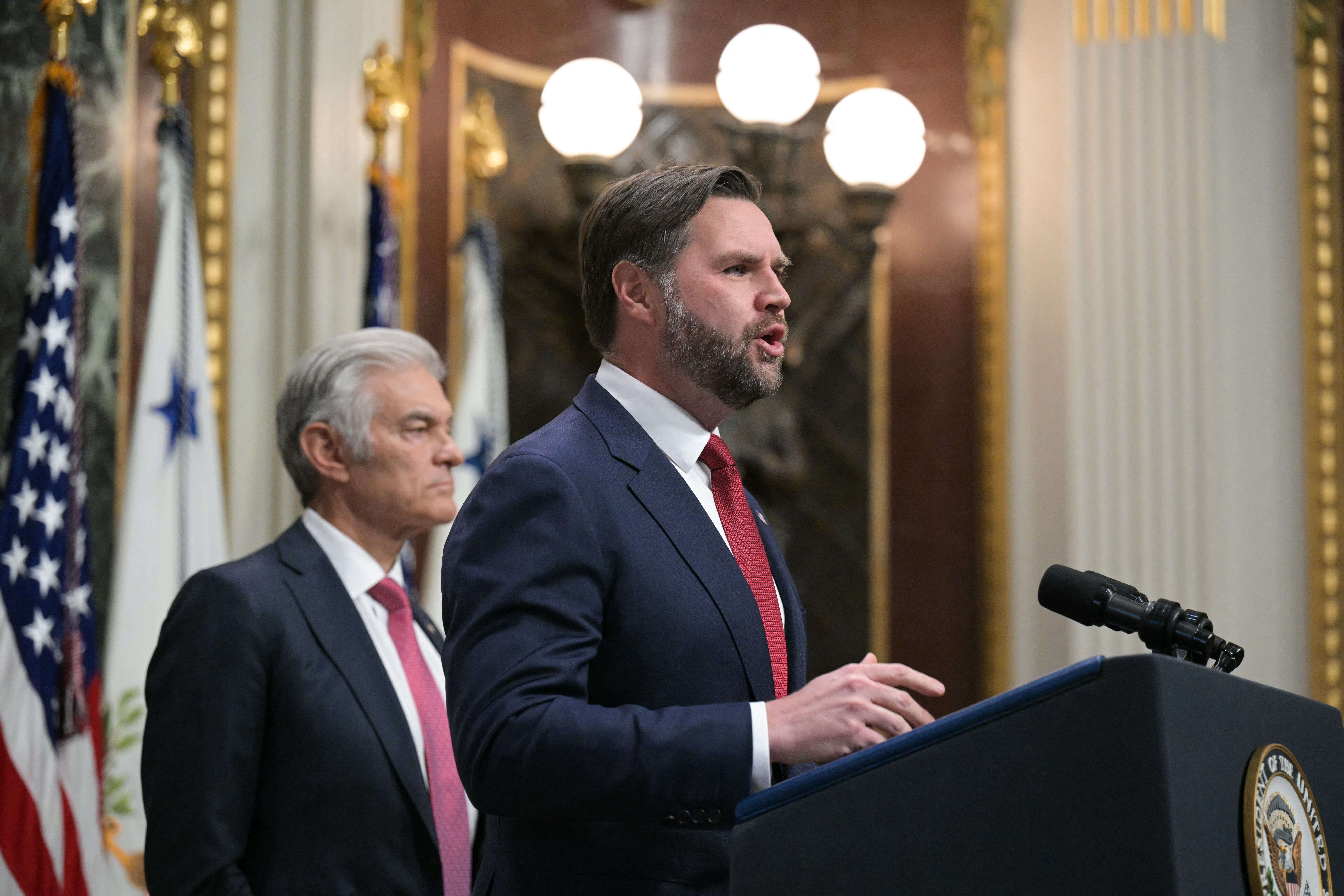
We saw that right out the gate, when Vance and Mehmet Oz, the TV doctor now in charge of the Centers for Medicare and Medicaid Services, announced that the federal government will withhold hundreds of millions of dollars in Medicaid payments from Minnesota, supposedly to punish it for fraud that took place years ago.
The state has become the centerpiece of a nakedly racist campaign by the Trump administration and right-wing media to scapegoat Somali-Americans for what was in fact a significant case of fraud — but one that the state and federal governments have been investigating for years, and in which multiple people have already been prosecuted.
But to hear the Trump administration tell it, because they only heard about it when a since-debunked video from a right-wing (and, it turns out, antisemitic) YouTube influencer went viral, it’s a new problem that has just been discovered. To boot, they are portraying this kind of fraud as something that happens only in states run by Democrats (“California, Massachusetts, Maine and many other states are even worse,” Trump said in his State of the Union), when the truth is that it happens everywhere.
The actual nature of government fraud
Unfortunately, a vulnerability to fraud is built into the way social services are funded in America. While the government spends hundreds of billions of dollars every year on a panoply of services, the vast majority of that money is funneled through private organizations, both commercial and non-profit. Whether it’s hospitals, child care centers, food banks, or many other services, the government may be footing part or all of the bill, but the people delivering the service aren’t government employees.
That kind of distributed system is a magnet for criminals, who see the opportunity to set up a fake service, or a real service that overbills the government. If the system is big enough, it becomes exceedingly difficult to catch fraud before it happens.

Let’s take Medicare. There are over a million physicians who participate in the program, billing for procedures, medications, and devices every day. If a doctor submits a bill for a procedure supposedly done on a real Medicare recipient — let’s say for a colonoscopy — the Department of Health and Human Services isn’t going to send an investigator to make sure the procedure really happened. The government would need a million investigators just to keep track of all the doctors. That means that if you want to commit Medicare fraud by sending bills for procedures that never happened, there’s a fair chance you’ll get away with it.
Once the criminal realizes how easy it is, they’re tempted to scale up. For example, when Republican Sen. Rick Scott of Florida was CEO of a hospital company in the 1990s, his company massively defrauded the federal government through Medicare and Medicaid, leading to a $1.7 billion fine, the largest ever of its kind at the time. When the scandal broke, Scott resigned from the company, skedaddling with a golden parachute worth over $300 million and escaping legal repercussions (he claims he knew nothing about it). That was just one case; the Government Accountability Office puts the yearly amount of Medicare and Medicaid fraud at $100 billion.
Here’s a more recent example. When the covid pandemic hit, Republicans and Democrats agreed that with the economy in a kind of induced coma, there would be an economic catastrophe unless the government stepped in. So we created the Paycheck Protection Program, which gave loans (really grants, since they didn’t have to be paid back) to millions of businesses so they could keep paying their employees. Because it was an emergency, there was a limited amount of paperwork required and the money went out fast.
Everyone involved knew that it would be catnip for scammers who could apply for loans to pay ghost employees or invent entire companies that didn’t exist, and not be discovered in real time — especially since the program was being run out of the understaffed Small Business Administration. The SBA’s Inspector General estimated that $200 billion in fraudulent loans went out through PPP and the Economic Injury Disaster Loan program.

Even when we aren’t in an emergency, as long as this is the basic structure of how services are delivered, a certain amount of fraud is inevitable — in every corner of the country, no matter which party is in charge. While there are ways to make it harder to pull off, and punishment for the offenders ought to be swift and certain, it can’t be eliminated completely.
Preventing and punishing fraud isn’t impossible, but it does require a detailed understanding of how systems operate, and a lot of time-consuming investigative work. But Republicans have never been particularly interested in that. Their answer to fraud is always the same: Rather than do the work required to stop it, they prefer to make it harder for everyone to access benefits and services, which is just what they’re doing in Minnesota.
It’s bad enough that the emphasis on that state is being driven by Trump’s gutter racism (he calls Somali-Americans “garbage” and says “We don’t want them in our country”).
Just as shocking is that this president, who spent a lifetime running scams, cons, grifts, and swindles, says with a straight face that he wants to fight fraud. And that JD Vance is the man to do it.
We can be sure that everything that actually comes out of the administration’s “war on fraud” will be driven by politics and their particular brand of hate-mongering. It will focus only on social service programs they already hate (rest easy, defense contracting fraudsters), only in blue states, and only when it involves some group they want to scapegoat; Somali-Americans may be the first, but they won’t be the last. There’s fraud at work alright, but it’s all coming from the White House.
That’s it for today
We’ll be back with more tomorrow. If you appreciate today’s PN, please do your part to keep us free by signing up for a paid subscription.
Thanks for reading, and for your support.
It is getting very difficult to maintain a positive attitude about the future of a country when so many people are willing to take such gross advantage of our honest attempts to provide help to people in need. It becomes doubly difficult when those responsible for protecting us are also complicit. Yes, I am talking about Mr. Trump and his whole cabal of hypocritical thiefs and liars!
Notice the death hierarchy embedded in how we discuss war.
Coverage typically leads with American casualties, then mentions civilian deaths as context. Whose deaths count as tragedy vs. acceptable cost reveals whose lives the system treats as mattering.
As I wrote in “What Societies Are Actually For”: Systems that treat like cases alike are justice systems. Systems that don’t are enforcement mechanisms. When children’s deaths are mentioned after soldiers’—we’re revealing hierarchy, not discussing morality.
Civilization’s moral basis—preventing the stronger from exploiting the weaker—collapses when: the stronger defines whose deaths deserve grief, institutions stop constraining power, Congress can’t check war-making, international law only applies to losers, and moral appeals exist without enforcement.
The direct line from coup attempt to Venezuela to Iran is operational doctrine. Each violation normalizes the next.
The gap: Appealing to “our sacred duty to stop this” requires functional institutions. Congress, courts, international law didn’t stop Venezuela. Didn’t stop Iran. Won’t stop what’s next.
The fabric frayed because people tasked with maintaining it chose not to when tested.
We’re past appeal. We’re just watching theater—the little games people play while pretending mechanisms still function.
—Johan