

This special Memorial Day edition of Public Notice is made possible by paid subscribers. If you value this newsletter but haven’t already signed up to support our journalism, please consider doing so 👇
Following the Supreme Court’s February ruling that Donald Trump’s tariff policy violated Congress’s tax authority, the administration must now refund the $159 billion it collected from its unconstitutional tariffs.
But unfortunately for American workers and consumers, winding down this fiscal fiasco results in a lose-lose-lose situation:
First, most Americans will never be reimbursed for what were effectively temporary sales taxes they paid for various imports, nor will they receive the public benefit of having those sums spent on government programs or projects.
Second, because it is logistically easier to reimburse the American companies that directly paid the tariffs, some corporations may enjoy windfall refund profits — presuming, that is, those companies did not go bankrupt.
Finally, the surviving businesses and the employees who still work for them — hundreds of thousands of workers were laid off because of the tariffs — will for the foreseeable future continue to suffer because foreign countries, companies, and citizens quite rationally retaliated against Trump’s policies.
Let’s work through the three-fold ruin wrought by Trump’s catastrophic policy.
#1: Lost taxes paid
Despite Trump’s woefully ignorant belief that tariffs transfer monies from foreign treasuries into our own, that’s not how they work.
Yes, tariff receipts temporarily ended up in Washington. But those taxes were paid indirectly, via increased retail prices, by every American who bought imported goods or products made from imported components. Yale Budget Lab estimated the price tag per American at $2,400 per year, which is almost how long tariffs were in effect until the Supreme Court’s February 20 decision. Because it’s nearly impossible for individual citizens to compute how much they paid in tariffs, no less apply for reimbursements, most will get nothing.

Some plucky consumers are seeking class-action relief. Nike customers already filed a suit against the sportswear manufacturer demanding reimbursement for the so-called “embedded costs” passed through to them in higher prices; customers at Costco and Ray Ban sunglasses filed similar suits. In a second category of “line-item cost” lawsuits filed against FedEx and United Parcel Service, litigants seek to recover sums these couriers required recipients to pay upon delivery for import tariffs their purchases mailed from abroad incurred in transit.
No matter who wins these cases, litigation creates economic inefficiencies, particularly the litigants’ legal expenses. And these suits only account for a fraction of the $159 billion in collected tariffs.
Last November, Trump promised qualified citizens they would receive $2,000 tariff “dividend” checks paid for by the “trillions and trillions” of dollars he claimed his tariffs already raised.
That’s Trumpian bluster at its finest: lying by several magnitudes of order about how much the tariffs raised, followed by yet another broken promise of restitution. It sounds like his earlier, broken promise to ink 90 trade deals during his first 90 days in office.
No citizen likes to pay additional or higher taxes, but they at least expect the revenues to support government projects and programs. After the Court issued its 6-3 ruling in Learning Resources v. Trump, Trump chafed that the Court could have ended the tariffs but at least allowed the government to keep the $159 billion raised. He specifically praised Brett Kavanaugh — the only of Trump’s three appointees to vote for the tariffs — who warned that refunding the collected tariffs would be “messy.”
Kavanaugh and Trump have a point. Because figuring out how much and to whom to issue refunds will be messy, in an ideal world it would have been better for the federal government to keep and spend the money on public programs. In effect, consumers qua taxpayers paid taxes but will receive no services or benefits in return.
Bottom line? If companies ultimately reap the lion’s share of the refunds, the tariff policy will be remembered as a federal sales tax paid by consumers for which the revenues ended up not in government coffers but on the balance sheets of American companies.
#2: Lost exports and jobs
Who will likely get most of the tariff-generated revenues the Supreme Court mandated the Trump administration refund? American businesses, of course. But do they deserve it?

Small or large, businesses and corporations initially paid the tariffs. They then faced two unenviable options: (a) raise prices to account for the added costs, thereby risking lost sales, or (b) absorb the tariff costs at the expense of profitability. The logical move was to pass the tariffs along to consumers, but either way businesses reliant on imports suffered.
Which is why many businesses — including notable corporations like Mack Trucks and Proctor & Gamble — explained substantial layoffs as a consequence of the policy. Other companies shuttered entirely; in fact, year-over-year business bankruptcies rose 14 percent in 2025 thanks mostly to Trump’s tariffs. Small businesses represented by the Chamber of Commerce — once the free market backbone of the pre-Trump Republican Party — were particularly hard hit.
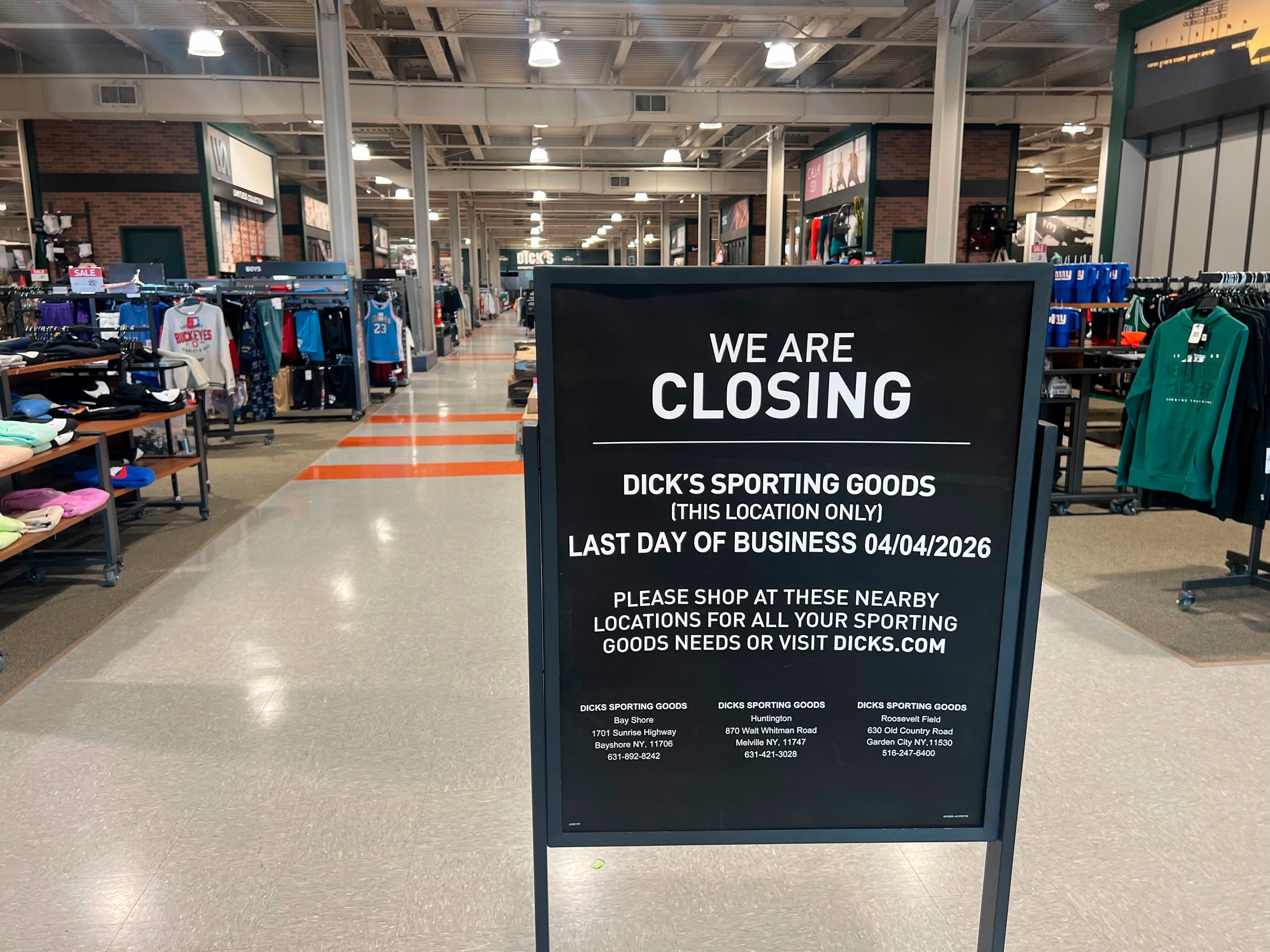
Consequently, roughly 100,000 manufacturing jobs were lost in 2025 after businesses scaled back or closed entirely. And because other companies, like outdoor retailer Orvis, closed multiple store locations, the 2025 retail job loss rate was even higher than in manufacturing. Nobody suffered more from Trump’s tariff policy than the workers who lost hours, shifts, or their jobs entirely. No wonder personal bankruptcies in 2025 surged 11 percent above 2024 levels.
Suffice to say, forcing workers into unemployment and businesses into bankruptcy is precisely the kind of unintended yet predictable consequence Trump and his advisers were warned about but ignored.

On one hand, Americans should be furious at corporations seeking reimbursements that passed their costs along to consumers. On the other, logistically it is easier to figure out which businesses paid how much in tariffs, reimburse them, and hope they pass those refunds along, too.
Unfortunately, companies likely will not.
Basic Fun! CEO Jay Foreman told the New York Times his toy company already received a $400,000 refund, but complained that the amount is a fraction of the $7.4 million he estimates his company paid in tariffs. One might empathize with Foreman if his company absorbed all $7.4 million in tariffs as lost sales or profits.
But if his company passed the costs along to the families who bought Tonka trucks and other toys, Basic Fun! broke even in the short term and is now $400,000 to the good — even if the feds never send him another nickel.
What’s certain are Foreman’s plans for the reimbursement: He told the Times he would be “primarily reinvesting the money into the business.” So caveat emptor: buyer beware of thinking you will be made whole.
#3: Longer-term economic losses
Trump’s illegal tariffs are gone but their effects will continue. Why? Because foreign countries and companies are not suckers who promptly submitted and groveled to the president, as he foolishly expected them to. Quite rationally, those bullied by Trump’s absurd tariff formula and impose-today-pause-tomorrow schizophrenia did not capitulate.
Many exporters, thinking about the longer term, realized the Trump administration was an unreliable economic actor. Accordingly, they took their business elsewhere.
Canada, our top trader partner, responded forcefully. They initiated reciprocal tariffs, of course. But they made global headlines by also forging trade agreements with other countries in order to reduce their vulnerability to Trump’s erratic behavior. Public officials led by Prime Minister Mark Carney — who closed a 30-point election gap to defeat Conservative Party nominee Pierre Poilievre in two months thanks in no small part to Trump’s talk about making Canada the 51st state — encouraged Canadians to rely less on American imports. Pretty soon, US wine and liquor makers were complaining about plummeting Canadian sales.

Rather than grumble about Trump’s tariffs and insults, Canadian citizens gave the United States the boot. They cancelled US vacation plans and bought products manufactured elsewhere. American companies have suffered and may continue to do so for the remainder of Trump’s term, if not longer.
In short, Trump’s tariffs conditioned foreign countries, companies, and consumers who once profitably traded with us and happily visited our country to change their habits. Lost US profits, jobs, and economic opportunities are difficult to calculate precisely. But they are no doubt considerable, ongoing, and in some case irreversible — economic shocks that will be felt long after the Treasury cuts its final tariff reimbursement check.
No taxation without exploitation
Trump never understood and still does not understand how tariffs work. He imposed them willy-nilly on countries that upset him, thereby creating market uncertainty and supply chain problems.
In the end, American consumers paid $159 billion in temporary national sales taxes for which most will never be reimbursed a penny. And rather than those taxes being used by the federal government to, say, repave roads or build bridges, most of the money will instead provide corporate windfalls. Worse, Trump’s erratic and punitive tariff strategy caused foreigners to seek new markets for their exports and retaliate against American producers.
This failed economic experiment turned out to be a lose-lose-lose policy delivered by the same business “genius” who promised Americans who voted for him they would get tired of so much winning.
That’s it for today
We’ll be back with more tomorrow. If you appreciate today’s PN, please do your part to keep us free by signing up for a paid subscription.
Thanks for reading, and if you’re in the United States, we hope you have a meaningful Memorial Day.
"Donald Trump was the dumbest goddamn student I ever had.” -Dr. William T. Kelley, marketing professor at the University of Pennsylvania's Wharton School of Business
Trump's crazy idea that other nations pay tariffs would mean that refunds would go to those countries. The fact that the refunds go to US corporations proves he's an idiot.
I'm sure the billionaire media has already pointed that out. I must have missed it.