

PN is supported by paid subscribers. Become one ⬇️
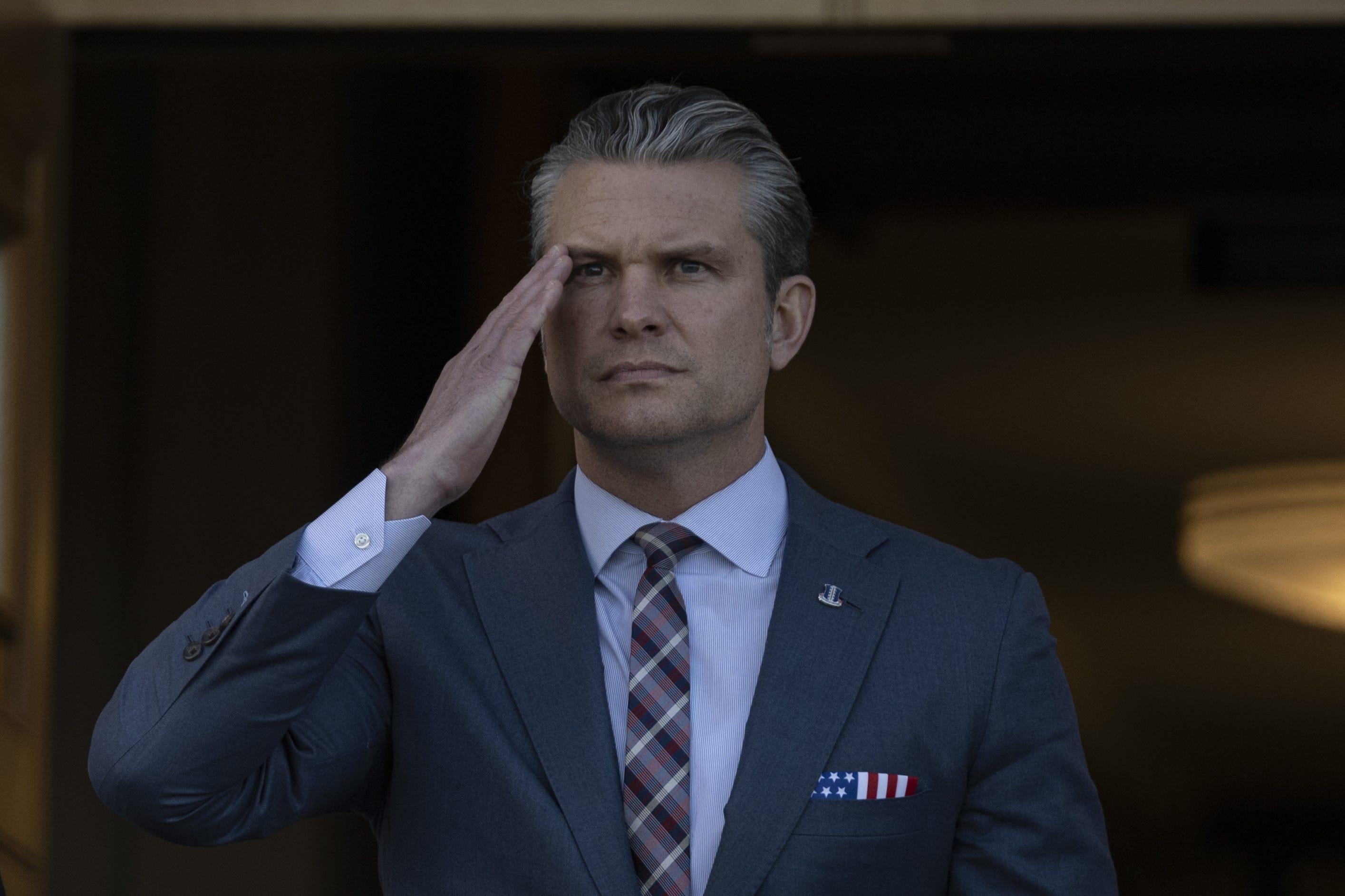
After spending several months bragging about killing people by bombing random boats in the Caribbean, Defense Secretary Pete Hegseth is suddenly far less interested in taking credit for the “double tap” strike that occurred on September 2.
Why is Hegseth backing off? Turns out that even Republicans are not so comfy with murdering survivors of a boat strike.
Yesterday, CNN reported that after the initial September 2 strike killed nine people, a second one 41 minutes later killed two survivors who “did not appear to have radio or other communications devices,” which undercuts any notion they were legitimate targets. The Washington Post previously reported that Hegseth gave a spoken directive to “kill everybody” on the vessel.
It’s tempting to say that Hegseth is a war criminal committing an ongoing series of war crimes, with the killing of survivors being especially horrific. But as George Will — not exactly a liberal anti-war type — put it, he “seems to be a war criminal. Without a war. An interesting achievement.”
It’s a testament to how egregiously indefensible Hegseth’s actions are that we now find common cause with George Will. (A cautionary note to the reader: this only gets worse below, where we are forced to nod along with John Yoo.)
There is no legal controversy
When there’s no war, you aren’t committing war crimes when you kill people indiscriminately. You’re just a straight-up murderer. And Hegseth and everyone else participating in these boat strikes are responsible for the deaths of 87 people on 23 boats (and counting).
Sure, President Donald Trump has tried to invent a war for Hegseth to fight, saying that the United States is in a “non-international armed conflict with these designated terrorist organizations” and therefore “we must use force in self-defense and defense of others against the ongoing attacks by these designated terrorist organizations.”

Trump even got the Office of Legal Counsel to whip up an opinion insisting that his Article II authority allows him to say, out of thin air, that we’re in an armed conflict with gangs who traffic drugs. The opinion justifies this by claiming cartels are selling drugs so they can make money to commit violence and extortion.
Let’s pretend, for a moment, that cartels are indeed packing these boats with thousands of pounds of drugs and setting sail for the United States — a thing which is very much in doubt. There’s still no evidence that Venezuelans traffic fentanyl to the US in any meaningful amount. The DOJ has never indicted anyone for trafficking fentanyl from Venezuela.
The administration has, of late, shifted to saying that the boats are carrying cocaine to our shores, but that’s equally unlikely. Roughly five percent of Colombian cocaine goes through Venezuela, but most of that goes to the Caribbean or Europe. It’s just as likely that all we are doing is bombing fishing boats and killing fishermen.
But even if it were the case that these boats were packed with drugs heading our way, the linkage of “they’re trafficking drugs to the US and therefore it’s war” doesn’t hold up at all. While drug traffickers do use violence for their ends, it’s to protect their business, not to convert profits into funding some sort of terrorism.
Now, plenty of stupid and incorrect legal things have come out of the DOJ in the last year, but that’s often because Trump stuffed loyalists and cronies into roles they are in no way qualified for — looking at you, Lindsey Halligan. But the attorney heading the OLC, T. Elliot Gaiser, actually has some legal experience. Well, sort of. Much of his career has been spent clerking for the very worst people on the federal bench: Edith Jones in the Fifth Circuit Court of Appeals, Neomi Rao in the Sixth Circuit, and Justice Samuel Alito, of course. In between those, he had some brief stints at law firms, including Jones Day, the most reliably Trumpy law firm in existence.
Gaiser did spend a couple of years as Ohio’s Solicitor General, but he didn’t get his current gig because of that. He got it because he was counsel to Trump during his efforts to overturn the 2020 election, including floating the theory that Vice President Mike Pence could refuse to certify the election results. So it really isn’t surprising that he’s willing to rubber-stamp whatever Trump cooks up.
Actual experts like Marty Lederman, who worked at the OLC from 1994 to 2002 and was deputy assistant attorney general of the OLC in 2009-2010 and 2021-2023, have explained that this rationale is nonsense. Lederman points out that “the first and most fundamental problem is simply that the United States is not engaged in an armed conflict with any drug cartel.”
It turns out there are actually rules about declaring a “noninternational armed conflict” that go beyond the president just inventing a rationale out of thin air. The entity can’t be some amorphous thing like “all drug dealers from Venezuela.” Rather, it has to be an organized and armed group with a “command structure that would render members targetable on the basis of their status because they’re subject to commanders’ direction and control.” Oh, and that entity also has to have engaged in armed, protracted violence against the United States.

This applies in situations like the fight against Al Qaeda after the September 11 attacks. Al Qaeda wasn’t some loose collection of people. Instead, members took direction from leaders and carried out orders. In other words, there were identifiable commanders and fighters, and there was no question that they had engaged in armed violence against our country.
The Trump administration’s notice to Congress, Lederman notes, doesn’t even attempt to explain how the cartels are organized, armed, and under a command structure. There’s also the wee problem that there’s no way to say that any cartel is attacking the United States with armed or protracted violence.
Sure, the notice — which is only half a page long, mind you — claims that the cartels “conduct ongoing attacks throughout the Western Hemisphere” and therefore that is “an armed attack against the United States.” However, the only “attack” here is that cartels bring illegal drugs into the country, and that stretches the concept well past the breaking point.
As John Yoo — yeah, the torture enthusiast — wrote in the Washington Post:
The US cannot wage war against any source of harm to Americans. Americans have died in car wrecks at an annual rate of about 40,000 in recent years; the nation does not wage war on auto companies. American law instead relies upon the criminal justice or civil tort systems to respond to broad, persistent social harms. In war, nations use extraordinary powers against other nations to prevent future attacks on their citizens and territory.
You do not, under any circumstances, have to hand it to John Yoo, but he’s spot on here. Drug trafficking harms Americans, sure, but that’s a crime, not a declaration of war.
This brings us back to Hegseth, who is the worst sort of bully and coward.
Unpersuasive spin
From a remove, Hegseth seems to act like a big tough guy, all swagger and trolling on X. He’s been playing at whatever his twisted brain thinks is “warfighting,” which seems to just be “killing whoever I want, as long as Trump wants it too.”
But Hegseth doesn’t appear to have counted on the fact that there would be some Republicans at the margins who may have bought the notion that we are somehow at war with drug traffickers, but actually aren’t down with bombing shipwrecked survivors. So, when news started trickling out that Republicans wanted to investigate Hegseth’s order for a second boat strike on September 2 to kill two people clinging to wreckage, it became time for extreme damage control.
And that’s really where the wheels started to come off as far as the justification for all of this goes. Because even if we’re engaged in a war, there’s still such a thing as a war crime. Even if you grant that everyone on these boats are indeed narcoterrorists hellbent on flooding America with drugs and killing American citizens, killing shipwrecked survivors is pretty much a textbook war crime. There’s literally a whole section on it in the Department of Defense Law of War Manual.
Those who are “wounded, sick, or shipwrecked, shall be respected and protected in all circumstances and … making them the object of attack is strictly prohibited.” Shipwrecked is defined as “those in distress at sea or stranded on the coast who are also helpless.” They must also “be in need of assistance and care, and they must refrain from any hostile act.”
Not shipwrecked, according to the DOD? “Combatant personnel engaged in amphibious, underwater, or airborne attacks who are proceeding ashore.”
With this, it doesn’t really matter if Hegseth had given a verbal order to kill everybody or if it came from Admiral Frank M. Bradley, who was overseeing the strike and who Hegseth is working hard to throw under the bus. If it’s a war crime, it’s a war crime no matter who ordered it.
The administration’s latest justification seems to be that Bradley determined the survivors were fair game because they could somehow call other drug traffickers to pick them up, along with their drugs. But that’s not an amphibious, underwater, or airborne attack. And they couldn’t have been proceeding ashore, as they were literally in the middle of the sea. Under Bradley’s logic, we could always murder any survivors under any circumstance by speculating that hey, they might call someone.
We’re watching the flimsy justifications fall apart in real time. The administration can try to shift the blame. They can try to say that people clinging for dear life to the wreckage of a boat in the middle of the ocean are somehow an active threat. But in the end, it’s just murder.
That’s it for today
We’ll be back with a new episode of Nir & Rupar this afternoon and a special Saturday PN tomorrow. If you appreciate today’s edition, please support our work by signing up for a paid subscription. Paid subscribers make this newsletter possible and keep it free.
Thanks for reading.
"Q: So you didn't see any survivors after that first strike? HEGSETH: I did not personally see survivors. The thing was on fire. This is called the fog of war. This is what you in the press don't understand. You sit in your air conditioned offices and plant fake stories in the Washington Post." Kinda reminds me of that scene in A Few Good Men where Jack Nicholson's character yells "You couldn't handle the truth!" as justification for the heinous crime he committed. Hegseth is so obviously in over his head that it would be laughable if it wasn't so serious.
The president's power to engage in war-like actions without a declaration of war by Congress should be seen as analogous to state powers (under Article I, Section 9) to "engage in War" when "actually invaded, or in such imminent Danger as will not admit of delay." The crucial limitation is the requirement of "such imminent Danger as will not admit of delay." Absent such circumstances, only Congress has the power to involve us in a war.
We the People delegated almost exclusively to Congress the powers to authorize actions that might involve us in a war. See Article I ("To declare War, grant Letters of Marque and Reprisal, and make Rules concerning Captures on Land and Water"). For elaboration on the meaning, see, e.g., https://constitution.congress.gov/browse/essay/artI-S8-C11-1-1/ALDE_00013587/%5B'marque'%5D. See also https://constitution.congress.gov/browse/essay/artI-S8-C11-2-5-2/ALDE_00013917/%5B'marque'%5D.
One of the most important attributes of the power to involve us in war is that all members of Congress are directly elected by the people who will have to fight and die in any such conflict. That's a big part of the reason for the 24th and 26th Amendments. The entire House of Representatives must stand for election every 2 years along with 1/3 of the Senate. So the People can deal fairly promptly with members of Congress who are responsible for wars of which the People don't approve.