

PN is supported by paid subscribers. Become one ⬇️
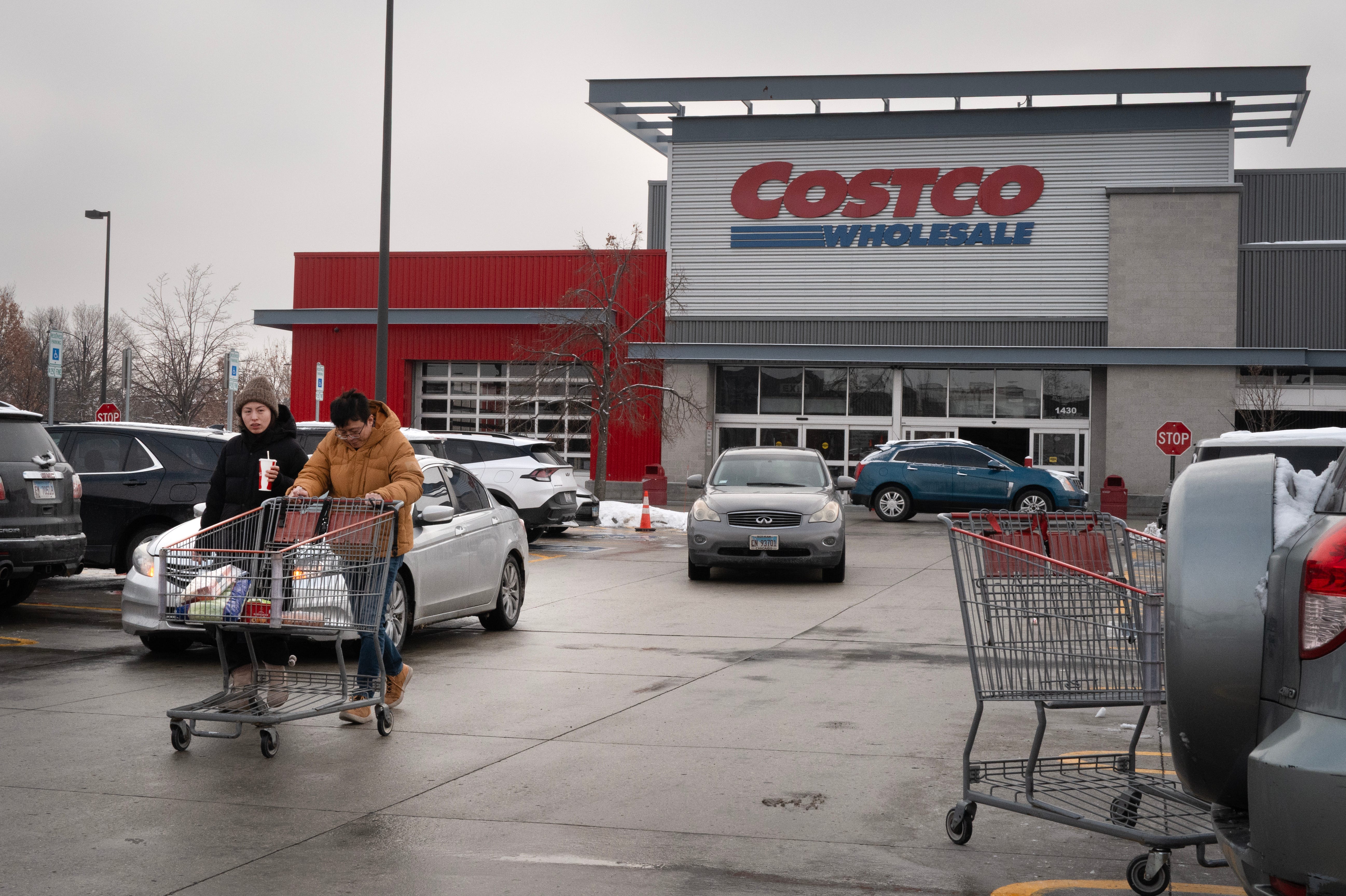
On Black Friday, customers piled into Costco stores hunting for deals. The company’s executives celebrated in their own quiet way by suing the Trump administration.
They weren’t in federal court to take advantage of holiday discounts on filing fees, and it wasn’t a demonstration of woke DEI. Instead they want a refund of the tens of billions money the company has paid in illegal import duties under the president’s ever-shifting tariff scheme.
Guess we really are saying “Merry Christmas!” again.
A fake emergency
The president’s claims about tariffs are a rancid brew of populism, xenophobia, and bad math.
He touts them as a means of extracting cash from other countries, whom he insists pay the import levies directly. Or maybe tariffs are a tool to encourage domestic production by making imports so expensive that Americans are forced to buy local. Or possibly tariffs are a cudgel to force other countries to lower their own trade barriers and negotiate more favorable trade deals.
“Taxpayers have been ripped off for more than 50 years,” Trump blustered in April. “But it is not going to happen anymore.”

Eight months after he brandished that poster with "reciprocal” tariffs on every country from Lesotho to the Heard and McDonald islands, American consumers are no better off.
Inflation is up and retail prices have risen almost five percent, costing the average American household roughly $1,100. US manufacturing jobs declined, as the promised wave of onshoring never arrived. Trump’s minions have been reduced to promising that Dear Leader’s boom economy is just around the corner, as the president invents “trillions” of dollars in tariff income filling US coffers.
Under the Constitution, Congress has the power to levy tariffs. Trump’s putative legal justification for seizing the authority is the International Emergency Economic Powers Act of 1977 (IEEPA), a law which has mostly been used to halt trade with terrorists or confiscate their money. Trump claims to be imposing tariffs to fight the “emergencies” of fentanyl importation and trade deficits, although he routinely lets the mask slip. At one point he threatened crippling tariffs on Brazil because it dared to prosecute former president Jair Bolsonaro for fomenting a coup.
Trump warns of “economic disaster” if courts block his haphazard tariff regime. But no president in history has ever used IEEPA or its predecessor statutes this way, and every court to examine the issue has ruled that the so-called “emergency” tariffs are illegal.
The US Court of International Trade (USCIT), the specialized federal court dedicated to adjudicating trade and tariff dispute, the Federal Circuit, and multiple US district courts ruled that Congress did not bury a secret delegation of its constitutional tariff power in IEEPA when it allowed the president to “regulate” imports. And courts pointed to various conservative legal doctrines governing the delegation of power from Congress to the president as evidence that the legislators couldn’t have transferred the tariff power to the president even if they wanted to, and certainly not by accident or implication.
And yet Trump has been allowed to collect these “emergency” tariffs for months while we wait for the Supreme Court to decide if it intends to let the president invent a brand new power out of whole cloth. And even though Chief Justice Roberts and Justices Gorsuch and Barrett gave Solicitor General John Sauer a chilly reception when he defended Trump’s tariff scheme back in November, we’re still in a state of limbo.

At oral argument in Trump v. VOS Selections, Justice Barrett acknowledged that unwinding these tariffs would be a nightmare: “How would this work? It seems to me like it could be a mess.”
“There’s a whole specialized body of trade law. And 19 USC § 1514 outlines all these administrative procedures,” plaintiffs’ counsel Neal Katyal conceded. “It’s a very complicated thing.”
But, as the Costco lawsuit signals, that complication is already upon us.
First come, first served
Multiple companies have already sued the Trump administration to get back the money they paid in tariffs.
The majority of these lawsuits are essentially “me too” claims, reiterating the plaintiffs’ arguments in VOS Selections — probably a safe strategy in light of the bruising Sauer took last month. Bloomberg reporter Zoe Tillman interviewed multiple trade lawyers, who made it clear that they want to get out before the Supreme Court’s tariff ruling.

Attorney David Craven was blunt about wanting to ensure that his clients “move to the front of the line” when it’s time to issue refunds.
“The Trump administration has made it very clear that they don’t want to return this money, so we’re just making sure we have every possible T crossed and I dotted,” he told Bloomberg.
The Libertarian advocacy group New Civil Liberties Alliance filed a class action on behalf of “all companies or individuals who have paid or become obligated to pay IEEPA tariffs.” The lead plaintiff is a board game company out of Connecticut called Smirk & Dagger Games — and that’s just good, clean fun!
But unwinding these tariffs is not fun, which is why one of the biggest importers in the country has entered the fray, at the risk of finding itself crosswise with the Trump administration.
Litigating in bulk
Costco’s complaint does more than simply rehash the VOS Selections arguments. The company warns that, even if the Supreme Court eventually overturns the tariffs, companies may not be able to fully recoup money already paid.
As Katyal said, there is a “whole specialized body of trade law,” and importers — who have always been the ones paying the tariffs — have to jump through a lot of administrative hoops to preserve their claims.

Typically when a company imports an item, it pays an estimated duty based on its customs declaration. Customs and Border Patrol (CBP) then finalizes or “liquidates” those claims within 314 days, unless it grants a discretionary extension. Costco says that its imports will begin liquidating on December 15, and that CBP denied it an extension on November 18.
Not every liquidation can be challenged, but for those that can, the importer must file a protest with CBP and/or the USCIT within 180 days. There is caselaw that says that, even if a tariff is later ruled illegal, importers are not automatically entitled to a refund if they didn’t protest the liquidation. So Costco must sue now to ensure that, if the IEEPA tariffs are struck down, it gets its shareholders’ money back.
So if importers want their money back, their choice is to file such a suit or cross their fingers and hope the Trump administration voluntarily disgorges the ill-gotten cash.
Thanks, Chief Justice Roberts!
As with so much of what has gone wrong in the past nine months (or years), this chaos can be laid squarely at the feet of the Supreme Court.
The conservative justices have been absurdly deferential to Donald Trump’s presidential actions in ways they never were to his predecessors. Where Joe Biden’s policies were immediately enjoined by district court judges and never went into effect, the Supreme Court’s six conservatives treat any impediment to Trump’s executive actions as an irreparable harm requiring appellate intervention.

They’ve allowed him to steal Congress’s power over the budget and refuse to spend federally allocated funds. They’ve allowed him to violate the civil rights of citizens and noncitizens alike, overruling multiple lower courts. And, as here, they’ve allowed him to continue collecting hundreds of billions of dollars in illegal tariffs despite multiple lower courts ruling that it is patently illegal.
If, as seems likely in the tariffs case, the justices eventually put a stop to it, they’ll congratulate themselves for their supposed independence. But reversing this policy will be an expensive nightmare for companies which paid the tariffs and now have to hire lawyers just to get their money back. And none of that will get back the $1,100 every family paid in higher prices for consumer goods.
This is what happens when you let the president break the law for a little while. The Court has let the president do more or less whatever he likes, on the theory that impinging on the president’s authority for even a minute is an irreparable harm. They are unbothered by the resultant upheaval and dislocation. None of that will be undone even if the Supreme Court eventually decides that, after all, they’d like to live in a country of laws.
Messy, indeed.
That’s it for today
We’ll be back with more tomorrow. If you appreciate today’s PN, please do your part to keep us free by signing up for a paid subscription.
Thanks for reading, and for your support.
Indeed, SCOTUS has facilitated Trump in every way—granting him near total immunity, using the shadow docket to favor him while ignoring both substance and lower court findings, accepting his “emergencies” when none actually existed. Why? Three were bought, the other (and older) three are sclerotic and driven by politics.
Just thinking about Mr Trump getting all excited about sharing his ill gotten tariff gains with us in the form of his $2,000 “rebates”. There is something typical and perverse in his actions. I am frustrated that his logic is construed as political genius instead of what it is … theft, fraud and lies. How can we help others understand and agree to call him to account??