

This edition of PN is made possible by paid subscribers. Become one ⬇️
Yesterday the Trump administration made it known that it’s tapping out on the “weaponization” slush fund … maybe.
First Axios and then every other news outlet simultaneously reported that the $1.776 billion payout to Trump’s pals is “dead for now.”
As for the administration, though, they’re putting nothing in writing.
And not even Trump’s fellow Republicans will take his word that this theft of taxpayer dollars won’t rise from the dead.
Trump v. Trump
In theory, the slush fund was created to settle a lawsuit Trump filed in January against the IRS.
Back in 2020, a contractor named Charles Littlejohn leaked more than 400,000 tax returns of the wealthiest Americans to ProPublica and the New York Times. As a victim of the leak, Trump was entitled to recover his actual damages under the Privacy Act, codified at 5 U.S.C. § 552a, and the Internal Revenue Code, 26 U.S.C. § 7431. But the statute of limitations is two years from the date of discovery, and Trump absolutely knew about the leak years before that.
In fact, Trump sent his lawyer Alina Habba to represent him at Littlejohn’s plea hearing in October 2023. Nevertheless, Trump demanded $10 billion — a number totally unmoored to any claim of actual harm suffered — insisting that he didn’t find out about the leak until 2024.

Everything about this case suggests that it was a collusive effort between Trump and the government he controls. No lawyer for the Justice Department ever entered an appearance, and the requests to delay the government’s answer to the complaint were docketed “jointly,” but signed by Trump’s lawyers alone.
Smelling a rat, Judge Kathleen Williams ordered both sides to brief the threshold question of whether she had jurisdiction to hear the case at all. Article III courts can only hear live cases and controversies, and a president suing the an agency he controls doesn’t look much like a real dispute. Trump himself confirmed as much on Air Force One, telling reporters “I’m supposed to work out a settlement with myself.”
The briefs were due May 20. But on May 18, Trump’s private lawyers filed a notice of voluntary dismissal.
Under the Federal Rules of Civil Procedure, if the Trump administration had filed an answer to the complaint, Judge Williams would have had to approve the settlement. But because the parties made sure that the no DOJ lawyer ever entered an appearance, Trump could just walk away without subjecting the settlement to judicial scrutiny. Judge Williams had no choice but to dismiss the case.
The same day, DOJ announced the Anti-Weaponization Fund, transferring $1.776 billion from the Treasury Judgment Fund to a private entity controlled entirely by Acting Attorney General Todd Blanche. Under the aegis of five commissioners named by Blanche and removable by Trump, the fund would secretly dole out cash with zero judicial or congressional oversight.
Here again, Trump’s lawyers inside and outside of government colluded to situate this payout in ways that are legally self-contradictory. They captioned it as a settlement of the lawsuit, even though it also purported to settle unrelated claims arising from an administrative complaint that Trump filed alleging abuse of process in the the stolen documents case.
Normally legal settlements are taxable income to the prevailing party, but Trump certainly doesn’t intend to pay taxes on $1.8 billion in income. And the Treasury Judgment Fund can only pay monetary judgments; it cannot be used to fund administrative overhead to run what is effectively a federal agency dispensing cash to randos.
The next day, Blanche signed a separate addendum immunizing Trump and his family for any tax crimes they might previously have committed. Trump has been arguing for more than a decade about a dodgy tax filing back in 2010, so this amnesty is potentially worth $100 million for him, according to the New York Times.
Sh*t sandwich fails to please diners
The backlash was intense, and not just from Democrats.
Pennsylvania Republican Rep. Brian Fitzpatrick joined Democratic Rep. Tom Suozzi to propose legislation blocking the slush fund. Over in the Senate, Sen. Thom Tillis called the project “stupid on stilts” and a “payout for punks,” according to CNN.
“Utterly stupid, morally wrong – take your pick,” Sen. Mitch McConnell scoffed.
Even Sen. Ron Johnson, one of Trump’s staunchest allies, called it “a galactic blunder.”
Blanche’s steadfast refusal to promise that no money would go to J6-ers who beat cops did not help matters.
Republicans in Congress were already furious at being asked to fund Trump’s ballroom — the one that was supposedly being donated by all his pals who just happen to have business before the federal government.
The Senate Parliamentarian saved the GOP from having to walk that particular plank by stripping the ballroom out of the reconciliation bill Republicans have been trying to pass to fund ICE and CBP without Democratic votes. But DOJ funding is still part of it, which gave Democrats a hook to propose endless amendments to the reconciliation package barring distributions to Trump’s slush fund. Voting to fund the project would be politically embarrassing for Republicans, and there’s good reason to think enough of them would cross the aisle that the amendment would pass.
PBS reports that Sen. Ted Cruz dished the dirt on his podcast, describing a Republican caucus meeting where senators screamed at Blanche and told him that he need to make this problem go away, or else.
Meanwhile the courts were also throwing sand in the gears.

In Florida, 36 retired federal judges filed a motion asking Judge Williams to reopen the case, arguing the entire transaction amounted to a fraud on the court. They make a case that the judgment fund is only available for actual settlements, and, if there was never a real adversarial case to settle, then the money transfer was illegal. Judge Williams responded by suggesting that she might reopen the case to investigate the fraud and impose sanctions on the lawyers who participated in it. Whacking the lawyers wouldn’t undo the slush fund, but it would likely force someone from DOJ to step forward and answer a lot of uncomfortable questions.
In Virginia, a coalition of plaintiffs who claim they were targeted by the Trump DOJ and will be locked out of the “weaponization” fund sued to block it for illegally discriminating on the basis of viewpoint in violation of the First Amendment. Judge Leonie Brinkema entered a temporary restraining order barring any transfer of funds, acceptance of claims, or disbursement of payments pending a hearing set for June 12.
Several similar lawsuits have already been filed, with more on the way. And so, dogged by Congress and the courts, the Trump administration seems to have realized that a course correction was inevitable.
Rumors of demise exaggerated?
Initially, the only official public statement came from the DOJ’s twitter account, which vowed to abide by Judge Brinkema’s ruling.

That’s obviously not going to cut it with Democrats.
But Trump’s prodigious lying has finally convinced Republicans that nothing is official until it’s actually official.
“It’s pretty clear that the president has to say very explicitly that there’s not going to be a weaponization fund,” said Sen. Chuck Grassley told Politico.
“If it means it’s completely pulled, then that would satisfy me, but I haven’t heard anybody say that that is actually what is happening,” Sen. Lisa Murkowski agreed.
On Monday, even after the news of the “settlement” was reported, Senate Majority Leader John Thune moved to strip DOJ funding from the reconciliation bill entirely, in an effort to separate the issue of the slush fund from the reconciliation bill.
And Trump’s most ardent supporters are sure that they’ll get their money, one way or the other.

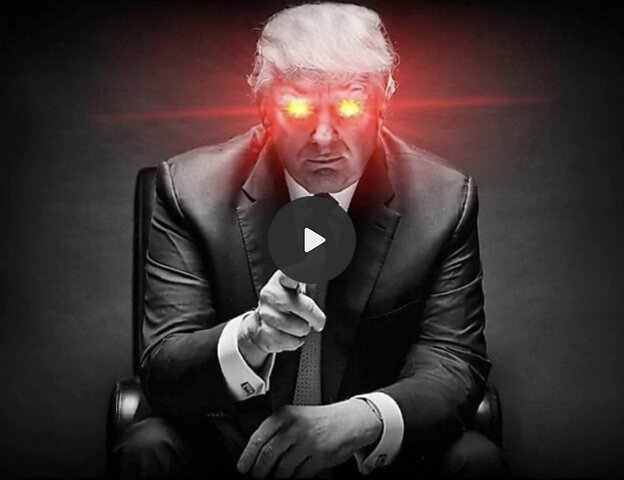
In testimony yesterday before a House appropriations subcommittee on oversight of the Justice Department, Blanche agreed that “we’re not moving forward with the fund. Period.”
But Blanche refused to put that in writing, suggesting that the money may still be moving to Trump, but not the slush fund. (Sorry, Enrique!) And he insisted that the tax amnesty was non-negotiable.
“There’s a settlement that the IRS entered into with President Trump and others in his family and his companies,” Blanche simpered. “As part of that settlement, as is customary in IRS settlements, there is a separate AG order.”
The slippage here is that this wasn’t an IRS enforcement action — it was a civil suit filed by Trump himself under the Privacy Act and the Internal Revenue Code. Blanche may be right that it is “customary” for the IRS to settle all a taxpayer’s outstanding issues in a dispute over back-taxes. But here, if Trump had actually won in court, he’d have been entitled to monetary damages and nothing else. His own tax liability is totally irrelevant.
On the plus side, the continued existence of this settlement means that Judge Williams’s inquiry into potential attorney misconduct will probably continue — and she’s not going to get flimflammed with a deliberate obfuscation about tax settlements and tort suits.
And neither will Congress!
“We will do whatever we can to force a vote during the budget reconciliation process on this monarchical outrage and further plunder of the people,” House Judiciary Ranking Member Jamie Raskin told The New Republic.
This thing isn’t over … not by a long shot.
That’s it for today
We’ll be back with more tomorrow. If you appreciate today’s PN, please do your part to keep us free by signing up for a paid subscription.
Thanks for reading, and for your support.
“It was miraculous. It was almost no trick at all, he saw, to turn vice into virtue and slander into truth, impotence into abstinence, arrogance into humility, plunder into philanthropy, thievery into honor, blasphemy into wisdom, brutality into patriotism, and sadism into justice. Anybody could do it; it required no brains at all. It merely required no character.” -Joseph Heller, Catch-22
The addendum also states that Trump does not have any taxable income from the $1.776B "settlement". I thought Congress was the only entity to write tax laws? Since Florida has no personal income tax, Trump would be exempt from FL tax for the grift.