

PN is supported by paid subscribers. Become one ⬇️
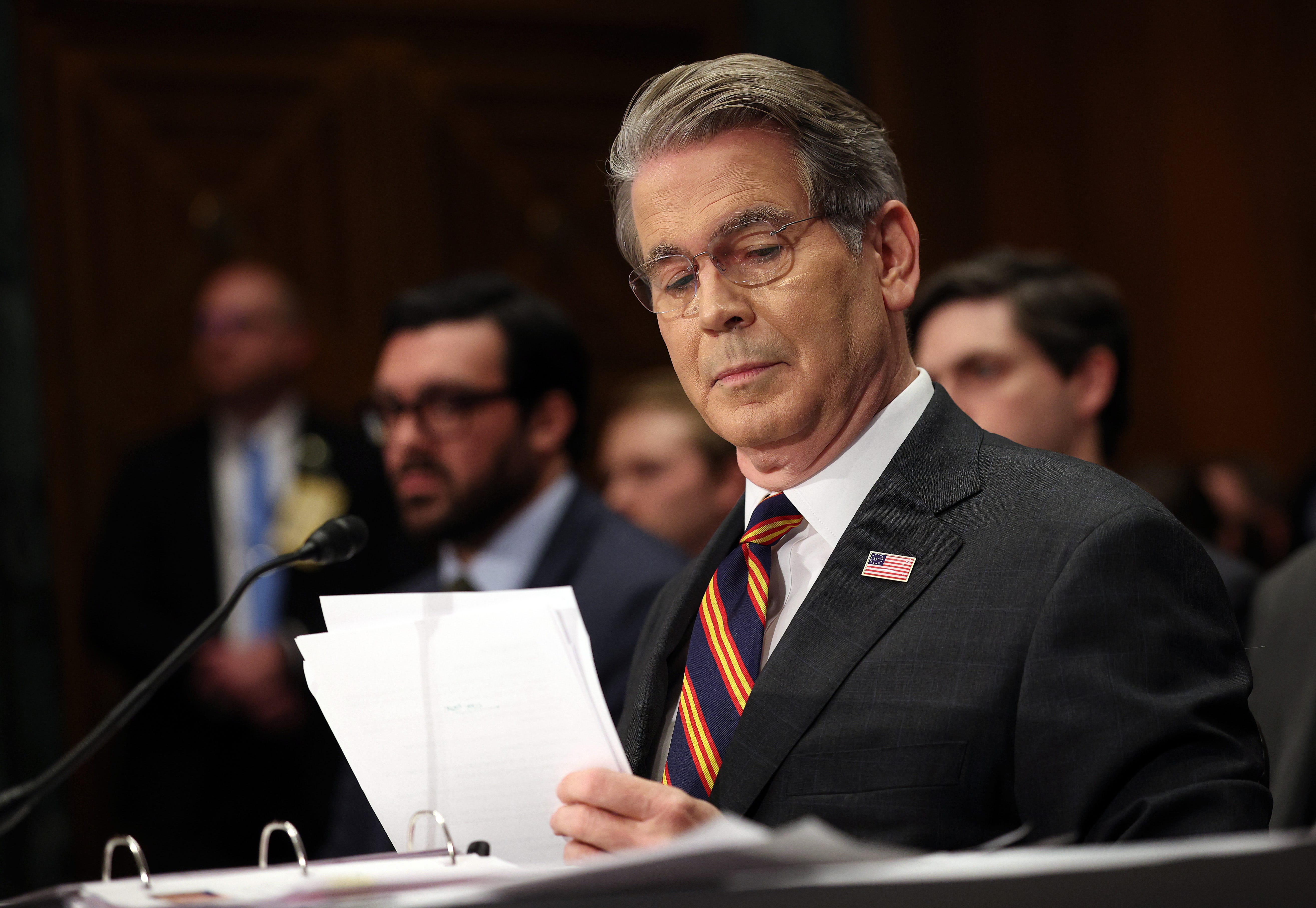
Speaking to Sky News last week, Treasury Secretary Scott Bessent was asked if there was some point at which the Iran war could grow so costly that he would tell President Trump it had become unaffordable.
“Absolutely not,” Bessent replied.
Whatever it costs, the American taxpayer will pony up. That makes this war a lot like all our other ones. And however much it looks today like the war will cost, it will almost certainly cost more. That’s how war works: It’s always more complicated, difficult, and expensive than the people who start it think it’s going to be. But with only one or two exceptions, Republicans are unperturbed by the effect of Trump’s “excursion” on our national balance sheet.

Once again we are reminded of a fundamental truth in Washington: Neither party thinks cost is ever a reason not to do something they want to do. The difference between them is that once Democrats decide what they want to do, they usually try to figure out how to pay for it. Yet remarkably, Republicans retain their reputation as the party of fiscal discipline, a vivid demonstration of the power of rhetoric over facts.
We’ll discuss that more in a bit, but first, let’s take a look at what the Iran War is actually costing.
The Pentagon’s cash register is ringing
We’re less than three weeks into this war, and already the numbers are shockingly large, even if they’re difficult to pin down with precision.
In a briefing early on, the Pentagon told lawmakers that the first six days of the war cost $11.3 billion. Democratic Sen. Chris Coons, not one given to hyperbole, said after the briefing, “I expect that the current total operating number is significantly above that.” The Center for Strategic and International Studies estimated that after 12 days, the cost had risen to $16.5 billion.
While some days cost more than others, the total price tag will keep rising. Expenses include everything from the ordnance we’re going through, which will will have to be restocked (for instance, each Tomahawk missile costs $2.5 million or more, and we’ve launched hundreds of them at Iran), to the extra fuel the Pentagon is using, to rebuilding the systems and bases Iran is hitting, to the medical costs for injured service members, and more.
It’s difficult to predict how costs will rise and fall from this point forward, but for the sake of argument, let’s take a round number of $1 billion per day. Some in the administration say that the war could last a few more weeks, while Trump himself says the war will end “when I feel it in my bones.”
The vibrations emitted by the president’s brittle skeleton notwithstanding, it’s fair to say that the war will last another month or two at a minimum and perhaps much more. It will likely end at the earliest date Trump decides he can declare victory and leave, but as long as Iran keeps the Strait of Hormuz shut down, that will be difficult for him to do.
That could mean another 20 days, 50 days, 100, or 1,000. That would mean the short-term cost of the war could be anywhere from $50 billion to $1 trillion.
That’s much less than we spent on the wars in Iraq and Afghanistan, but those wars lasted for years and involved hundreds of thousands of ground troops. The Brown University Costs of War project estimated that through 2022, we had spent $2.3 trillion on Afghanistan and $2.1 trillion on Iraq, not including long-term medical and disability costs for veterans, which will boost each figure by a trillion dollars.
Throughout those decades, not only did Republicans never ask “How are we going to pay for this?”, their answer to every new development was that we should do more and spend more. If things were going well, we should amp up the war to march to victory, and if things were going poorly, we needed to amp up the war in order to turn things around. Anyone who suggested that we ought to be concerned about the cost was shouted down with the accusation that they didn’t “support the troops.”
Today, Congress is in no hurry to pass a supplemental spending bill to fund this war. Democrats mostly oppose it, and Republicans would rather not start a debate about what we’re paying. In any case, they think the Pentagon has plenty of money to fund it for the time being, which it likely does, even though as the Washington Post reported on Wednesday, the Pentagon wants to ask Congress for an additional $200 billion to fund the war.

As the watchdog group Open the Books recently documented, at the end of fiscal year 2025, the Department of Defense spent $50 billion in just five days on grants and contracts in order to avoid giving up unspent money under “use it or lose it” budget rules. In September their spending included $6.9 million on lobster tails and $15.1 million for ribeye steaks. But rest assured: At some point the Department of Defense will plead poverty to Congress, asking for tens or hundreds of billions more to make up for what it spent in Iran.
For all Republicans claim to care about “waste, fraud, and abuse,” the Pentagon is almost always excused from their supposedly stern budgetary gaze. Last month, Congress approved an $839 billion budget for the DoD for 2026, but even before the Iran war began, Trump insisted that wasn’t nearly enough. In January, he proposed that we should be spending $1.5 trillion on the military every year. To put that in context, military spending for the entire world totaled $2.7 trillion in 2024, meaning that the US already accounted for a third of the globe’s spending. Trump wants to make it more than half.
Republicans make it rain
If you ask “How will we pay for it?”, the answer Trump and Republicans will give is no answer at all. Whether it’s the Pentagon budget in general or the Iran war in particular, rather than proposing some means by which we will foot the bill, they will simply argue that the cause itself is worthwhile. We must be strong! We can’t let Iran have a nuclear weapon! We must secure the free flow of oil!
In other words, what matters is the thing we want to do, and if what we want to do is worth doing, then we don’t have to worry about what it costs. But for some reason this logic never applies to education, healthcare, or any of the things that provide direct benefits to Americans.

And what could we do with $50 billion, the low end of what the Iran war will cost? So many things. We could give Medicaid coverage to 6.75 million Americans. We could pay for free school lunches for every public school student in America. We could fund the National Park Service at pre-DOGE levels for 17 years.
When Democrats want to do those things, and especially when they want to do something big, the cries of “But how will you pay for it?!?” ring out from both their opponents and the news media. So they come up with an answer. For instance, when they passed the Affordable Care Act, Democrats labored for months to produce cost savings and tax increases to offset every penny of new spending the bill entailed.
Republicans feel no such obligation. Their most consequential piece of legislation in recent years was the Big Beautiful Bill, which will increase the deficit by $2.4 trillion over a decade, according to the Congressional Budget Office. In addition to cutting taxes for the wealthy, it showered money on the Pentagon and allocated $170 billion in additional funds for immigration and border enforcement.
How will we pay for it? The same way we pay for everything Republicans want to do: with deficit spending. In modern history there has never been a single time in which a Congress controlled by Republicans chose not to do something it otherwise wanted to do because it would be too expensive or had to be financed by debt.

So how do Republicans retain their reputation as fiscal hawks? They have a three-part strategy. First, whenever we’re debating spending on social services like healthcare, they repeat “We can’t afford it” over and over, justifying brutal cuts on the basis of fiscal probity, when the truth is that they wouldn’t want to fund those programs even if they cost almost nothing.
Second, when discussing military spending or war, they pivot away from any questions about costs by arguing that the war is an absolute necessity regardless of cost, then condemn anyone who raises fiscal questions as unpatriotic. And third, at every opportunity they shamelessly proclaim their commitment to balanced budgets and promise to achieve them, regardless of their actual record. To take just the latest example, in his recent State of the Union speech, Trump promised that with JD Vance now heading up a laughable anti-fraud effort, “We will actually have a balanced budget overnight. It’ll go very quickly.”
The result is that the average voter has heard Republicans talking about fiscal discipline and balanced budgets for decades, so they assume that Republicans must be the responsible ones. In order to conclude accurately that this is the opposite of the truth, those voters would have to pay attention to the news and understand what sometimes becomes fully clear only in retrospect, something that is beyond the ken of most ordinary people.
Trump’s war on Iran is already deeply unpopular, and will likely grow even more so as it drags on. While we can’t know what its ultimate price tag will be, we know this: Whether it’s $50 billion or $100 billion or $1 trillion, neither this administration nor this Congress will care about the cost. But we’ll all pay for it, in more ways than one.
That’s it for today
We’ll be back with more tomorrow. If you appreciate today’s PN, please do your part to keep us free and thriving by signing up for a paid subscription.
Thanks for reading, and for your support.
Bessent’s “absolutely not” when asked if the war could become unaffordable reveals the entire framework: extraction first, cost irrelevant, Americans pay regardless.
$11.3 billion first six days. $16.5 billion by day twelve. Pentagon wants $200 billion more. At $1 billion/day, we’re looking at $50 billion minimum, potentially $1 trillion depending how long Trump’s bones vibrate with victory feelings. That’s Medicaid for 6.75 million Americans or free school lunch for every student.
The sheer operational stupidity at every level is staggering. Trump ignored Joint Chiefs Chairman General Caine’s warning that Iran would close Hormuz—-a “bedrock principle of US national security for decades.” Started an unauthorized war, acts shocked when Iran did exactly what warned, now begging allies he didn’t consult to clean up the mess. Navy calls the strait a “kill box” and refuses escort duty but demands other countries send their ships into the meat grinder he created.
Meanwhile oil hit $120, gas prices spiking nationwide, Patriots getting burned defending Gulf states while Ukraine goes without, Russia feeding Iran targeting intelligence killing Americans, and Trump won’t criticize Putin because $120 oil benefits Russia while crushing American consumers. Every single outcome benefits Putin and oligarchical extraction class while gutting Americans.
These are genuinely the dumbest people ever handed authority.
Not strategy, just a malignant narcissist surrounded by sycophants too incompetent to see they’re Putin’s useful idiots executing oligarchical extraction. Fiscal discipline disappears instantly when question is bombing vs feeding children.
The pattern is clearly visible. When they come begging for “emergency powers” after something crazy provides pretext, refuse.
That’s the only move that matters.
—Johan
Particularly exasperating: Trump demands more money … to bulk up the incompetent—both he and Hegseth are in ‘way over their heads and abilities (if any).