

PN is supported by paid subscribers. Become one ⬇️
For a man who spent a lifetime using showmanship to con people into believing things that aren’t true, Donald Trump has run an absolutely dreadful propaganda campaign in support of his latest foreign military adventure.
Nothing about what just happened in Venezuela is clear — who is now running the country, what will happen from this point forward, or why we did it. We don’t even know what to call it. An invasion, a kidnapping, a coup, a takeover? Who knows? In the long run, it will probably turn out badly for the people of Venezuela and for US foreign policy interests, but it’s already a case study in incompetent public relations.
Let’s be honest: Getting the American people to support a fun little war has never been all that hard, at least at first. When things eventually go sideways they’ll realize it was a mistake, but the beating of the war drums gets their toes a-tapping, and it isn’t long before a majority of them are clapping along. But despite spending months laying the groundwork for the incursion that happened Saturday morning — bombing boats supposedly carrying drugs, moving an aircraft carrier to the region, making an endless series of threats to Nicolás Maduro — Trump never got anything like a majority of the public behind him.
If you want a preview of how chaotic, self-contradictory, and ultimately futile the Venezuela policy will be, you have only to look at how inept the PR campaign has been.

Granted, skill at public relations doesn’t necessarily correlate with policy competence. In 2002 and 2003, the Bush administration conducted what may be the most extraordinary public persuasion effort in American history, to convince Americans that we absolutely had to invade Iraq lest Saddam Hussein obliterate us all with his terrifying arsenal of weapons of mass destruction.
As propaganda, it was a smashing success. Before the war began, overwhelming majorities believed the twin lies the administration was pushing — that Saddam had WMD and was involved in the 9/11 attacks. But the skill of their communication was not reflected in the implementation of the war and its aftermath, which turned out to be probably the most catastrophic blunder in the history of American foreign policy.
Nevertheless, the incoherence of the Trump administration’s communication suggests that what happens next in Venezuela will be an unfolding series of screwups. If these clowns can’t even get the American public to support a war, do we really think they’ll be able to manage an infinitely more difficult task of nation-building?
They can’t get their story straight
Start with the most basic question: Why, precisely, did we attempt a takeover of the Venezuelan state through military force? If the first answer is “Well, it’s not exactly a takeover, we arrested Maduro, but we’re not really running Venezuela,” then that illustrates the problem. What was all this about?
Maduro and his wife have now been indicted for drug trafficking. Was that the reason for this whole thing? Not exactly — after all, President Trump recently pardoned Juan Orlando Hernández, the former president of Honduras, who was convicted of helping to send hundreds of tons of cocaine to the United States. Maduro’s indictment also mentions cocaine, but we’ve been told that the real drug problem is fentanyl, of which almost none comes through Venezuela.
The point is, if you’re going to invade another country, you have to at least put some effort into convincing the public that this will solve a serious problem that faces them. How many people believe that taking over Venezuela is going to change America’s relationship with drugs?
Here’s the truth, and it isn’t exactly a secret: Multiple key administration figures had their own motivations for wanting to overthrow the Venezuelan government, none of which are about drugs.
Secretary of State Marco Rubio wanted to overthrow a leftist government as a prelude to his ultimate goal of doing the same to Cuba. Stephen Miller would like to see Venezuela become a place where the administration can dump huge numbers of deported immigrants, no matter where they originally came from (and the White House is reportedly considering Miller for an “elevated role in overseeing post-Maduro operations in Venezuela”). Secretary of Defense Pete Hegseth froths at the mouth at the prospect of any military action anywhere.
This means they were all pushing the president in the same direction. But how does Trump explain the purpose of all this? Incredibly, he has said multiple times that we’re taking over Venezuela so we can seize their oil.
“We’re going to be taking out a tremendous amount of wealth out of the ground,” he said proudly after Maduro’s arrest. And we’ve learned that the administration is trying to force oil companies to go into Venezuela and rebuild the country’s crumbling oil producing infrastructure, a project that could take years.
It’s not even clear that the companies want to do so. Domestic oil production has never been higher, and the problem the oil companies have isn’t a shortage of supply. In fact, it’s just the opposite: Increasing supply would only push prices lower, which is the last thing they want.
That relates to another problem with Trump’s insistence that we simply must get our hands on Venezuela’s oil. When gas prices are low, as they are now (the national average is $2.81 a gallon), the average voter won’t feel any particular urgency about increasing oil supplies, especially through a foreign adventure. Even in ordinary times, “We need access to the oil,” as Trump told reporters on Sunday, would be a hard sell. When gasoline is averaging $2.81 a gallon? Who needs it?

Even now, it’s impossible to pin the administration down on what exactly will happen in Venezuela. Trump said when announcing the incursion that “we’re going to run the country until such time as we can do a safe, proper and judicious transition” to a new regime. So are we running the country now? Well, no — Maduro’s vice president has been sworn in as interim president, and the government that existed last week is basically intact.
Pressed on Trump’s statements and the question of who’s running Venezuela, Rubio said, “What we are running is the direction that this is going to move moving forward. And that is we have leverage. This leverage we are using and we intend to use.”
So depending on who you listen to, America is either running Venezuela, or we’re threatening Venezuela with more attacks if they don’t do what we want. Perfectly clear.
Does anybody want this?
This action didn’t come out of nowhere — for months, Trump has been saying that an attack on Venezuela was coming “soon.” Yet despite all the boat bombings and fist-shaking coming from the administration — including Trump proclaiming that “the Venezuelan Regime has been designated a FOREIGN TERRORIST ORGANIZATION,” as though operatives from Caracas might be coming to bomb the Super Bowl — the public was decidedly uninterested in armed conflict. Polls in recent weeks have shown support for an invasion at around 20 percent, a reassuringly anemic number.
That is already changing somewhat, not so much because of the traditional “rally round the flag” effect — which in the past has produced strong support for war across the political spectrum — but because a certain number of Republicans will support Trump in whatever he does. Some of them were even foolish enough to believe that he was opposed to military adventurism writ large (he never was), but even so, if Trump does it, they’ll say they support it.
They’ll be spurred to do so by triumphal Fox News coverage and prominent right-wing influencers, many of whom after years of praising Trump for his supposed aversion to foreign wars quickly did a 180 and cheered the Venezuela operation.
Nevertheless, early indications show a public decidedly lukewarm on our latest foreign takeover. A Washington Post poll taken over the weekend showed support for “the United States having sent its military forces into Venezuela to capture Maduro” — which frames the action as just about one man — running a close 42-40 percent against. But when the same people were asked, “Would you support or oppose the US taking control of Venezuela and choosing a new government for the country?” the figure was 45-24 percent in opposition. Similarly, a YouGov survey found 39 percent opposed and 36 percent in support of “the US using military force to overthrow Venezuelan President Nicolás Maduro and bring him and his wife to the US to face trial.”
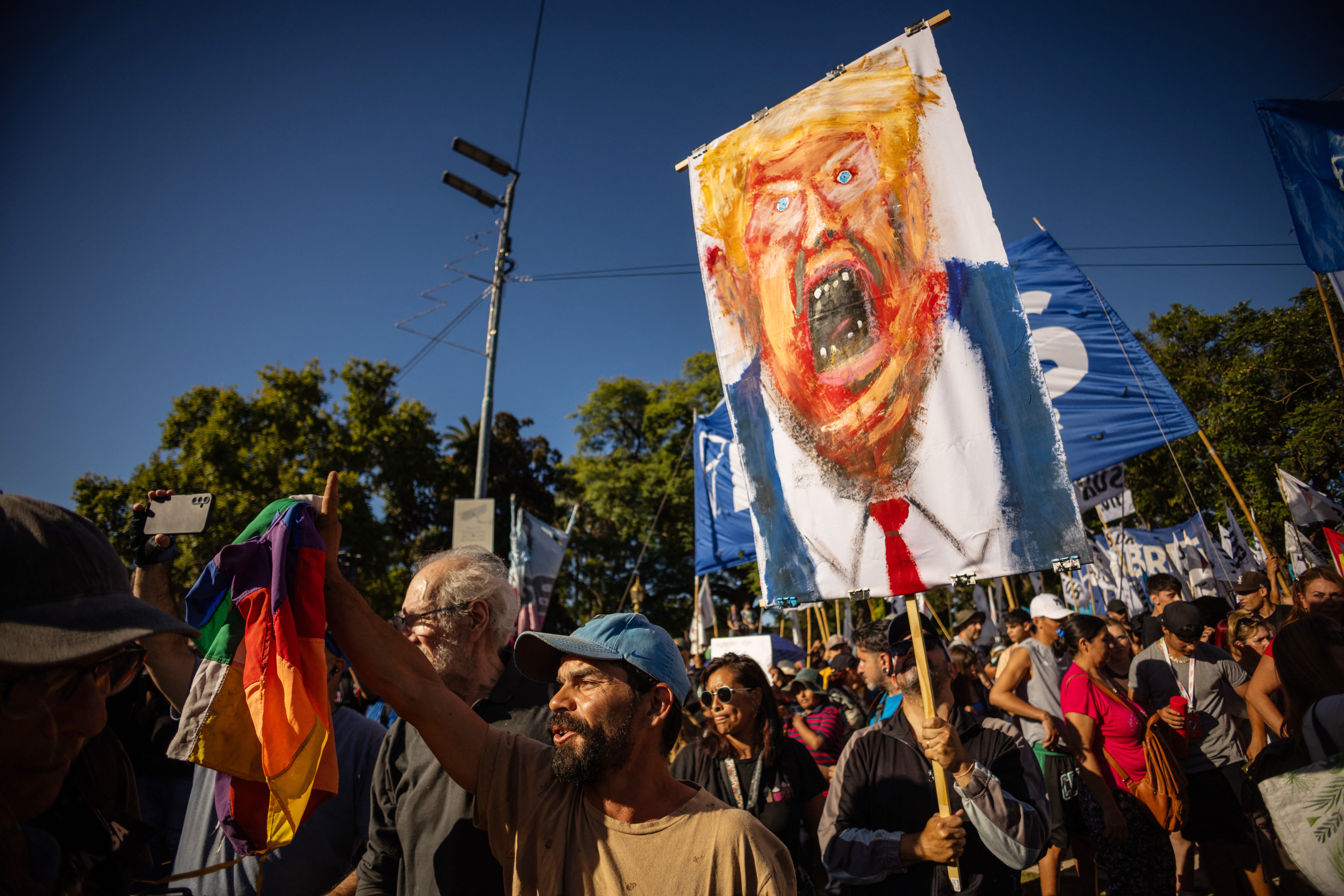
In other words, it appears that the public is reacting to Trump’s Venezuelan adventure mostly through the lens of what they already think about him: His supporters broadly say they approve, but nobody else does. Given his poor approval ratings overall, that’s hardly a win.

And how will the public respond to whatever happens in Venezuela over the next three years? The idea that the country will become a thriving success story and a firm US ally seems far-fetched. Despite Trump’s repeated insistence that we’re now “running” Venezuela, he seems to have little appetite for an extended occupation. And if he did, he’d no doubt turn a mess into an outright catastrophe.
In the end, the follow-up from the incursion and the PR campaign around it share the same core problem: Donald Trump himself. He couldn’t convince the public that Maduro was a threat to them, his explanations of what we’re doing there make his invasion seem even more ill-conceived than it is, and he’s increasingly erratic as his advancing age and poor health take their toll. The best thing for both Venezuela and America may be for him to declare victory and look for something else to screw up. In fact, he has circled back to his dream of seizing Greenland, as though he’s already bored with Venezuela and wants to chase the next shiny object.
One day, a clever president will convince Americans to get excited about another war or the overthrow of another dastardly leader, reinforcing the idea that it is our eternal privilege to determine who runs any foreign country in whose future we decide to meddle. But not this time; the public is unconvinced, and likely to stay that way.
That doesn’t mean Trump won’t do what he pleases, of course. But he won’t have the cheering crowd behind him.
That’s it for today
We’ll be back with more tomorrow. If you appreciate today’s PN, please do your part to keep us free by signing up for a paid subscription.
Thanks for reading, and for your support.
It’s beyond comprehension that Trump could have 36% of the population in support of this debacle in Venezuela. But my feelings of incomprehension when it comes to Trump’s support, no matter the issue, have become a chronic condition. Hearing human weasel Steven Miller (with offense to the animal) plays into all of this is beyond revolting.
Let’s hope Trump sets up Miller as the Venezuelan Czar. Can you imagine him dealing with all those brown people?