

PN is supported by paid subscribers. Become one ⬇️
Last week, gas prices shot up to a Labor Day weekend record of $4.15 a gallon. Diesel prices also broke records, reaching $5.85 — 55 percent higher than in February, when Trump started his illegal war of aggression with Iran.
Higher diesel increases trucking costs, which will drive inflation for groceries, clothes, and any other shipped goods. Americans already ranked inflation and cost of living as their highest concern a month ago, before this latest surge. Now, as midterms loom, voters who rightly blame Trump’s war-mongering and indifference for high prices are only going to get angrier. Republican operatives are reportedly panicking.

Trump as usual pretended he had a solution. Ever since American forces kidnapped Venezuela’s dictator Nicholas Maduro in January, Trump had been trying to arrange for US seizure of the country’s oil. Last week the White House claimed Trump had succeeded and “secured the biggest oil deal in world history.” The US was to have “majority control of more than 65 billion of proven oil reserves.”
Trump of course said that the deal would address costs at the pump, boasting that “ultimately, prices are going to come down.” But even he admitted he couldn’t say for sure whether those benefits would be tangible before the election.
If he was not a liar, Trump would have admitted there is zero chance that Venezuela’s oil will help lower prices by the midterms. In fact, his lust for other countries’ oil is, like all his policies, almost completely divorced from any effort to help Americans.
This gross colonial resource grab is not for America at all. It is for Trump, because gross colonial power grabs give opportunities for self-dealing and, more importantly, make him feel powerful and presidential. His ego is the world’s largest gas guzzler, and what it belches out, in the US and worldwide, is corruption and misery.
Plunder
Trump has long made it clear that he loves the idea of invading other countries and stealing their stuff. All the way back in 2016 during his first run for president he blithered that Obama’s Middle East policy was insufficiently extractive.
“Take the oil. I’ve been saying it for years. Take the oil. They still haven’t taken the oil,” he said.
Maduro was a brutal authoritarian and some analysts cheered Trump when he kidnapped and imprisoned him, insisting the US was acting to establish freedom and democracy. The Wall Street Journal called Maduro’s seizure “an act of hemispheric hygiene against a dictator who spread mayhem far and wide.”
When Trump talked about his goals, though, democracy was not high up on the agenda.
He quickly said Venezuela would be handing 30 to 50 billion barrels of oil to the US supposedly to “benefit the people” of both countries — though he did not explain why anyone in the US had a right to Venezuela’s oil in the first place. When Maduro’s Vice President Delcy Rodriguez, now the country’s dictator, said she wasn’t going to play ball, Trump responded with his usual first resort: not at all veiled threats.
“If she doesn’t do what’s right,” he said, “she is going to pay a very big price, probably bigger than Maduro.”
Trump’s threats were effective. Or maybe Rodriguez and Trump have simply made a mutually beneficial deal. She pays Trump with oil and he allows her to rule as a dictator without any pressure to hold elections.
Trump doesn’t want Venezuelan elections in any case; he hates all elections on principle. And Venezuelans across the political spectrum are not fans of being robbed.
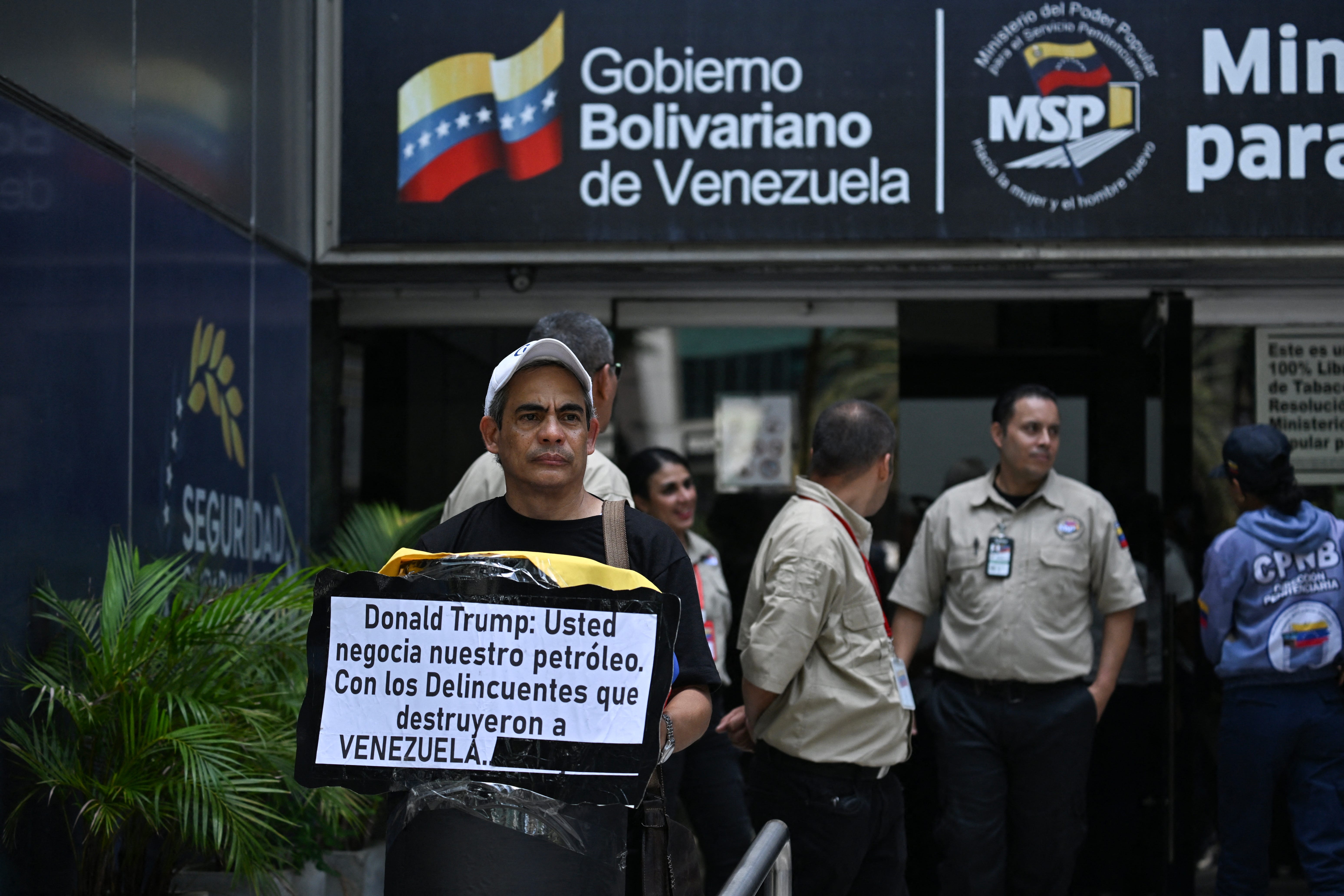
“Left-wing Chavismos despise foreign exploitation, and the opposition resents the Chavismos’ corruption,” as Jonathan Chait succinctly explains. Allying with Trump may have made Rodriguez as unpopular in her own country as Trump is in his.
“You chose to use the power of the United States not to liberate Venezuelans, but to ally yourself with our oppressors,” Venezuelan economist Ricardo Hausman told Rodriguez on social media.
“To the victor belong the spoils”
More details about the Venezuelan oil deal will no doubt be released over the coming weeks and months. What we know so far, though, is that the agreement gives a company led by the US a century-long concession of 20 percent of Venezuela’s proven oil reserves. That’s 17 oilfields and 65 billion barrels of oil.
The US is partnering with North American Blue Energy Partners (NABEP), the largest private oil company in Venezuela after Chevron. The Pentagon’s Office of Strategic Capital will have a 35 percent stake in the company. The State Department can buy 20 percent of the oil at cost and has preferred access to the rest. NABEP’s board is required to be majority American citizens, and the US government can veto the choice of any board member.

There are a host of ugly aspects of the agreement, which Elliott Abrams, Tump’s former special representative on Venezuela and Iran described as a “kind of fever dream of what colonialism looks like.”
Just for starters, the head of NABEQ, Alejandro Betancourt, has been investigated for wrongdoing by the US, Spain, and Switzerland. Earlier this year, federal prosecutors in Florida were building a possible case against him for embezzling money from Venezuela’s state-owned oil company; they believed he was laundering the funds through Miami real-estate. Reuters reports the prosecutors were pushed to stop the probe, and the US also discouraged the Swiss government from investigating Betancourt.
Trump has engaged in billions in graft and corruption already as president — he basically admitted to it on Truth Social yesterday.
So it’s not a surprise that he feels most comfortable dealing with a shady business partner. Nor will it be a surprise if we learn at some point in the future that the Venezuelan deal includes some undisclosed amount of side-payments for Trump, his cronies, Bettencourt, or all three.
Trump may or may not end up personally profiting. The benefits to the US consumer that he’s touted, though, are distant at best. Venezuela’s oil industry needs major investments in everything from pipelines to ports and roads before it can get back to anything like the 3.4 million barrels a day it was producing in the late 1990s. Experts estimate that a $100 billion investment is needed. Even then, it will take four to 10 years before there would be a significant boost in Venezuelan production.
That’s assuming the funds to move forward become available. But American oil is leery of making that kind of investment. They lost a great deal of money after Hugo Chavez nationalized the oil industry in 2007, and most companies other than Chevron have stayed out of the country since.
Trump has been trying to push for investment, and there’s been some interest. But everyone knows the framework Trump and Rodriguez are putting forward is extremely fragile. Whatever the two governments say, the fact is that the deal is hideously unpopular in Venezeula and has little public or bipartisan support in the US. The ranking Democratic member of the Senate Armed Services, Jack Reed, was blunt in his assessment: “President Trump’s effort to turn the US military into an investor in Venezuelan oil is a blatant abuse of power and taxpayer dollars.”
Midterm polls suggest Democrats are going to have real power in Washington in three months, and Trump’s all time low popularity looks ominous for Republicans in 2028 as well. Oil company executives are no doubt acutely aware that they are being asked to make a 10-year investment in a deal which is likely to be virulently rejected by whoever is the next government in either of the two countries involved.
Trump has also suggested that Venezuela’s oil might help refill the strategic petroleum reserve, which has been drawn down, most recently, by Trump’s failed war in Iran. But Venezuelan oil is too thick and tarry for the pumps in the strategic reserve. Venezuelan crude could perhaps be exchanged for lighter oil — but again that’s not going to happen without billions in investment and years of infrastructure repair.
Whether the goal is to lower prices or bolster security, in the near term the deal is useless and in the long term it’s so unpopular and partisan it can’t be counted on.
This will not end well
Foreign policy is often immoral and crude. But there is a point at which immorality and crudeness becomes self-defeating.
Trump’s unprovoked attack on Iran was so gratuitous, so obviously illegal, and so partisan that it alienated any potential allies, ensuring defeat as soon as Iran did not buckle immediately. Similarly, a naked heist of Venezuela’s resources practically dooms itself to failure because it destroys the trust, the stability, and the political buy-in from multiple constituencies required for an expensive, long-term industrial project.

If Trump wanted to actually achieve his stated aims — victory in Iran, more oil resources for the US — he would need to at least pretend to be motivated by something beyond self-aggrandizement and thuggish assholishness. But Trump is unwilling even to pretend. Indeed, the performance of thuggish assholishness is itself the point.
Trump loves to see himself as tough and cruel. He thinks power is a zero sum game, and that he makes himself look bigger and better by taking whatever he wants without regard to consequences or conscience.
With an eye on the midterms, Trump sort of vaguely wants to lower prices at the pump in an abstract way. But the only thing he really truly cares about is glorifying himself. That means building giant ugly arches in the center of the capital. It means bullying Apple and Google to rename “Lake Ontario” to “Lake America.” It means committing war crimes in Iran. And it means stealing Venezuela’s oil, maybe to enrich himself, but definitely because he thinks taking people’s stuff makes him cool.
If Trump has to choose between solving the nation’s problems and being an obnoxious bully, he’ll choose obnoxious bullying every time.
That’s it for today
We’ll be back with more tomorrow. If you appreciate today’s PN, please do your part to keep us free by signing up for a paid subscription.
Thanks for reading, and for your support.
Like a leopard, Trump cannot change his spots. He came to office as a lying, sociopathic narcissist and has maintained his obvious shape and color. How can there be so many foolish and greedy people in America??
This is why Trump is so afraid of Antifa … it names the beast.