


Public Notice is proudly celebrating 5 years of independent journalism. Support our work by becoming a paid subscriber ⬇️
The Trump administration has a bigly genius plan for January when Democrats take control of the House and Senate and start conducting oversight. And that plan is … contempt of Congress at scale!
White House Counsel Will Scharf laid it out in a memo obtained Monday by PBS News:
“Executive Departments and Agencies must obtain approval from the White House Office of Legislative Affairs (OLA) and the Office of the White House Counsel (WHCO) before any agency personnel may agree to appear before any congressional committee,” he wrote, blithely alluding to “the established White House consultation process” and promising that further guidance will be forthcoming.
That’s horse hockey — if the process were “established,” the memo would be unnecessary surplusage. In reality, this is a radical departure from prior policy, contrary to both law and precedent.
And it comes as Attorney General Todd Blanche and Scharf himself (along with a goober US Attorney in Texas) are threatening to criminally prosecute Democratic legislators for doing their jobs.

Asked about the memo, a White House official told PBS the administration “will not be extorted, intimidated, or threatened into submission.” They pointed to four letters from House Democrats instructing executive agencies to preserve their documents as evidence of Democrats’ “exorbitant demands.” Because asking DHS not to shred its files is apparently a bridge too far.


Let’s do the Time Warp again
Scharf’s edict is something out of a time warp. (Fitting, since the president’s former defense lawyer is a dead ringer for Riff Raff from “The Rocky Horror Picture Show”.)
In 1909, President Taft decreed that no federal employee should “respond to any request for information from either House of Congress, or any committee of either House of Congress, or any Member of Congress, except through, or as authorized by, the head of his department.”
In response, Congress passed 5 U.S.C. § 7211 in 1917, ensuring that federal employees’ right “to furnish information to either House of Congress, or to a committee or Member thereof, may not be interfered with or denied.” And for a century now, the Supreme Court has upheld Congress’s power to conduct oversight of the executive branch, including by issuing subpoenas.
In McGrain v. Daugherty, a 1927 case involving an investigation of Warren Harding’s Justice Department during the Teapot Dome scandal, the justices held that “the power of inquiry — with process to enforce it — is an essential and appropriate auxiliary to the legislative function.”

In practice, neither Congress nor the president has been able to call the shots unilaterally. Disputes were resolved through “the hurly-burly, the give-and-take of the political process between the legislative and the executive,” as Antonin Scalia put it in 1975. The future justice was then serving as Gerald Ford’s head of the Office of Legal Counsel, fighting off congressional subpoenas in the wake of Nixon’s resignation, so he knew whereof he spoke!
With some notable exceptions, this process of interbranch accommodation worked until Trump’s first term, when Democrats took back the House in 2019. Oversight Chair Elijah Cummings demanded to know how Jared Kushner got a security clearance when intelligence officials, as well as Trump’s own Chief of Staff John Kelly and White House Counsel Don McGahn, agreed that he was categorically disqualified.
That was mostly a rhetorical question. Everybody knew from the New York Times and CNN that Trump had ordered his staff to give clearances to Jared and Ivanka — notwithstanding Ivanka’s insistence that “the president had no involvement pertaining to my clearance or my husband’s clearance.”
By then, McGahn had been replaced by Pat Cipollone, who ordered Carl Kline, the official who operationalized Trump’s order, not to testify. Cipollone flatly refused to turn over any documents, calling the committee’s request “unprecedented and extraordinarily intrusive.” (That was bullshit; the Director of the White House Security Office had testified publicly in 2007.)
Kline eventually sat for a voluntary interview after Republicans on the committee helped broker a deal. But as Democrats dug in their heels on the Russia inquiry, the White House effectively stopped cooperating with Congress altogether.
“We’re fighting all the subpoenas,” Trump announced in April 2019.
The next month, Cipollone sent House Judiciary Chair Jerry Nadler a 12-page letter calling his committee’s work a “pseudo law enforcement investigation” and suggesting that “the appropriate course is for the Committee to discontinue the inquiry.” Days later, the White House directed McGahn to skip his subpoenaed testimony, citing a dusted-off Office of Legal Counsel theory that a court had already rejected.
In August 2019, the Judiciary Committee sued to enforce the McGahn subpoena. Then-Judge Ketanji Brown Jackson rejected the absolute immunity theory, writing that “the primary takeaway from the past 250 years of recorded American history is that Presidents are not kings.” Two years later, after extensive proceedings at the DC Circuit, McGahn finally sat for a closed-door interview with Congress. But by then Trump had been out of office for four months — he lost on the law, but he won on the clock.
Congressional demands for Trump’s financial records met a similar fate.
In 2019, Congress subpoenaed Trump’s accounting firm, Mazars USA, for his financial documents, on the sensible theory that they needed to pass anti-corruption laws for the president. Trump sued to block the subpoena, and lost at both the trial court and the DC Circuit. Then in July 2020, the Supreme Court vacated those rulings and sent the case back down with a brand-new four-part test for subpoenas seeking a president’s personal information. Under the Mazars test, the information sought must be 1) unavailable from other sources; 2) narrowly tailored; 3) related to a legitimate legislative purpose; and 4) balance the relative burden on the executive and potential partisan purpose of the legislators.
Everyone understood this as a loss for Trump — that’s why Justices Thomas and Alito dissented. And if your plan is to defy congressional subpoenas, it’s not a great precedent. So Scharf is simply pretending that Mazars means something else entirely.
Oversight isn’t over
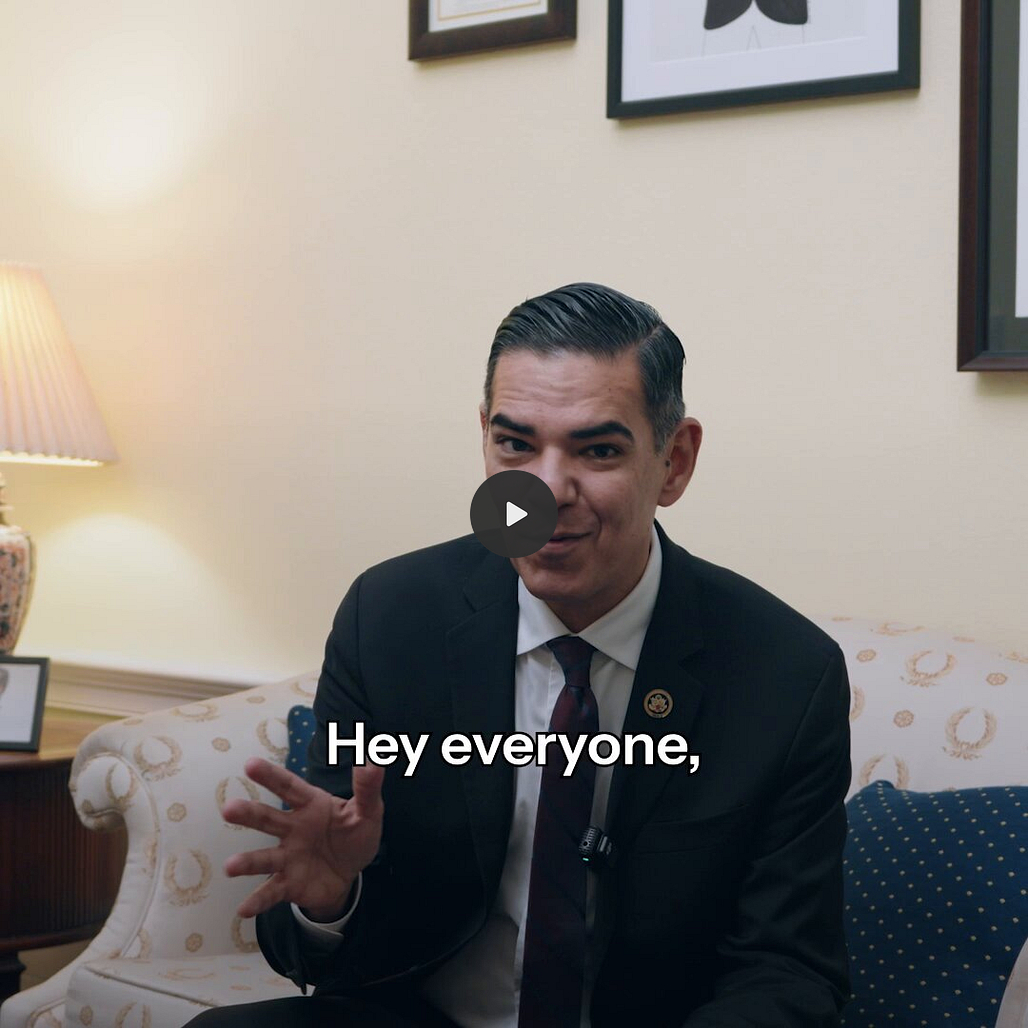
In a November 9 letter to Rep. Robert Garcia, incoming chair of the House Oversight Committee, Scharf cited Mazars for the proposition that “Congressional investigations must further a legitimate legislative task; Congress cannot employ them to exercise powers of criminal prosecution assigned to the Executive and the Judiciary.”
His theory is that Democrats “seek to abuse the legislative process to intimidate and to interfere with the lawful functioning of government,” and that their “threats to executive branch officials designed to deter them from public service, or process designed merely to abuse or instill fear in the recipient may cross the line into blatant criminality.”
The idea that members of Congress could be prosecuted for conducting oversight is preposterous. Bro, do you even Speech or Debate Clause?
And the theory that Mazars allows the executive to simply declare a congressional subpoena lacks a legitimate legislative purpose and ignore it is no less ridiculous. As the Supreme Court said in 1957, “In determining the legitimacy of a congressional act, we do not look to the motives alleged to have prompted it.”
Trump’s henchmen tried this trick in 2019, too, when the House Ways and Means Committee demanded his tax returns. Treasury Secretary Stephen Mnuchin looked into the soul of Committee Chair Richie Neal and divined that the “request lacks a legitimate legislative purpose,” and thus he didn’t have to comply with 26 U.S.C. § 6103(f)(1), which says that “the Secretary shall furnish such committee with any return” upon request. The DC Circuit disagreed, and the Supreme Court declined to intervene, with no noted dissents.
As for their “legislative purpose,” Democrats have made no bones about it — they intend to uncover the massive corruption and self-dealing permeating every corner of this administration.

They’re going to Jared
Once again, this is very bad news for Jared Kushner, who’s about to find himself on the pointy end of a bunch of subpoenas.
The president’s son-in-law is now a “special peace envoy,” negotiating with Iran, Russia, and Hamas, while his private equity firm Affinity Partners manages billions for Saudi Arabia, the United Arab Emirates, and Qatar. About 99 percent of Affinity’s assets come from foreign investors, mostly Gulf sovereign wealth funds, and the New York Times reported in March that Kushner is trying to raise another $5 billion from the same governments he’s negotiating with.
This time around, the president’s sons, Don Jr. and Eric, are also getting in on the grift. Companies they’ve invested in scored $3.2 billion in federal contracts, investments, and loans, most of it since their father returned to office.
As private citizens, the Trump boys are not covered by the Scharf memo. But everyone they did business with inside the government is, which means that the White House will almost certainly order them to defy the subpoenas which are coming in a few short weeks.
Other congressional investigations will focus on the bunker ballroom, which hoovered up $333 million in private donations, and the Trump presidential library in Miami, which he now says is “most likely” going to be a hotel. A year ago, Trump pinky-promised that the $400 million jet Qatar gave him would go “directly to the library,” and Defense Secretary Pete Hegseth told Congress the same thing under oath. Now Eric says that’s “not the plan at the moment.” If Democrats want Hegseth or the Air Force to explain what happened to the plane, they’ll need the White House’s permission first.
During his first term, Trump managed to run out the clock on inquiries into his family’s finances. That was thanks in part to Cipollone, who managed to stall Congress for several months by at least pretending to negotiate. This time around, Scharf is announcing in advance that he will treat all oversight as inherently illegitimate. And thanks to the precedents Trump himself established by filing those lawsuits in 2019, the legal questions are a lot closer to settled.
None of which means that coming legal battles will be quick or easy — this Supreme Court has shown itself willing to throw a whole lot of sand in the gears to help Trump break the law.
But now Trump is a historically unpopular lame duck, who just got walloped in both houses of Congress. Obviously Todd Blanche won’t prosecute anyone for defying a congressional subpoena, but whoever is in charge of the Department of Justice in 2029 might take a different view — and the statute of limitations for contempt of Congress is five years. Anyone who refuses to show up has to trust that Trump will be sufficiently interested — and sentient! — to pardon them before leaving office.
Soon enough we’re going to find out if witnesses put their faith in Riff Raff or save themselves.
That’s it for today
We’ll be back with more tomorrow. If you appreciate today’s PN, please do your part to keep us free by signing up for a paid subscription.
Thanks for reading.
Donald Trump, Tariff Master, will not be extorted? House of Mirrors …
This future lawlessness is compliments of SCOTUS and it’s dream of a unitary presidency.