

This edition of PN is made possible by paid subscribers. Become one ⬇️
Something historic happened in May: For the first time in American history, more electricity was generated in the United States with solar power than with coal.
While natural gas remains our largest electricity source, the crossing of the lines between solar and coal — one representing the future and one the past — is something we may look back on as one of the key moments in the planet’s transition to green energy.
We don’t know whether someone told Donald Trump about this milestone, but if they did, he wouldn’t have been happy. Since taking office, he has waged an all-out war against renewable energy, not just making it more difficult to create and use clean power, but pouring taxpayer money into fossil fuels.
That’s the bad news. The good news is that though Trump has done significant damage to America’s green energy industry — and given us more pollution, higher costs, and more insecurity in the bargain — that industry continues to grow.
There is a global energy revolution underway, and Trump’s efforts to slow it down are destined to fall short.

What happened to “all of the above”?
After years of Republicans arguing that they favored an “all of the above” energy strategy, they’ve essentially dropped the facade and made clear their vision for the future is one in which we get all of our energy from fossil fuels.
Trump’s rhetoric is almost comically anti-renewable — “We will not approve wind or farmer destroying Solar. The days of stupidity are over in the USA!!!” — and the policy has followed.
Trump’s Big Beautiful Bill was a climate horror, rescinding loans for the development of green energy and rolling back tax credits for energy audits, heat pumps, and more. Perhaps the most visible element was the repeal of subsidies for the purchase of electric vehicles, which were helping to drive interest in EVs that for the moment are usually more expensive than internal combustion vehicles.
The result has been the near-destruction of the American EV industry. Without the subsidies, demand leveled off, and the car companies that had made huge investments on the presumption of future growth found themselves holding the bag. So GM, Ford, Stellantis and now Honda pulled back on their EV manufacturing plans for the US and Canada, costing thousands of jobs and forcing Americans who want EVs to buy imports (unless you’d like to support the white supremacist trillionaire on a mission to wreck the world by buying a Tesla, which most of us don’t want to do).
Then there’s wind. Because many years ago Trump got in a fight with Scottish authorities over whether offshore wind turbines would mar the view from one of his golf courses, he developed an almost deranged loathing of wind power, and his administration has made it all but impossible to get permits for new wind farms, especially offshore. They are paying companies with new wind projects in the planning stages to abandon them, and even claim that wind power is a national security risk, supposedly because sneaky enemies could launch drones through a wind farm without being detected by radar.
Administration officials, even ones like Interior Secretary Doug Burgum who in their former lives were sensible people — Burgum proudly touted North Dakota’s wind power sector when he was governor — are forced to go out in public and cry that renewable energy doesn’t work when the sun goes down or the wind lessens, as though batteries don’t exist.
In some ways, this holy war against renewables has succeeded; investment in new clean energy projects has been throttled. As Grist reports, according to a recent analysis from a clean energy think tank, “for every dollar announced in new clean energy projects, companies canceled, closed, or downsized roughly three dollars’ worth. In total, at least roughly $35 billion in projects were abandoned last year, compared to just $3.4 billion in cancellations in 2023 and 2024 combined.”
What was that about “so much winning you’ll get tired of winning”?
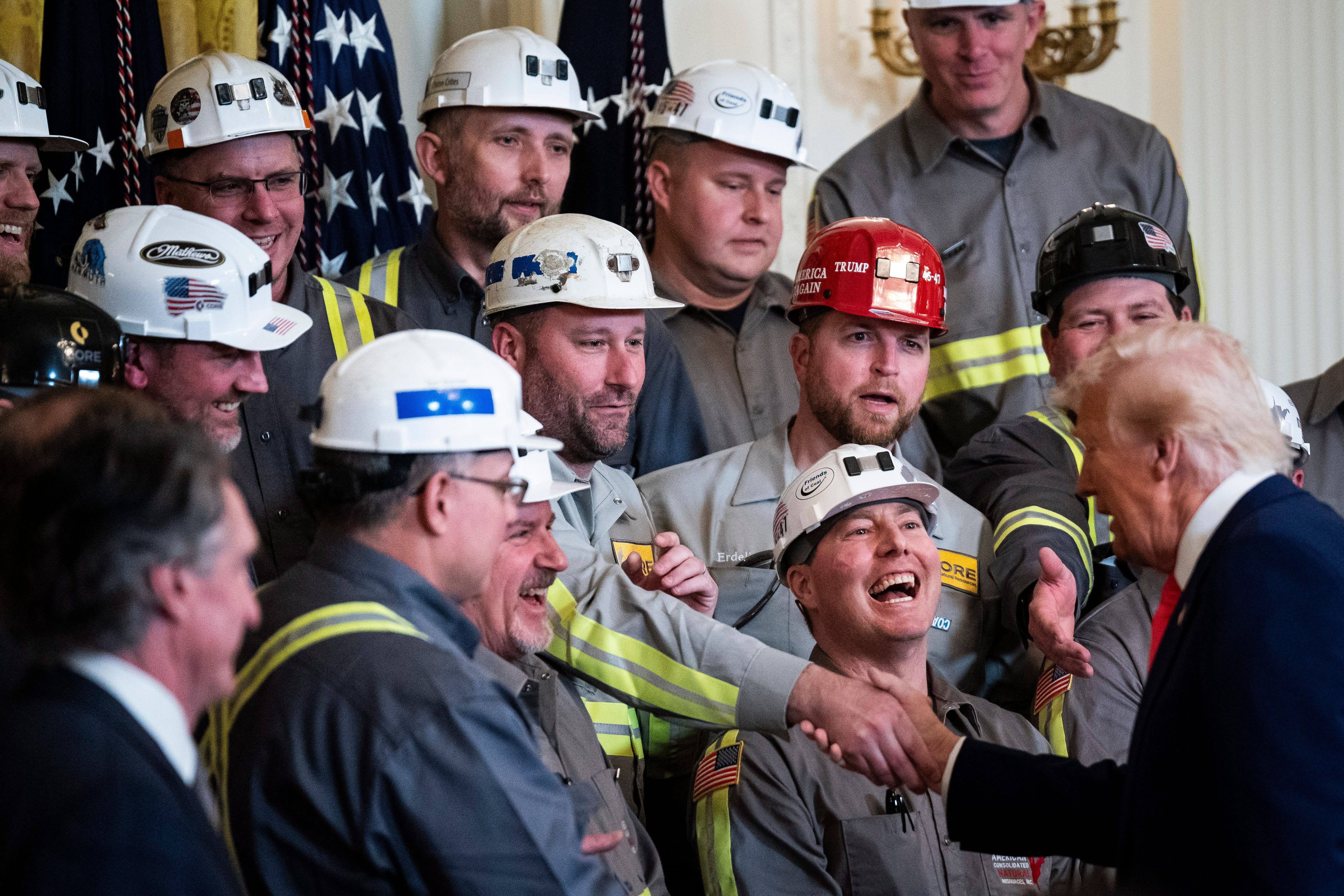
At the same time, Trump is trying to save coal, a decrepit industry on a relentless decline.
During the first week of June, Trump invoked the Defense Production Act to direct $700 million in taxpayer funds to coal plants, just the latest in a series of moves the administration has made to put money in the pockets of coal companies. In its desperation to force Americans to keep burning coal, the administration has used its authority to order utilities against their will to keep open coal plants slated to shut down — even though doing so will likely cost customers billions of dollars. And Trump still promises voters in Appalachia that he’ll bring back all the lost coal jobs — a lie he’s been telling them for a decade, but one they seem to still want to believe.
The green revolution can’t be stopped
The other side of this story is that the entire world is undergoing a green energy revolution.
Solar is now the cheapest type of energy available, which is why more and more countries are looking to it as the foundation of their energy future.
In the last few years, Pakistan, the world’s fifth-largest country, underwent a stunning boom in the spread of rooftop solar; solar now generates a third of the country’s electricity. According to the Yale School of the Environment, India is “on the verge of becoming the first major country to power its industrialization predominantly with solar energy.” Among its new projects is the Khavda Renewable Energy Park in Gujarat, a gigantic facility of solar and wind intended to produce 30 gigawatts of electricity (one gigawatt is roughly enough to power a mid-size city).
Even though it continues to burn huge quantities of fossil fuels, China is at the center of the green energy boom, with huge projects like the Talatan Solar Park, which produces 17 gigawatts of power and growing. It has become far and away the leading manufacturer of renewable energy equipment. According to the Climate Action Tracker, “China is the powerhouse of the global energy transition’s supply chain, manufacturing over 80 percent of solar panels, 60 percent of wind turbines, and 75 percent of electric vehicles (EVs) and their batteries worldwide.”

We are also in the midst of a worldwide battery boom, with new technologies enabling grid-scale storage that drives more wind and solar development. And yes, China is leading the way there too, in both production and deployment. All told, the country invested $625 billion in renewable energy in 2024; the renewable energy sector made up 11.4 percent of its GDP in 2025.
The weakness of the American EV market isn’t slowing development around the world. Despite the pullback from American EV makers, there are now 70 different EV models available to buy in the US, dramatically more than there were a few years ago — which doesn’t include any from the Chinese manufacturers that are coming to dominate the market. While demand may be rising slowly here at home, it’s ballooning around the world: In 2025, 10 percent of new car sales in the US were EVs, compared to 27 percent in the European Union and 53 percent in China. Overall, global EV sales grew by 20 percent percent in 2025 from the year before, with over 20 million new EVs sold.
Americans are pushing ahead with green energy wherever they can whether MAGA likes it or not. In Georgia, the largest solar cell factory in America — one that will make every part of the solar panel — just began operating. Almost all the new generation capacity being added to the grid comes from renewables. Half the states have either passed or are considering bills to allow “balcony solar,” small modular kits that allow people to get the benefit of solar power without the complication and expense of a rooftop system — and even renters can use them.
Despite the Trump administration’s efforts, investments are being made that will bear fruit in the future. Consider the story of EV charging stations.
The Biden administration poured billions of dollars into a long-term plan to spread charging stations across the country, since “range anxiety” is one of the main reasons people hesitate to buy EVs. That funding required a lengthy process of approvals, with the money routed through states and localities. So the early stages of the rollout were slow, and when Trump came into office, he tried to simply withhold the money that had already been appropriated.
Twenty states and a collection of organizations sued over one $5 billion program, and earlier this year they won their case, meaning the money will continue to flow. The administration is still trying every bureaucratic trick it can think of to slow the installation of charging stations, but meanwhile, states and counties are creating their own charging station programs, and private companies are installing charging stations in their parking lots.
You may have noticed it yourself. Stores like Walmart, Sheetz, 7-Eleven, Kroger, and Costco all feature charging stations in some of their parking lots and have plans to significantly expand the number — not because the government told them they had to, but because it’s good business. Today there are over 253,000 charging ports at over 82,000 publicly available locations, with more being added every day.
None of that is to minimize the damage that this administration has done and will continue to do for the next two and a half years. But Trump can’t bring back coal, which is destined to wind up as a niche energy source limited to certain industrial applications. He can’t make EVs illegal or stop people from buying them as the cars get more appealing and affordable. He can’t stop the explosion of solar power, both here and around the world.
The transition to green energy is happening too slowly, but it is happening. And it will outlive Trump.
That’s it for today
We’ll be back with more tomorrow. If you appreciate today’s PN, please do your part to keep us free by signing up for a paid subscription.
Thanks for reading, and for your support.
Trump’s rhetoric is almost comically anti-renewable — “We will not approve wind or farmer destroying Solar. The days of stupidity are over in the USA!!!” — and the policy has followed.
Name me one farmer that believes the sun destroyed their farm. Crops need sunshine. It’s an integral part of photosynthesis. The fossil fuels, on the other hand, have played a huge role in climate change and contributed to crop-killing droughts. We all know the damage working in a coal mine does to a person’s lungs.
You can’t make this 💩 up…🤦🏼♀️
Thanks for this positive update that the world is still moving in the right direction. ❤️
He doesn't understand that people "want" cheaper and cleaner energy, but of course he isn't interested in what the people want because he doesn't care about them.