

PN is supported by paid subscribers. Become one ⬇️
Over the course of Joe Biden’s presidency, a great awakening took place among the nation’s tech industry leaders.
Their wealth expanded dramatically, they grew disgusted with their own employees, and their brains got cooked by the covid pandemic and all its effects. The mildest skepticism from the Biden administration about social media and AI sent them into paroxysms of rage, as the world’s most privileged people decided they were being oppressed by a cruel federal government out to destroy them. So they ran into Donald Trump’s arms, realizing that it was where they should have been all along.

So far, the merger of Silicon Valley and MAGA has worked out great for the industry; they’ve showered Trump with contributions, made him feel important and special, and in return have gotten almost everything they want from Washington and more.
But this is an alliance they will come to regret.
So much winning
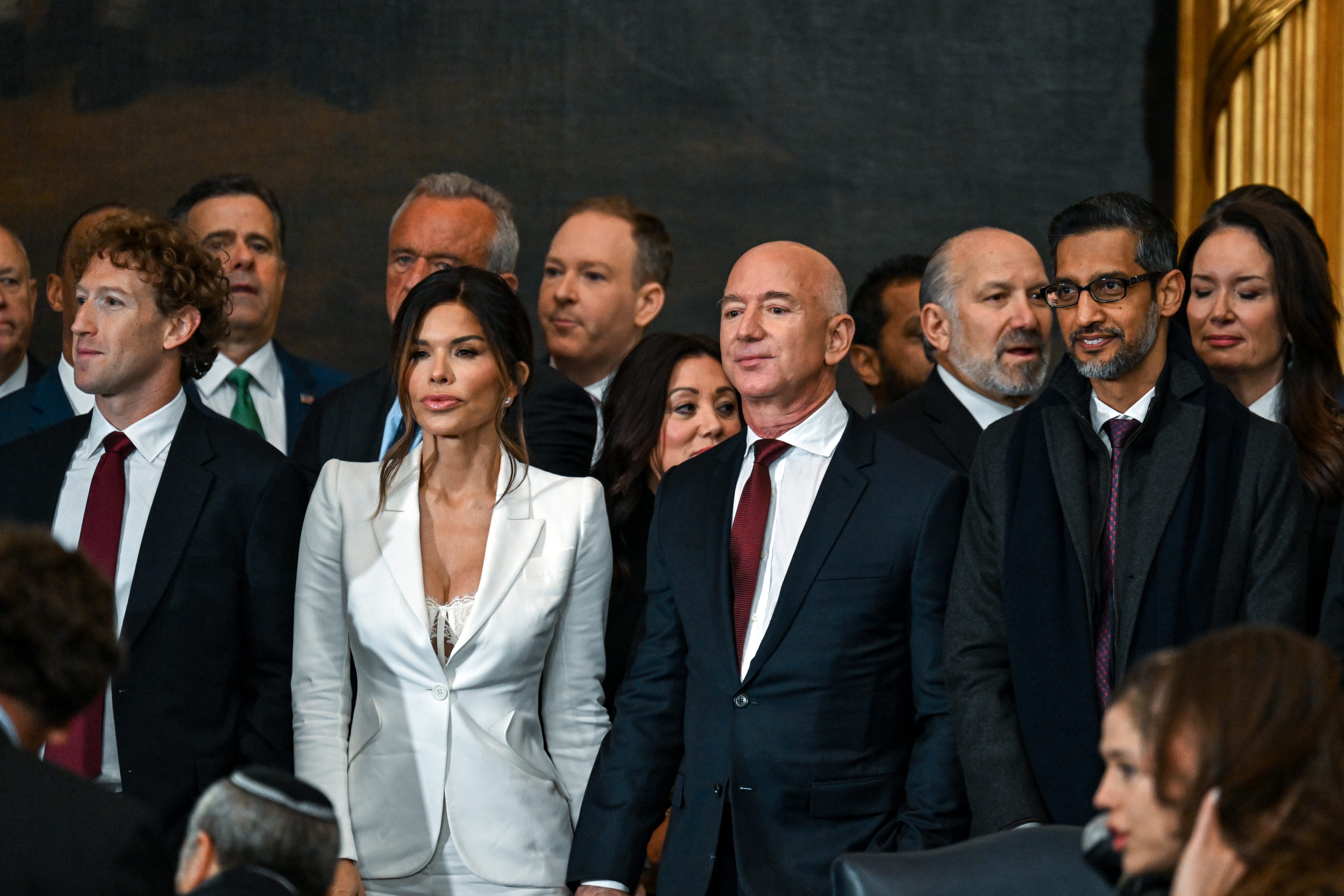
When all the tech barons took their place of honor at Trump’s inauguration in January, it was a striking visual display of the new alliance between America’s wealthiest industry and the most corrupt president the country has ever known. In the 11 months since, the relationship has borne fruit for both sides: The industry continues to shower Trump with contributions and tacky gifts, and Trump has worked to satisfy all the tech leaders’ desires.
And what do they want? First, they want what every rich person wants: to pay as little as possible in taxes, which is also what the Republican Party wants for people like them.
Many of the key figures within the tech industry are also heavily invested in cryptocurrencies, so they were extremely pleased when the Trump administration all but shut down regulatory enforcement of misdeeds in the crypto sector. Under Trump, the last remaining Democrat on the Securities and Exchange Commission told the New York Times that the crypto industry “can effectively get away with anything.”
On antitrust enforcement, it’s important to note that the complete policy reversal the companies were hoping for hasn’t materialized; the Trump administration has continued some of the cases that had been brought against tech companies in the past. On the other hand, none of the antitrust cases have seriously hurt the companies. It looks like they’ll emerge from this wave of antitrust enforcement largely unscathed.
But that’s almost a footnote at this point, paling in comparison to the most important priority for the industry: making sure that regulation of artificial intelligence is either non-existent or so minimal as to be meaningless.
The almost universal belief in Silicon Valley is that because of the rapid development of AI, we stand on the cusp of one of the most profound transformations in human history. Tech leaders see themselves as heroic visionaries carrying humanity to a glorious future of limitless possibility — and, not coincidentally, limitless wealth for themselves. What a tragedy it would be if the government put any kind of constraints on the realization of their dreams. Trump has embraced that perspective with enthusiasm.
Up until now, there has been no meaningful regulation of AI at the federal level. States, however, have passed a variety of new laws seeking to regulate how AI is used and what kinds of misuses won’t be allowed. This is a cause of great distress for the tech companies, which argue that a patchwork of state regulation is inefficient and difficult to comply with.
The argument isn’t completely unreasonable; it is complicated to have each state make its own rules governing AI, and national standards would be more efficient and predictable. But right now, the choice isn’t between one national regulatory system and 50 state systems. It’s between state regulation and nothing.
One answer to this problem came in the form of legislation written by Sen. Ted Cruz, who tried to insert into the GOP’s “Big Beautiful Bill” a provision that would punish any state that created its own AI regulation. But it produced such an intensely negative reaction — from both Democrats and Republicans — that it was quickly shelved. A few months later, Republican leaders tried to include another moratorium on state AI regulation in the National Defense Authorization Act, the massive bill funding the military, but pulled back when they encountered resistance from within their party.
So President Trump rode to the rescue.

Last week, he issued an executive order meant to intimidate states into rolling back whatever AI regulations they already have in place, and not think about passing any new ones. It instructs the attorney general to create a task force “whose sole responsibility shall be to challenge State AI laws” the administration doesn’t like. It also orders the Commerce Department, the Federal Communications Commission, and the Federal Trade Commission to punish states that pass AI laws using a variety of tools, including withholding federal funds. While Trump can’t nullify state laws, he is attempting to use the power of the federal government to achieve the same end.
Trump’s enthusiasm about AI and his new friends in the tech industry has been evident throughout this year, from the regular events he holds at the White House touting data center investments to the policy changes he has made to allow the sale of AI chips to China and the Middle East, undoing export controls put in place under Joe Biden. In the latter case, the United Arab Emirates got the chips it was seeking to build out its AI capabilities, and Trump got a crypto deal that will give his family millions of dollars.
The administration’s AI policy is being driven by David Sacks, a conservative Silicon Valley investor and original member of the “PayPal Mafia” (along with Elon Musk and Peter Thiel) who holds the title of Special Advisor for AI and Crypto.
In Trump’s executive order, Sacks is mentioned no fewer than six times; the order instructs a wide variety of officials to work with him to carry out the attack on state AI regulation. The New York Times recently reported that Sacks has “at least 449 stakes in companies with ties to artificial intelligence that could be aided directly or indirectly by his policies.” No wonder he and Trump get along so well.
The political backlash could be on its way
In one sense, this is a familiar story: A bunch of billionaire industrialists support the party that promises them low taxes and almost no regulation, no matter how much harm their products might do. But for a group of people whose eyes are always on the future, the tech leaders have shown a remarkable blindness about the risk they have taken by engineering a merger with the Republican Party.
A powerful backlash against Silicon Valley and AI is beginning to form, and it shows every sign of increasing in intensity. Opposition to data centers is becoming more common. The deployment of AI tools in the workplace is heightening anxiety about the future of white-collar employment.
People have seemingly been encouraged by chatbots to commit suicide, leading to not just dramatic news coverage but increasing worries about what these systems might be capable of. Polls have shown widespread worries about AI; people are concerned it will make us less creative and connected to one another, and that it will become a tool of political chaos and job losses.
Whatever the long-term effects of AI will be, there’s a more immediate worry: that the hundreds of billions of dollars being poured into data center construction have created a bubble that could take down the entire American economy if it pops. Should that happen, Silicon Valley could become the target of a degree of anger they haven’t seen before.
So it wouldn’t be surprising at all if ambitious politicians in both parties, but especially Democrats, soon use those concerns about AI and the already widespread contempt for tech industry leaders such as Elon Musk, Jeff Bezos, and Mark Zuckerberg as an organizing theme of their campaigns.

To maintain their position, the tech industry is pouring huge amounts of money into new political organizations that will attack politicians who support AI regulation. One of their first targets was Alex Boras, a New York state assemblyman who is running for Congress and sponsored a bill in the legislature to force the companies to publish their security protocols and document safety incidents. While Boras says he is benefiting from his conflict with the tech companies, Gov. Kathy Hochul watered down his bill in an apparent victory for the tech firms.
That series of events — and the divisions in the Republican Party over how to think about the tech industry (among the prominent GOP tech critics are Sen. Josh Hawley and Steve Bannon) — shows that this isn’t a simple partisan issue. Just as there are Republicans who criticize Silicon Valley, there are Democrats who boost it; House Minority Leader Hakeem Jeffries recently created a House Democratic Commission on AI and the Innovation Economy stocked with friends of the industry. But Trump’s incessant cheerleading for AI — and the industry’s very public embrace of him — means that the tech barons can’t avoid their association with Trump. That could come back to haunt them.
It would seem like a no-brainer for Democrats to run by fostering a reaction against the shocking corruption of the Trump years, the degradation of our political system, and the mounting inequality that has come to define American life. A comprehensive anti-corruption, anti-oligarchy, pro-consumer movement would inevitably target the tech industry and its indifference to the harms it creates. Such a movement could be incredibly potent, and the tech barons would have no one to blame but themselves.
That’s it for today
We’ll be back with more tomorrow. If you appreciate today’s PN, please do your part to keep us free by signing up for a paid subscription.
Thanks for reading.
The tech industry’s embrace of their Ruler’s AI agenda isn’t about innovation, it’s about ethics abandoned. What we’re watching is the behavioral mechanics of cruelty turned into policy: deregulation as domination, spectacle as distraction, and suffering normalized as the cost of doing business.
As I argued in The World Ahead 2026, America’s operating system has shifted…institutions no longer reward competence or law, they reward manipulation and rent‑seeking.
AI is being treated not as a tool for progress but as a bubble to be inflated, a theater for insiders to consolidate wealth while the public is left exposed to collapse.
This isn’t innovation, it’s extraction. And until ethics are restored as the baseline, every “deal” will be a deal with cruelty.
—Johan
Thank you for an excellent analysis of the troubled and scary AI situation.