

PN is supported by paid subscribers. Become one ⬇️
On Monday night, the Supreme Court finally blocked Trump’s plan to unleash chaos on the midterms and disenfranchise millions of voters. In a 7-2 order, they barred the Post Office from inserting itself into the mail-in ballot process.
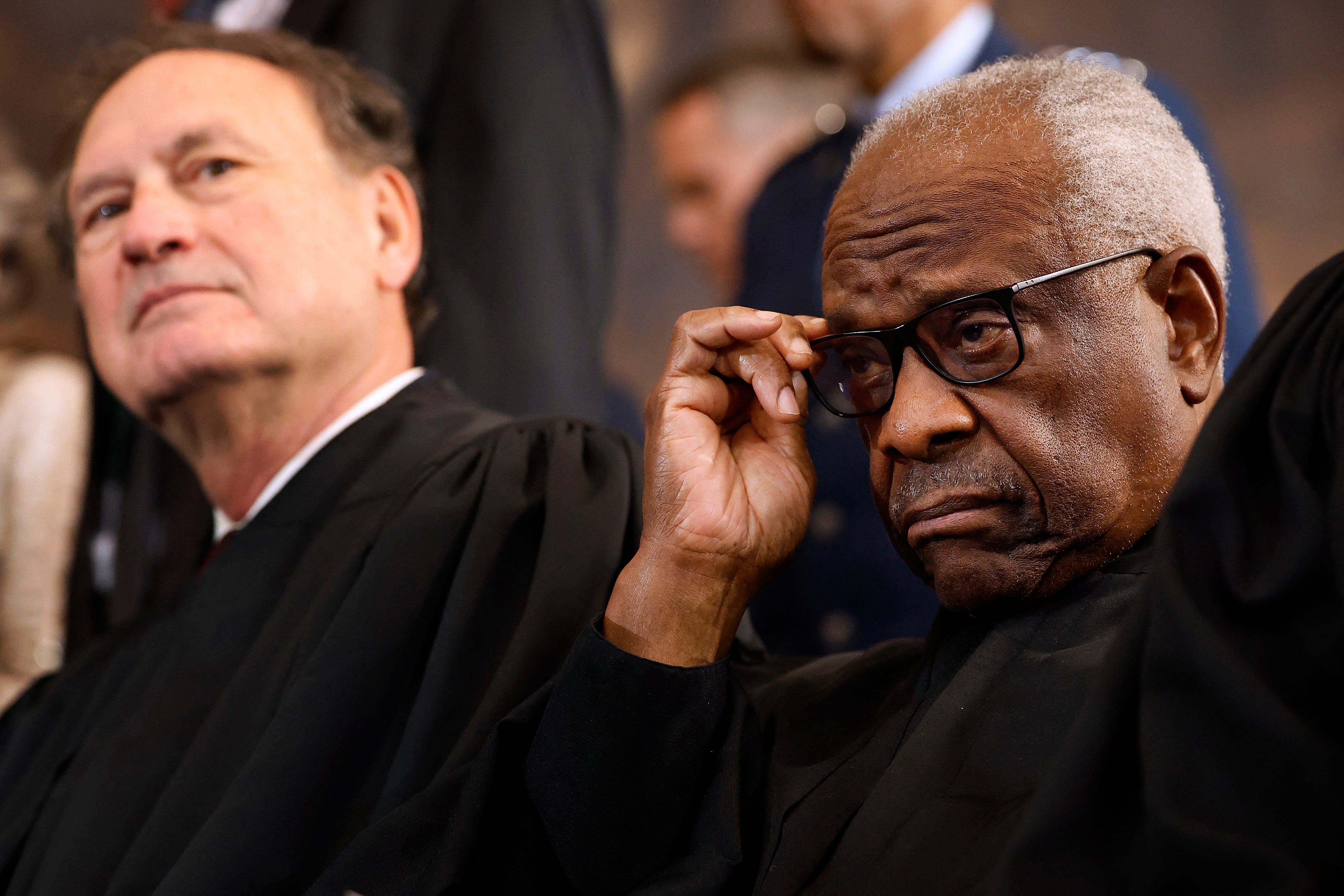
All three of Trump’s own appointees sided with the liberals and Chief Justice Roberts, leaving Justices Alito and Thomas alone in bitter dissent.
Naturally, Trump spent yesterday morning screaming about this act of betrayal.
“These are not the people I interviewed to serve on the United States Supreme Court, they are merely a shell of their original selves,” he whined, adding that “It is not easy for me to write this criticism of the United States Supreme Court — it will likely cost me dearly for years to come — but I feel it my obligation and duty, as President, to do so for the America we love!”
Executive disorder
On March 31, Trump signed an Executive Order mandating fundamental changes to the way the Post Office handles mail-in ballots. States would be required to pre-submit lists of all voters receiving ballots and purchase envelopes with an Intelligent Mail barcode (or IMb) assigned to each individual voter. The Post Office could refuse to deliver ballots to anyone not on the list or anyone the government decided shouldn’t be voting.
Even if this plan had been operationalized the very next day, it would have been too late.
Most states send out their mail-in ballots 30-45 days before the election. Envelopes and ballots must be ordered and printed months in advance, and it takes weeks to stuff those envelopes and ready them to go out.
As the County Clerk for Texas’s Travis County attested, preparing the county’s mail-in ballots takes 35 people working full-time for five weeks, ballot envelopes have to be ordered between three and six months in advance, her office has no IMb scanner, and she has no budget to cover the purchase of a new scanner or replacement envelopes.
But Trump’s order did not go into effect immediately. Instead the Post Office was given 60 days to come up with a proposed rule, after which there would be a mandatory period of public comment. On June 2, USPS published the proposed rule, which went into effect August 21, roughly ten weeks before Election Day.
Opponents of this policy immediately sought to vindicate their rights. On April 1, a raft of Democratic organizations (DNC, DSCC, DCCC, etc.) along with the NAACP and LULAC filed suit in federal court in DC. And on April 2, a coalition of 24 blues states, the District of Columbia, and the League of Women Voters sued to block the rule in Massachusetts.

In DC, Judge Carl Nichols, a Trump appointee, initially refused to grant an injunction, finding that harm from the rule was merely speculative before it went into effect. In Massachusetts, Judge Indira Talwani reached the opposite conclusion. She found that the potential disruption to the midterms was so great that the rule should be preliminarily enjoined.
On August 24, the Supreme Court’s conservatives agreed with Judge Nichols that the plaintiffs lacked standing to challenge the rule because it was not yet in effect when they originally filed their lawsuit. Judge Talwani then invited the plaintiffs to file an amended complaint and seek a new injunction, which they did. And so the rule was once again blocked by August 28.
The stakes
There are only two real legal questions here: Has Congress authorized the Post Office to police elections? And, if so, does this rule come too late to be a legitimate exercise of that authority?
The majority said no to both:
The Government is unlikely to succeed on the merits of its challenge to the District Court’s preliminary injunction. And the equitable factors applicable for obtaining emergency relief from this Court do not favor a stay.
Justice Kavanaugh said yes to the first, no to the second:
In my view, based on the briefing the Court has received at this interim stage, there is at least a fair prospect that the final rule falls within the Postal Service’s statutory authority. See 39 U. S. C. §401(2). But applying the rule in the 2026 elections would be arbitrary and capricious in violation of the Administrative Procedure Act because state and local election officials do not have sufficient time to reasonably implement the rule before the elections.
Only Justice Alito, writing for himself and Justice Thomas, said yes to both, and it required him to engage in some breathtaking dishonesty. Most egregiously, he insists that “the plaintiff States and the courts bear a substantial share of the blame for the rule’s timing.”
But the timing here was wholly dictated by the president, who could have issued this order a year ago but instead waited until March 31, when the primaries were already underway, to start monkeying with the electoral apparatus.

Alito huffs that the lawsuits “cast a cloud over the Government’s ability to issue a final rule” and scolds his fellow justices for delaying the final rule by failing to stay Judge Talwani’s injunction earlier, “despite the Government’s public notice that it would not publish a final rule while subject to the injunctions.”
In fact, the government violated the injunction and went ahead and published the final rule anyway.
Alito shrugs off a mountain of evidence that allowing the administration to operationalize this scheme would cause chaos, airily asserting that “twelve States supported the rule below and asserted that compliance at this time is practicable.” As Notre Dame law professor Derek Muller pointed out, that’s a blatant distortion of the record.
As is customary in this hyperpartisan moment, red state attorneys general dutifully paraded into the Massachusetts case to support the president’s position. But they did not claim that “compliance at this time is practicable.” What they said on August 29 was that Judge Talwani should “limit any injunction to ensure that States at least retain the option to comply with the Rule for the 2026 General Election — an option Missouri and likely other States want.” They did not repeat those demands when the case wound up at the Supreme Court in September, presumably because ballots were already being mailed out and compliance was no longer possible.
An amicus brief filed by 38 current and former election officials, including sitting Republican secretaries of state from Utah, Kentucky, North Dakota, South Dakota, Georgia, New Hampshire, and Kansas, lays out plainly that “neither election officials across the country nor USPS are equipped to successfully implement this Rule for the 2026 midterms.”

When clerks in Leon County, Florida, voluntarily submitted their mailers for review, the Post Office rejected every single ballot envelope because the blank space around the words “Return Service Requested” was 0.236 inches, not 0.25 inches. As the Washington Post reported, this tiny discrepancy could have disenfranchised tens of thousands of voters, although the Post Office eventually relented.
Allowing this rule to go into effect nationwide would have unleashed pandemonium, particularly in rural counties without the staff or funds to quickly replace noncompliant equipment and envelopes. But Alito does not care.
“I take that problem very seriously, but it is not enough to convince me to deny the application,” he sniffed, pointing to the Trump administration’s “strong interest in enforcing the rule … in order to better detect election fraud.”
But there is no election fraud! The government never argued in its briefs that fraud is a pervasive problem, because pointing at a few hundred prosecutions over a decade and claiming that the solution is to disenfranchise millions of people is to refute the case entirely. The only place where election fraud is real is in the right-wing media ecosystem where Alito and Thomas get their news. And because they are so steeped in online misinformation and conservative grievance, they are willing to sacrifice every principle of law they ever espoused.
Time is almost up for Sam and Clarence and Don
It’s would be easy to dismiss this as two cranky grandpas, brain-poisoned by Fox News. But the reality probably has as much to do with the looming question of their own retirement.
After decades on the Court, Alito and Thomas are finally in a conservative supermajority — only to find themselves being unsubtly shoved toward the exit by fellow conservatives yearning to replace them with their own law clerks. Their younger colleagues have decades to leave their mark. But this moment, with this president, is the last chance for Thomas and Alito to radically restructure the country.
They can’t wait for 2028 to allow Trump to root out “fraud” with this misbegotten edict. They need it now!

At the same time, Alito and Thomas have long since given up being respected by anyone outside the conservative firmament. While Chief Justice Roberts furiously battles to protect his legacy, they are unabashed culture warriors who sneer at the “liberal” establishment. They know they’ll never be revered, especially after getting their hands caught in Harlan Crowe’s cookie jar. They just want to win in whatever time they have left on the Court.
And so they’re tied to Donald Trump, their last, best hope.
No president will ever shatter America’s laws and norms the way he has. No president will ever give them the chance to destroy the liberal establishment they so patently despise. There’s no tomorrow for them — there’s only now, and whatever damage they can inflict on their enemies today.
Trump, who is marinating in an even more toxic cocktail of right-wing agitprop and AI-slop, rages over his own appointees’ disloyalty. In reality, Justices Gorsuch, Kavanaugh, and Barrett are exactly the people he interviewed during his first term — naked partisans, with a strong antipathy to civil rights, devoted to the long term project of entrenching conservative and corporate power and destroying the separation of church and state. But they know that Trump will be gone in two years, and they will not. They killed Roe v. Wade, affirmative action, and the Voting Rights Act, and they’re just getting started. Their project isn’t Trump, it’s America, and it’ll be a lot harder if they so thoroughly discredit themselves that they actually convince Democrats to pack the Court.
In the meantime, Thomas and Alito will have ensured their continuing relevance. If Democrats do manage to retake the Senate, Trump won’t be able to confirm a replacement, and no one will say another word about Thomas and Alito retiring. The nation’s angriest grandpas can sit at One First Street and spit bile for two more years at least.
That’s it for today
We’ll be back with more tomorrow. If you appreciate today’s PN, please do your part to keep us free by signing up for a paid subscription.
Thanks for reading, and for your support.
Today would be a great day for Volume II of Jack Smith’s report to be leaked.
While Justice Brett Kavanaugh indulged a bit of his chafing independent streak in this ruling, he will continue to piggyback his votes with his Chief, in his quest to become the next Chief Justice.