

Public Notice is supported by paid subscribers. Become one ⬇️
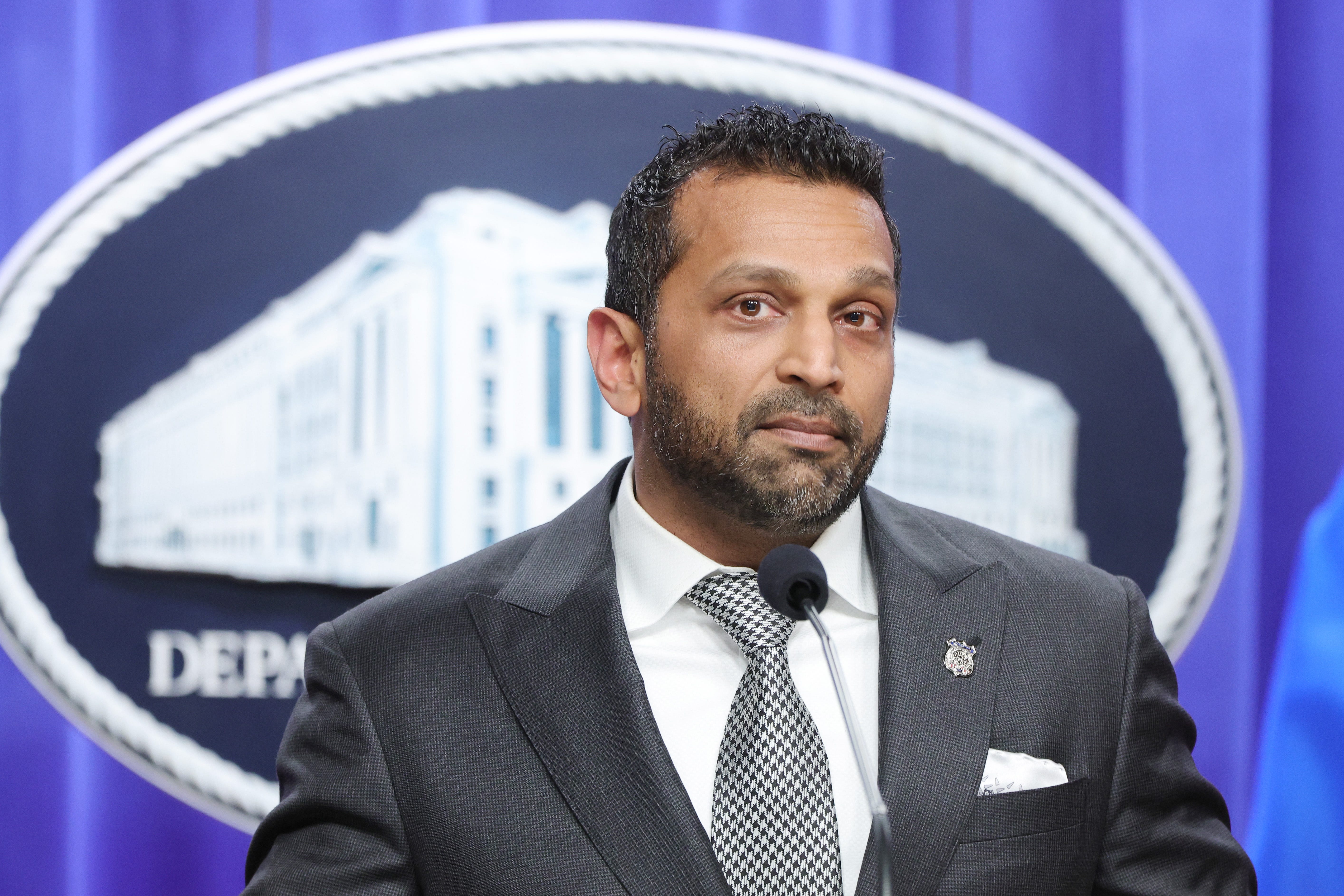
Late Friday, we were treated to a big story in The Atlantic about FBI Director Kash Patel’s unprofessional, self-destructive behavior, including allegations of alcohol abuse and absenteeism that would get anyone else fired.1
By Monday, we were treated to a big dumb lawsuit over it by Patel, because he has the impulse control of a toddler. So he’s ginned up a frantic legal filing accusing The Atlantic of actual malice and malicious malice and malice actualizing, or whatever is going on here.
Suffice to say that Patel seems to think he dropped a world of hurt on The Atlantic when all he really did was show that both he and his attorneys seem to have been struggling with hangovers during their first year of law school.
Frivolous lawsuits are a dime a dozen in Trumpworld, and there are so many times when it’s obvious that the person filing them should know better. In Patel’s case, as hapless a malicious doofus as the guy seems to be, he’s also actually a lawyer.
Not, like, a Lindsey Halligan lawyer. Patel actually practiced law for over a decade, first as a public defender in Miami and then as a line prosecutor at the Department of Justice, although his time at the latter seems to have engendered more resentment than experience. Or, as a former colleague put it to CNN after it was clear Patel would be President Trump’s pick for director, he’s “an opportunist who feels constantly aggrieved.”
Sounds about right.
Patel’s problem here starts with a little thing called actual malice, which, despite its name and how Patel’s attorneys mangle it, doesn’t actually refer to doing anything with malice or in a malicious fashion. Rather, it’s about the standard a public figure must meet to successfully prove defamation.
“A legal lay up”
For plebes like us, defamation broadly requires a plaintiff to prove four things: (1) the defendant made a false statement of fact; (2) published or communicated to a third party; (3) with at least negligence on the part of the defendant; and (4) the plaintiff incurred damages or harm to their reputation.
For plaintiffs who are public figures or public officials like Patel, things are a bit different regarding that third element. There, precisely because a robust free press is critical to a flourishing democracy, the United States Supreme Court, in 1964’s New York Times v. Sullivan, held that a public figure plaintiff must prove that the false statement was made with knowledge it was false or with a reckless disregard for whether it was false. Imposing liability for merely negligent statements about public officials created a chilling effect, leading the press to self-censor.
Unsurprisingly, right-wing public officials hate NYT v. Sullivan, particularly Donald Trump, who has been calling for its demise for at least a decade.
But for now, at least, Patel must meet the standard of actual malice, so his complaint must show both that the statements in The Atlantic piece were false and that the publication either knew they were false or recklessly disregarded whether they were false. Patel boasted, weirdly, that the “actual malice standard is now what some would call a legal lay up,” which, unless he knows something about the state of libel law in the United States that literally nobody else does, is simply not true.


In reality, it’s quite hard for public figures to meet that actual malice standard, but Patel and his attorneys seem to think it is as easy as saying, quite simply, that the FBI told The Atlantic that the allegations weren’t true, but The Atlantic published them anyway.
That sounds like an unfair paraphrase or framing, but that’s all the complaint really does. Here’s a sample, addressing the allegations that Patel is frequently seen intoxicated at two specific bars, Ned’s in Washington DC and the Poodle Room in Las Vegas, and that the drinking has caused concern within the government:
“Director Patel does not drink to excess at these establishments or anywhere else, and this has not, and has never been, a source of concern across the government. Prior to publication, the FBI expressly informed Defendants that each of these allegations was ‘totally false.’”
It doesn’t take a law degree to understand that if a powerful public official can stop the press from reporting something, on pain of an expensive defamation suit, simply by flatly declaring everything is false, the whole notion of a free press kind of grinds to a halt. Trump tried this approach when he sued the Wall Street Journal for reporting on his ties to Jeffrey Epstein, alleging that since he denied writing the infamous letter in the shape of a naked woman as a birthday treat for the convicted sex trafficker, publishing the story anyway was actual malice. It didn’t work there either.
Patel also contended that because he denied a similar allegation in an entirely different lawsuit, The Atlantic was therefore on notice that every last bit of their reporting was false. However, that case, where Patel sued Frank Figliuzzi, a former FBI official and MSNBC talking head, was about a one-off comment Figliuzzi made that Patel had been “visible at nightclubs far more than he has been on the seventh floor of the Hoover building.” Since MSNBC walked it back a bit the next day, saying it hadn’t been verified, Patel believes the existence of that one exchange means that the Atlantic should have decided all its detailed reporting was just plain false.
Much like some of Trump’s media complaints, Patel’s has the flavor of counsel making the grave mistake of letting the client write the thing. So instead of sober statements of fact and law, you get stuff like “under Director Patel’s leadership, the FBI has achieved historic law enforcement results” and “these operational successes are inconsistent with a director who is “often away or unreachable” or too intoxicated to do his job.”
Even if Patel were the World’s Greatest FBI Director as far as law enforcement results, and even if The Atlantic shamefully ignored his great stats, none of that has anything to do with whether the allegations in article about Patel’s drinking, absenteeism, and impulsivity are true. Nor does Patel’s whining that he only got an “arbitrary two-hour window” to respond to the story’s allegations before they went to press have anything to do with actual malice.
By the time The Atlantic reached out to Patel, the reporter who authored the piece (Sarah Fitzpatrick) had interviewed over two dozen people, including “current and former FBI officials, staff at law-enforcement and intelligence agencies, hospitality-industry workers, members of Congress, political operatives, lobbyists, and former advisers.” Reaching out to Patel was a journalistic courtesy, not an opportunity for him to demand time to respond.
The complaint also makes much of a “Pre-Publication Letter” that Patel’s attorneys say is chock-full of “substantive refutations” provided to The Atlantic yet shamefully ignored, therefore ipso facto actual malice. That argument might hang together a bit better if that Pre-Publication Letter were anywhere to be found, but it’s not part of Patel’s complaint or published anywhere else. Somehow, everyone is just supposed to take at face value that Patel’s attorneys wrote a detailed letter that proves, hands down, that The Atlantic knew they were printing lies, but we can’t see the letter because it lives in Canada and goes to a different school.
Next, Patel claims that the Atlantic not naming any sources shows that their reporting is just a crock of malicious lies. But whether or not someone was willing to put their name to something has nothing to do with whether what they said about Patel was true.
Finally, even Patel’s whining that The Atlantic was engaged in “advocacy against Director Patel” rather than journalism doesn’t have anything to do with defamation or showing actual malice. The test is whether The Atlantic printed something it knew, or should have known, to be false, not whether they feel appropriately fond of Kash Patel.
Doesn’t have the cards
Patel’s lawsuit is no less fictional than the myriad harassments disguised as defamation lawsuits that Trump has filed to secure 10-figure settlements from media companies. Patel, however, seems to have forgotten that Trump can force those settlements because broadcast media licenses and mergers are regulated by the Federal Communications Commission, headed by Trump enforcer extraordinaire Brendan Carr. There’s no equivalent pressure point for The Atlantic.
Patel also seems to have decided that the ease with which his attorneys, the Binnall Group, recently obtained a seven-figure settlement for Mike Flynn would work in his favor too. But Flynn’s suit against the DOJ was even more of a sham than Trump’s anti-press lawsuits, as Flynn did not achieve a hard-won settlement against an actual opponent. Rather, Flynn and the DOJ colluded to figure out the best way to give Flynn over a million of your tax dollars to redress this “historic injustice.” Somehow, it doesn’t seem like The Atlantic will join hands with Patel’s attorneys to give him $250 million.
Patel would be luckiest if The Atlantic succeeds at getting this thing dismissed right away — no, really. Because if this case goes forward, he’s stuck with discovery.
Sure, Kash might be hyped to conduct his own discovery and unmask anyone still in the FBI who spoke ill of him, but The Atlantic’s reporting makes clear they talked to plenty of people who are out of his reach, such as hospitality workers. Patel’s attorneys can talk to some poor waiter who had the misfortune of dealing with a drunken Patel at the bar, but it’s not going to help much unless they can get them to say “I totally told reporters Patel was sober as a judge and the best employee ever.”
Additionally, discovery means, to put it in very precise legal terms, that The Atlantic’s legal team gets to crawl up Patel’s ass. For all of the complaint’s bluster about how the story’s allegations are so incredibly easily disproven by readily available public materials that they can be willfully ignored, it has to actually deliver on that. So, show us that Pre-Publication Letter! Show us those FBI calendars! Show us how The Atlantic was supposed to get its mitts on all this material about Patel from a relentlessly opaque and secretive administration.
Patel didn’t file this lawsuit to win. He filed it to show Trump that he’s not just a dilettante flying around on the FBI jet, but a loyal crony who’s fighting back against the fake news media. He filed it to send a message to other publications that he will make their lives hell if they report critically on him. But he did not file it because he genuinely believes he can show The Atlantic manufactured all of this out of whole cloth.
Come on, dude, we’ve all seen your little beer party with the US Men’s Hockey Team. A sober, serious, dedicated public servant you are not.
That’s it for today
We’ll be back with more tomorrow. If you appreciate today’s PN, please do your part to keep us free by signing up for a paid subscription.
Thanks for reading, and for your support.
In case you missed it, here’s the key passage from Sarah Fitzpatrick’s piece:
Several officials told me that Patel’s drinking has been a recurring source of concern across the government. They said that he is known to drink to the point of obvious intoxication, in many cases at the private club Ned’s in Washington, D.C., while in the presence of White House and other administration staff. He is also known to drink to excess at the Poodle Room, in Las Vegas, where he frequently spends parts of his weekends. Early in his tenure, meetings and briefings had to be rescheduled for later in the day as a result of his alcohol-fueled nights, six current and former officials and others familiar with Patel’s schedule told me.
On multiple occasions in the past year, members of his security detail had difficulty waking Patel because he was seemingly intoxicated, according to information supplied to Justice Department and White House officials. A request for “breaching equipment”—normally used by SWAT and hostage-rescue teams to quickly gain entry into buildings—was made last year because Patel had been unreachable behind locked doors, according to multiple people familiar with the request.
The filing is not a legal strategy, it is a press release with a docket number, designed to signal grievance to the president who hired him.
He sued because he could not ignore the piece and could not laugh it off, and now the lawsuit is the better story.
Johan 🐌
Many bars have video cams so that they can protect themselves against various claims. Perhaps discovery would reveal the giddier side of Patel. Much like the celebration in Milan...