

PN is supported by paid subscribers. Become one ⬇️
The US committed its first major atrocity of Trump’s war on Iran during the first day of bombing.
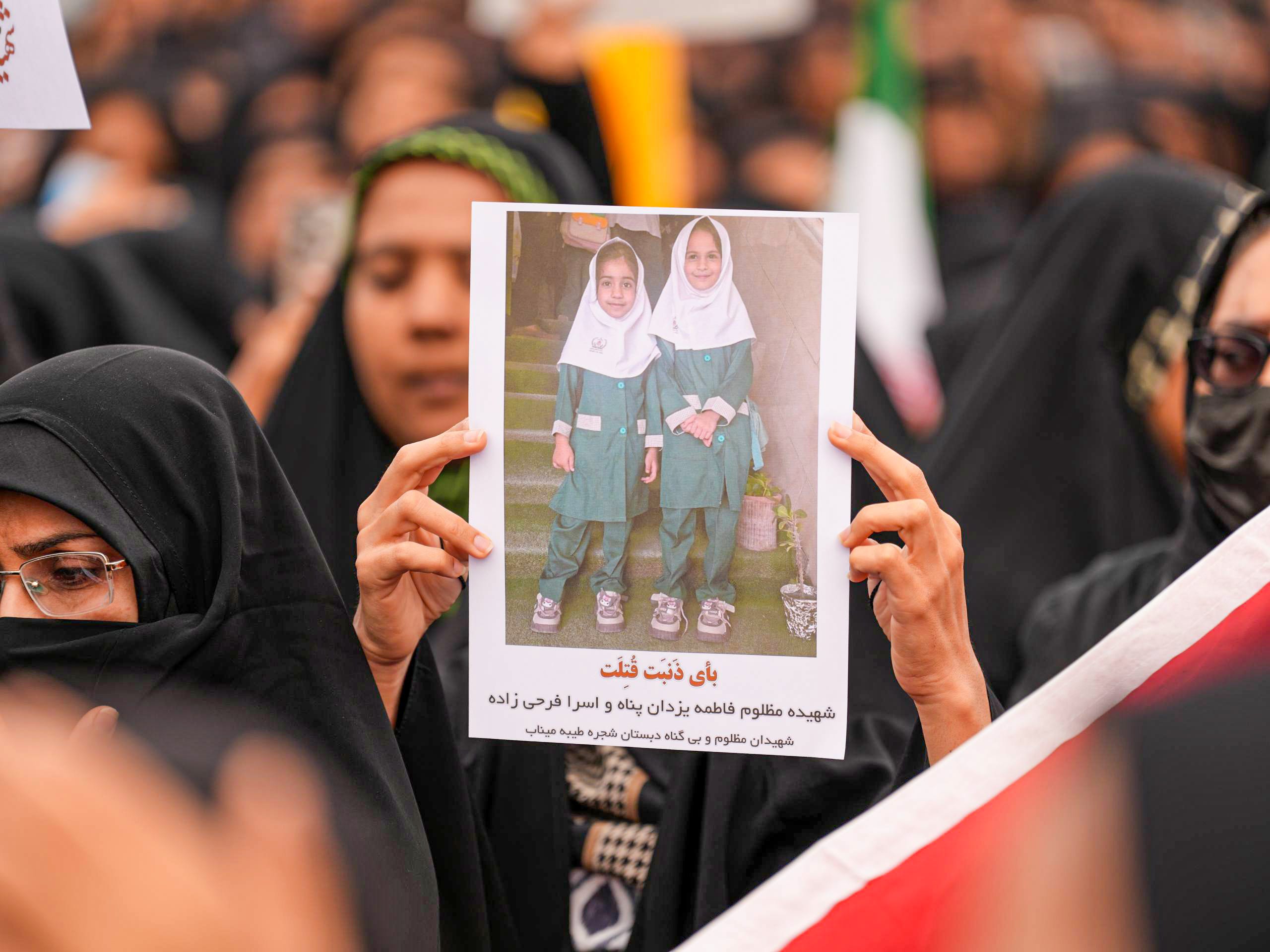
On February 28, a missile directly hit Shajareh Tayyebeh school in southern Iran. The school building was destroyed; dozens of young girls between seven and 12 years old were killed. It is believed that around 168 people died altogether. The Guardian reported on horrific details from verified videos; in one, they say, “a very small child’s severed arm is pulled from the rubble. Colourful backpacks covered with blood and concrete dust sit among the ruins.”
The school appears to have been deliberately targeted, perhaps because the location was the site of a Islamic Revolutionary Guard Corps base 15 years ago. Defense Secretary Pete Hegseth insisted that “we, of course, never target civilian targets,” but large-scale bombing raids often hit and kill civilians, including children. This is one reason that it is immoral, as well as illegal, to launch a war of aggression.

Initially, most US media outlets did not cover the mass slaughter of Iranian girls with much urgency. Neither The New York Times, The Washington Post, nor The Wall Street Journal put the story on the front page, and the Sunday news shows mostly ignored it as well.
Slowly, though, the scale of the horror began to break through; The Times, CNN, and US military investigators have all independently confirmed US strikes were almost certainly responsible for the destruction of the school. (As this newsletter was being finalized Sunday evening, The Times published a new analysis showing Tomahawk missiles landing beside the school, which represents further evidence of US guilt.) The UN has called for an investigation and US reporters have pressed Defense Secretary Pete Hegseth, who (inevitably) has been evasive.
Even worse, Trump on Saturday tried to blame the Iranians for killing their own children, lying that “it was done by Iran.”
The initially blasé reaction to US mass murder of children was ugly; the increased concern over the past week at least shows that Trumpist amorality hasn’t yet permeated our entire society. Even now, though, the deaths of 168 civilians at US hands is, at best, a side issue in a debate about the war which is mostly focused on surging gas prices, the deaths of seven US service members, worries about Iranian terrorism on US soil, and other domestic implications of the war. Deaths of Iranian civilians, when discussed, are often framed around worries that atrocities will radicalize Iranians against the US, reducing our influence in the region and putting US lives at risk.

It’s not that the US doesn’t care about the deaths of Iranian girls, exactly. It’s just that the media, politicians, and the public pretty clearly care about other things more.
Iran is a long way away and most Americans don’t feel closely connected to, or in community with, the people there. This isn’t surprising and isn’t even necessarily a problem — until the US starts projecting power overseas. At that point the public disinterest in the lives of those on the other side of the globe becomes a key resource which politicians use to enable and justify endless cynical and callous wars.
“It’s sickening”
The US has a longstanding tendency to see wars as one-sided affairs, with American protagonists, American victims, and a cast of disreputable and/or sympathetic non-American side characters. This is perhaps most obvious in the mass of Hollywood Vietnam war films, of which only rare exceptions include a non-American main character.
As Viet Thanh Nguyen writes, “American memories of the war usually forget or obscure the Vietnamese, not to mention the Cambodians and Laotians.” To back up this insight, Nguyen looks at virtually every Vietnam movie released in the US up to 2016. Almost none of them spend much time or thought on the impact of the Vietnam war on the three million Vietnamese dead, on their families, on those who had to build a life on a land devastated by US bombs and napalm. At its most exaggerated, films like “Jacob’s Ladder” (1990) dispense with the Vietnamese altogether and present the war as a hallucinatory firefight between Americans on one side and Americans on the other.
The focus on Americans is in part a reflection of American public interest. But they also shape that interest in ways that glorify patriotism and ultimately rationalize intervention and war. Whether any given war is framed as good or bad, when America’s interests are seen as paramount, when only Americans really exist, the path to justifying war becomes a lot easier.
The Trump regime certainly frames the war in Iran as a particularly boneheaded and un-nuanced Hollywood film along the lines of “Rambo” (1985). In a 60 Minutes interview that aired last night, Hegseth, asked about dangers to US troops, blithely declared that “the only ones who need to be worried right now are Iranians who think they’re going to live” — a chilling pronouncement in any context, and even more so after the US murdered dozens of young Iranian girls.
Perhaps even more tellingly, the White House X account posted a video collage of clips from the war intercut with footage from Hollywood action, war, and superhero films. Cardinal Blase Cupich of Chicago excoriated the clip, pointing out that “a real war with real death and real suffering [is] being treated like it's a video game … It's sickening.”
Cupich is correct — not least because this Hollywoodization of US wars is not new. The difference now is just a matter of timing. In the past it might take some years before a conflict would be turned into a movie about good guy Americans and insignificant bad guy opponents. Now on social media the propaganda can be spliced together (by the government!) while the bombs are still dropping.
Moral myopia
You could say that America’s public memory of war and foreign policy in general has always adopted an America First approach, in which Americans are the only ones who really matter. This default has helped to launder and enable the worst excesses of the Trump administration.
As the most obvious example, Trump’s most horrific atrocity so far — the shuttering of USAID, which is estimated to have killed 518,000 children and 263,000 adults in a single year — has gotten little public attention, largely because the deaths are spread out across a range of nations in Africa and Asia. The murder of Alex Pretti by Border patrol agents in Minneapolis was a horrific, nightmarish injustice which deserved all the coverage it received. But there is nonetheless an imbalance when his death at the hands of the government received exponentially more attention than the deaths of almost 800,000 people at the hands of US policy abroad.

The America First approach, in which the lives of non-Americans count for little or nothing, has also dominated the discourse around war. Hegseth, a bloodthirsty Christofascist, has forsworn “politically correct wars” — which is to say, wars in which the US attempts to avoid civilian casualties. The US has already killed at least 1,300 people in Iran; 30 percent of those are children. UNICEF says 20 schools and 10 hospitals have been bombed.
Strikes on oil refineries over the weekend near Tehran and Keraj blotted out the sun; poisonous fumes forced residents to stay inside their homes.
Democratic opponents of the Iran attacks are not advocating for war crimes or boasting about how little they care about the rules of war. But even they tend to avoid discussing the effects of US assaults on the people being assaulted.
Senate Minority Leader Chuck Schumer’s statement after the first strikes, for example, urged Trump to provide a clear rationale for the war and insisted that “the American people do not want another endless and costly war in the Middle East when there are so many problems at home.” Which is certainly true. But there is nothing in the statement about the Iranian people, who will suffer the most from American bombs.
In the past, highly publicized reports of American war crimes or brutality — at My Lai, at Abu Ghraib — have helped turn global and domestic opinion against US interventions. The war in Iran is already extremely unpopular, but details of the Shajareh Tayyebeh massacre could plausibly lower those numbers even further.
The cold facts remain, though, that in assessing the costs of war, US administrations, US opposition leaders, US media, and US pundits spend too little time discussing the inevitable horror, carnage, death, and injury which our military inevitably inflicts on civilians and bystanders in a conflict of any length and severity. Perhaps if we had greater empathy for those we bomb — perhaps if we spoke of their lives as having as much worth as ours — wars like Trump’s misadventure in Iran would be so unpopular there would be no temptation to launch them in the first place.
In any case, it is hard to see on what moral grounds we claim the right to decide the fate of those overseas about whom we clearly care so little.
That’s it for today
We’ll be back with more tomorrow. If you appreciate today’s PN, please do your part to keep us free by signing up for a paid subscription.
Thanks for reading, and for your support.
It’s heartbreaking that so many Americans care more about their gas prices than murdered children. America has certainly lost its way.
The fact that this administration is targeting the least among us… children, the sick, the refugees… with every move they make, and our government has not done anything to stop this monster from burning our moral compass to the ground is devastating. Do unto others as you would have done until you. We live in a world of sado-masochists.😞