

🍾 PN NEW YEAR’S SPECIAL 🎊 Click the button below to sign up for an annual paid subscription for the special price of $40 ⬇️
In recent weeks, Democrats have had a strange feeling — hope.
Spurred by Abigail Spanberger and Mikie Sherill’s blowout victories in gubernatorial elections, Zohran Mamdani’s win in New York City, and Aftyn Behn’s large overperformance in Tennessee’s 7th Congressional District (not to mention winning two statewide elections in Georgia), pundits have been pointing out that you don’t need to be high on hopium to believe Dems could retake the Senate in 2026.
It’s not likely … but we’re saying there’s a chance. It requires Dems holding every seat they currently have, flipping ones in North Carolina and Maine, and also flipping two out of Ohio, Iowa, Alaska, Texas, Florida, and Nebraska.

Despite what Republicans will tell you, in a blue year, Democratically-held seats in New Hampshire, Minnesota, and Virginia will not be competitive. Nor will Republican- held ones in South Carolina, Montana, and probably Kansas too.
With that being said, here’s an overview of the races that are up for grabs the calendar turns.
Likely Dem holds
Georgia
Conventional wisdom says Jon Ossoff is the most vulnerable Democratic senator running for reelection, especially since Democratic incumbent Gary Peters is retiring in Michigan. But Ossoff is off to a really strong start.
Ossoff raised over $54 million for his reelection by the end of the third quarter and had over $21 million on hand. He’s relentlessly attacked the Trump administration on tariffs, cost of living, and the ACA subsidies expiring — all top voter concerns in Georgia.
Even more promising for Ossoff is the fact that Democrats dominated Georgia in 2025. In November, both statewide Dem Public Service Commission candidates won by 25 percent in a Trump +2 state. Then, on December 7, Democrat Eric Gisler flipped a Trump +12 state House seat near Athens.
Meanwhile, the Republican primary to face Ossoff is a mess. It’s a three way battle between Rep. Buddy Carter, Rep. Mike Collins and former University of Tennessee football coach Derek Dooley. Carter, who represents Savannah, is the most conventional candidate, a standard South Georgia Republican who appears frequently on Fox and Newsmax.
Collins is the most conservative and downright unelectable candidate. The Northeast Georgia congressman is known for sending inflammatory and conspiratorial tweets that have dipped into outright antisemitism.
Dooley, son of former University of Georgia coaching legend Vince Dooley, is trying to run the playbook of Tommy Tuberville, another former football coach who leveraged his local celebrity to win a Senate seat. But Georgia is 25 points bluer than Tuberville’s state of Alabama, and Dooley has not lived in Georgia for much if any of his adult life.
With all three Republican candidates having obvious flaws, Ossoff is the favorite in a race that represents the GOP’s best chance of flipping a seat.
Michigan
Another race Democrats will have to sweat is in Michigan, where incumbent Gary Peters is retiring.
The Democratic primary is currently between former gubernatorial candidate and former Wayne County Health Director Abdul El-Sayed, state Sen. Mallory McMorrow, and Rep. Haley Stevens. El-Sayed is the progressive favorite, being endorsed by Bernie Sanders, Rashida Tlaib, and Pramilila Jayapal. McMorrow spoke at the 2024 DNC and has some national recognition thanks to her frequent appearances on MS NOW. Stevens is the more moderate candidate, supported by Nancy Pelosi and former Detroit Mayor Dave Bing.
A note from Aaron: Working with brilliant contributors like Joe takes resources. If you aren’t already a paid subscriber, please sign up to support our work 👇
Republicans are running back Mike Rogers, the same candidate who narrowly lost to Elissa Slotkin last year. Rogers only has $2.7 million dollars on hand, a minimal amount for a candidate in a very consequential senate race. But he has significant name ID from his prior Senate run and terms in the House.
Early polls of the race mostly show Rogers slightly ahead of the Democratic candidates, but many voters are undecided. Whoever Democrats nominate will face a strong challenge, but nonetheless be favored thanks to a bluer electorate and plenty of national money.
North Carolina
The easiest Democratic pickup opportunity is North Carolina, where Republican Sen. Thom Tillis made the decision earlier this year to retire rather than face a tough primary challenge and general election.

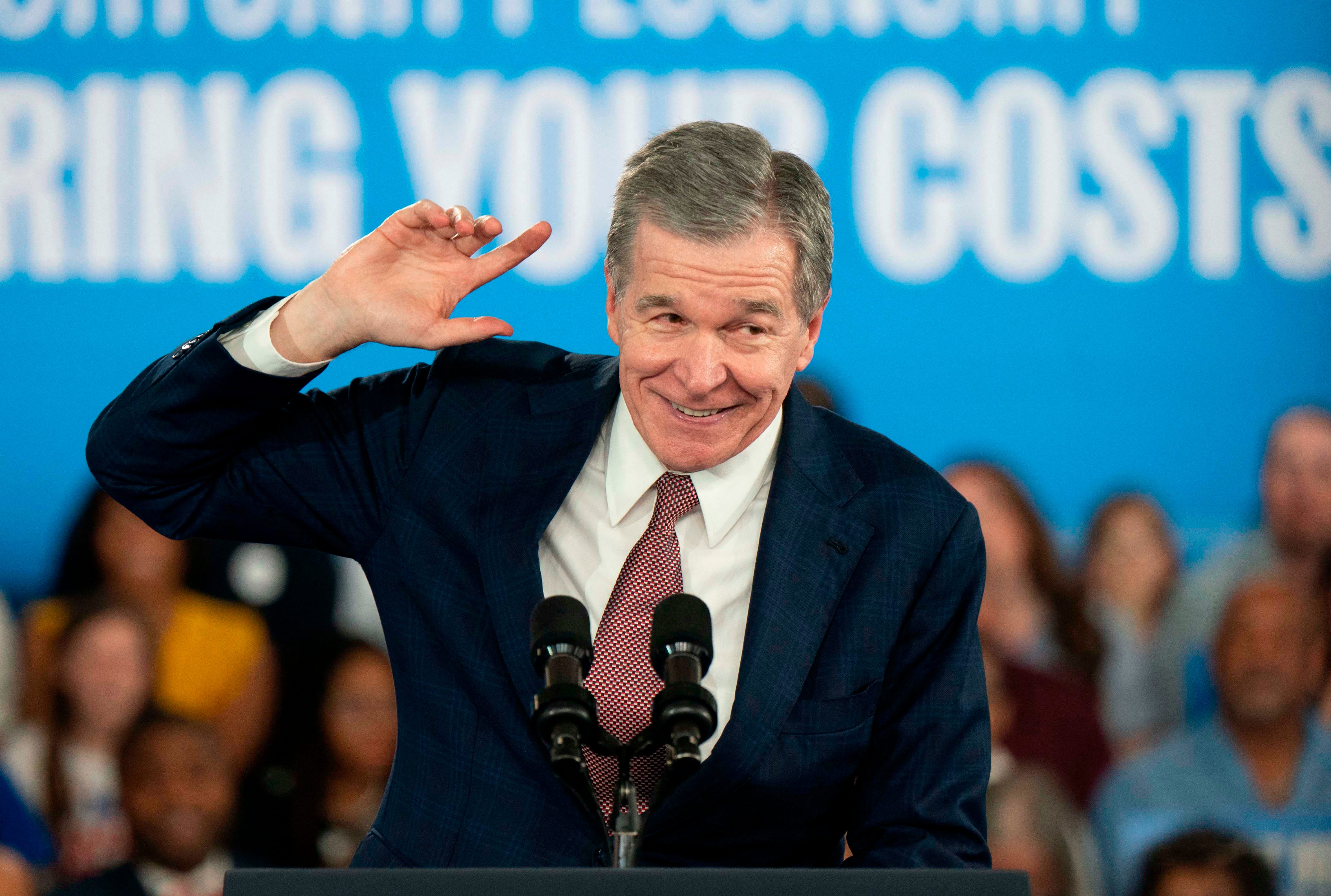
Democrats will nominate former Gov. Roy Cooper, who has been elected six times statewide in the Tar Heel State. Republicans are countering with Michael Whatley, a former chair of the state party who is best known for serving as RNC chair during the 2024 cycle.
The difference in candidate quality is substantial. Cooper is the strongest possible nominee Democrats could run in North Carolina. Whatley is relatively unknown, having never held elected office before. This disparity is seen in fundraising and polling. In the third quarter of 2026, Cooper raised $10 million and had over $8 million on hand, while Whatley raised just over $1 million. Cooper has led in every public poll and is seen as the consensus favorite.
No North Carolina US Senate race has been decided by under 3.5 percent since 2016, meaning Cooper is unlikely to rout Whatley. He is, however, the favorite in a race Democrats have to have.
Maine
Perhaps the most fascinating Senate race in the United States is in Maine, where in 2020 Republican incumbent Susan Collins won by almost nine percent, running 18 points ahead of Donald Trump.
The Democratic primary is between incumbent Gov. Janet Mills and current Sullivan harbormaster Graham Platner. Mills is a popular two-term governor who won by more than 13 points in 2022, but she’s 77 years old and would be the oldest freshman senator ever elected. Platner has never run for elected office and has been involved in a string of controversies, including authoring offensive Reddit posts and revelations of a Nazi tattoo. Platner is running as a progressive and is endorsed by Bernie Sanders and Ro Khanna, while Mills is the establishment candidate and endorsed by Chuck Schumer and Kirsten Gillibrand.
Collins has been in the Senate since 1997 and is an extremely strong incumbent, having won easily even in cycles even where Democratic presidential candidates carried the state. But 2026 can be different. Collins is saddled with the baggage of doing Trump’s bidding (she provided key votes for Brett Kavanaugh and RFK Jr. and for the “Big Beautiful Bill”) and she’s become one of the least popular senators.
With Collins’s approval rating underwater in Maine, her seat is an enticing pickup opportunity for whoever emerges from the primary.
Ohio
Once a swing state, Ohio has drifted right over the past couple decades and longtime Democratic Sen. Sherrod Brown narrowly lost his reelection bid in 2024 to now-Sen. Bernie Moreno. Brown is making a comeback and remains a strong candidate in the Buckeye State, having overperformed Kamala Harris by more than eight points last year.
But Brown arguably faces a stronger opponent this time around — Jon Husted, who was appointed by Gov. Mike DeWine to fill the seat formerly held by JD Vance. A former speaker of the Ohio House, Ohio secretary of state, and lieutenant governor, Husted has never won an election by less than 13 percent, even if he comes across as little more than a Trump toady publicly.
Given the headwinds in Ohio, Brown’s return to DC is unlikely, which in turn makes it very difficult for Democrats to retake the Senate. But early polling at least shows him within striking distance.
Dem reaches
Texas
The Lone Star State is the Democratic white whale. No Dem has won a statewide here since 1994, and Trump carried the state by 14 points last year. Yes, it seemed to be trending blue, but MAGA’s gains with Latinos put an end to that — at least for one cycle.
Fortunately for Democrats, the Senate primary features Ken Paxton, easily the worst candidate Republicans can put forward. Paxton, the current attorney general, is challenging incumbent John Cornyn, who though conservative is not especially popular among Trump fans.

Paxton’s tenure has been riddled with problems. He’s been indicted for securities fraud, allegedly cheated on his wife (and current state senator) Angela Paxton, and was impeached by the Texas House in 2023. He was the weakest Republican nominee running statewide in 2022 and almost lost outright four years before that.
The Democratic field includes Rep. Jasmine Crockett, who made a national name for herself skewering Republicans during hearings and on TV, and state Rep. James Talarico, most known for his appearance on Joe Rogan’s podcast and viral outspokenness against Christian nationalism.
It’s impossible to count on Texas coming through for Democrats, but the combination of a tough national environment and the GOP’s flawed candidates means that we’re in for another cycle of hoping and praying.
Alaska
Since Mark Begich’s narrow Senate win in 2008, Alaska has been fool’s gold for Democrats. Only one, Mary Peltola, has won statewide in the nearly two decades since, and she lost her US House seat last year despite overperforming Harris by 13 points.
Democrats’ best hope for defeating incumbent Dan Sullivan is probably nominating Peltola, who has been rumored to be considering a run. If she runs, Alaska is in play given her past electoral strength and Sullivan’s tepid approval numbers. But Sullivan is beatable even if the Democratic candidate ends up being someone else.
Iowa
Democrats are hoping Iowa becomes competitive again next year after many cycles of GOP dominance. Factors working in their favor include the strength of Democratic gubernatorial candidate, Rob Sand, the unpopularity of outgoing Republican governor Kim Reynolds, and the recession the Hawkeye State is experiencing in large part because of Trump’s tariffs.

Republicans will nominate Rep. Ashley Hinson, a former TV anchor who has a strong track record of overperforming. The Democratic primary will likely boil down to state Rep. Josh Turek or state Sen. Zach Wahls. Turek, a former Paralympian, won a Trump +8 seat in both 2022 and 2024. Wahls, who represents the very blue Iowa City, has won endorsements from the likes of Howard Dean and former Lt. Governor Patty Judge.
The race is likely Hinson’s to lose, but Trump is doing everything he can to make it tough on her.
Florida
While broadly seen as non-competitive, Florida was closer in 2024 than Iowa, Texas, and Alaska. Appointed incumbent Sen. Ashley Moody is running for her first full term. The Democratic field remains unsettled, but there’s still time for the race to develop ahead of the August primary.
Some have been optimistic about Florida because of the electoral success Democrats had in 2025, including winning Miami’s mayorship for the first time in 30 years. But while Moody is a clumsy public speaker, she’s no slouch, having outrun Ron DeSantis in both 2018 and 2022.
Nebraska
An unlikely path to a Democratic Senate majority is through Nebraska. Independent candidate Dan Osborn (who has the support of the Nebraska Democratic chair) is running again after losing statewide by seven points in 2024. He overperformed Vice President Harris by 14 points last year, but the Cook Political Report rates the race “Solid R” and notes that incumbent Sen. Pete Ricketts is a more formidable candidate that Osborn’s 2024 opponent (Sen. Deb Fischer) and “should easily win.”
On a heater, but needing an inside straight
Democrats flipped 25 legislative seats in 2025 — something Republicans didn’t manage to pull off even once. And things could get worse for the GOP before they get better considering Trump’s unpopularity and the fact his movement seems like a spent force when it comes to addressing the economic concerns that are top of mind for Americans.
While Democrats are a strong bet to retake the House, they’ll need everything to go right to win both chambers. But if that happens, a year from now we’ll be talking about the full lame-duckification of Trump and what it means for the 2028 primaries. That’s a nice note on which to end a year in which hope was often in such short supply.
Onward to 2026.
That’s it for this year
Thank you for being part of the Public Notice community in 2025. It was a tough time to be an American, but even in the States there’s still a lot to be grateful for as the calendar turns.
Whether you’re in the US or abroad, here’s to a great 2026. If you’re appreciated our coverage in 2025 and aren’t yet a paid subscriber, please consider clicking the button and becoming one.
Signing up now gives you full access to everything we publish all the way through the midterm elections and beyond. But perhaps most importantly, support from readers like you makes this newsletter possible and keeps it almost entirely free for everyone.
From the PN team to you and yours, we hope you have a safe and wonderful New Year’s. We’ll be back on Friday with our first edition of 2026.
Cheers!

Thanks for all you efforts this past year. Especially watching All. That. Television!
We can but hope, though I think it more realistic that Democrats can reduce the Republican margin in the Senate and hope to win all three houses next Presidential one.
Nevertheless one key change helps the Democrats in the mid term that isn't talked about enough. Democrats have replaced Republicans as the party that does better with low turnout elections. Look at the way they have been over-performing in Special Elections!
That's not so good news in Presidential elections but definitely helps in the mid terms.