

Ahead of PN’s 5th anniversary next week, we’re offering paid subscriptions at the special yearly rate of $40 (or about 16¢ per edition). This newsletter is only possible thanks to the support of paid subscribers. If you’re not already one of them, please sign up and keep PN thriving for many years to come.
Thanks for reading, and here’s to the next five years.
In its current role as a wholly owned subsidiary of President Donald Trump, the Department of Justice continues to make a mockery of itself.
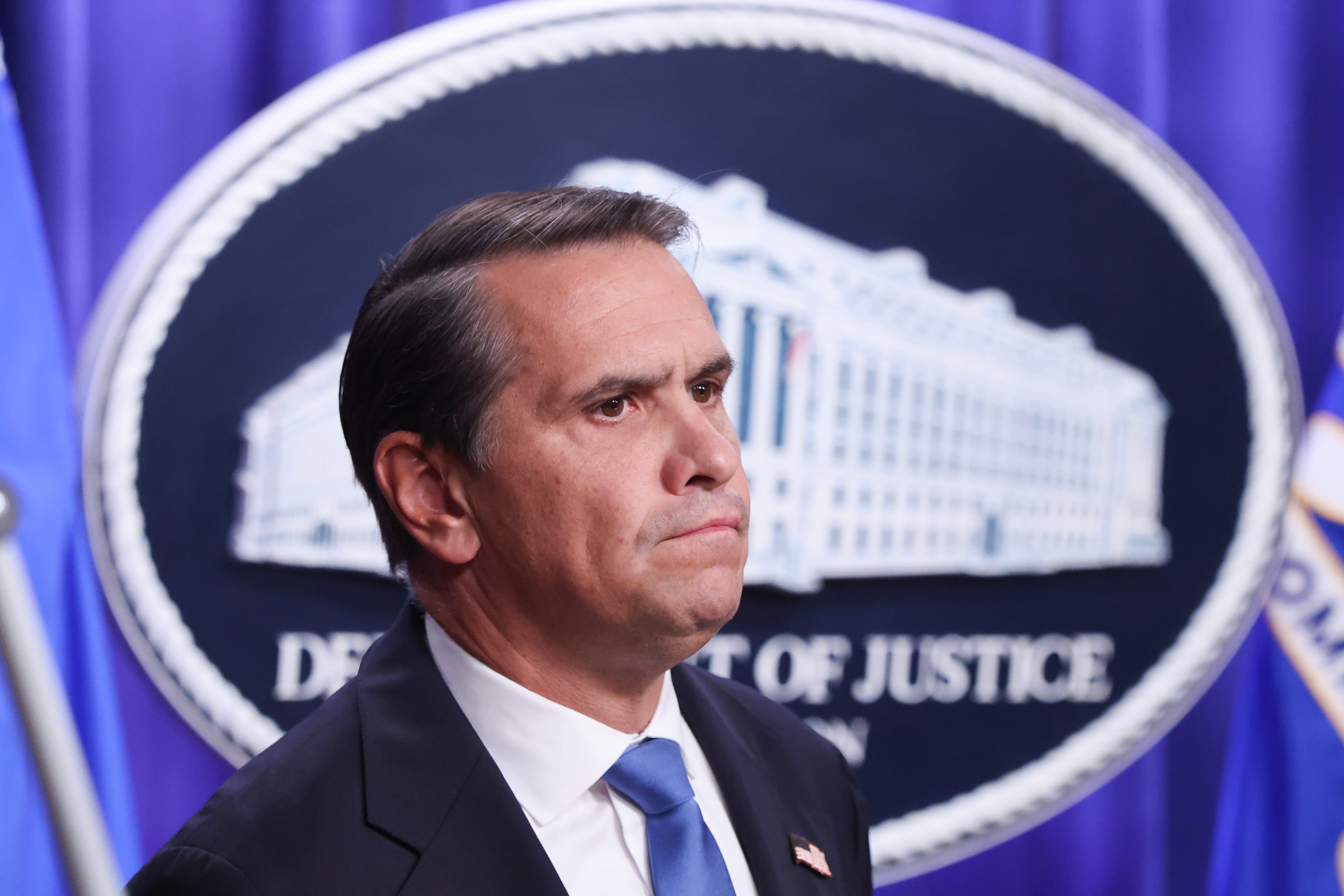
On Wednesday, Attorney General Todd Blanche puffed out his chest and boasted that the DOJ had filed a judicial misconduct complaint with the Eighth Circuit Court of Appeals against all but one district court judge in the District Court of Minnesota.
What “various judicial canons” did literally all but one of Minnesota’s federal district court judges violate and how? Well, they spoke to the New York Times and said things that made Trump sad.
You will not be surprised to learn that this does not constitute a violation of judicial ethics, but that little fact isn’t going to stop Blanche and company, now is it?
A slippery dope
In September, then-Chief Judge for the District of Minnesota, Patrick Schiltz, gave an interview to the Times, which also spoke with six of the seven other judges on Minnesota’s federal bench.
Yes, having a sitting judge talk to the press about how the administration’s behavior imperils the rule of law is unprecedented, but so is having an administration that imperils the rule of law on the regular. Schiltz specifically declined to discuss any ongoing cases, which could have caused some ethical problems. Since he didn’t, the DOJ just decided to invent, wholesale, a new judicial canon judges have to follow: “Judges are ethically prohibited from commenting publicly on cases pending in any court and making political or policy statements concerning matters that are or have been before them.”
The first half of the sentence is true and drawn from Canon 3.A.(6) of the Code of Conduct for United States Judges. But the second half — that judges cannot make “political or policy statements concerning matters that are or have been before them” — is nonsense that doesn’t appear anywhere in any of the canons.
In fact, it substantially misstates the canons themselves, which include a carveout in Canon 4.A.(1): “A judge may speak, write, lecture, teach, and participate in other activities concerning the law, the legal system, and the administration of justice.”
And just in case that wasn’t clear, the commentary on that canon specifically states that, well, we live in a society: “Complete separation of a judge from extrajudicial activities is neither possible nor wise; a judge should not become isolated from the society in which the judge lives. As a judicial officer and a person specially learned in the law, a judge is in a unique position to contribute to the law, the legal system, and the administration of justice, including revising substantive and procedural law and improving criminal and juvenile justice.”

Schiltz’s comments to the Times are a textbook example of discussing the legal system and the administration of justice. They were broadly about the pressures on the courts from Operation Metro Surge, not a statement about any case or even group of cases.
He even gave the DOJ a benefit of the doubt it most certainly does not deserve: “My impression was that most, if not all, of the noncompliance was due to incompetence, not due to conscious defiance of orders.”
So, that’s the first mendacious step here: creating a new rule out of thin air and then whining that judges aren’t following it. Then, the DOJ’s complaint takes text from the Times article and presents it as if it’s a quote from Schiltz himself. This is from the Times:
“In a rare 90-minute interview seven months later, Judge Schiltz said his order had been prompted by concern that the Trump administration’s disregard for court orders was clogging his courthouse to a near standstill, contributing to rising tensions in the protest-filled city and, ultimately, putting the constitutional order at risk.”
Here’s how this is characterized in the complaint:
“During that interview, Judge Schiltz apparently told a reporter that…This purported ‘disregard’ had ‘clogg[ed] his courthouse to a near standstill, contributing to rising tensions in the protest-filled city [of Minneapolis] and, ultimately, putting the constitutional order at risk.’”
You see the slipperiness here? Without quite crossing the line into an outright lie, the DOJ complaint does everything to lead the reader to believe this is something Judge Schiltz actually said, rather than the New York Times’s characterization of his comments.
Other things in the complaint are, to be perfectly frank, impossible to be read as anything nefarious, even under the unhinged standards of the DOJ. For example, Schiltz told the Times that he needed to check his phone constantly during the surge because “the cost of me enjoying a movie could be somebody waking up in New Mexico the next day when they shouldn’t have.”
Here, Schiltz was commenting on the chaos of the judicial workload during the siege — that if judges were not available to address the slew of habeas petitions clogging the court, an immigrant might be sent to another jurisdiction before their petition could be heard.
This is simply a statement of fact. Detainees were transferred from Minnesota to Texas within hours, often before their intake processing was even complete. Those transfers sometimes violated existing court orders and, indeed, in a January order, Schiltz detailed some 96 court orders the administration had defied in 74 cases.

To be scrupulously fair to the administration, not all of those violations involved ICE transferring people to Texas in violation of a court order. Sometimes, they were entirely different types of violations, like refusing to release someone after multiple court orders requiring them to do so. Somehow, that doesn’t seem like much of a defense here though, now does it?
Here’s another example of what the DOJ alleges is heinously unethical behavior: “They weren’t arresting, in my view, people who were dangerous criminals on the street.” That’s from Judge John R. Tunheim, also a subject of the complaint.
However, this is not a statement about any matter pending before any court. It’s a vague, high-level opinion about ICE’s behavior. It’s also one borne out by actual facts. Of the over 3,700 people people arrested during Metro Surge, the federal government’s own data shows that less than one quarter of them had any criminal conviction on their records at all. Most were arrested for alleged violations of immigration law — which is a civil, not criminal, matter.
Here’s another slippery thing: Much of this complaint relies upon saying that the Eighth Circuit has already weighed in on judges speaking to the press and concluded that doing so in the fashion Schiltz did was impermissible. The complaint stitches together a bunch of quotes from White v. NFL, an Eighth Circuit case about whether the Atlanta Falcons were entitled to recover money from Michael Vick after he pleaded guilty to federal dogfighting charges and was suspended from the league. But the case was in the context of an ongoing, lengthy antitrust settlement consent decree that the judge, David Doty, had overseen decades earlier.
The NFL demanded the judge be removed from the case because he made comments to the press that showed bias. In evaluating that argument, the court did indeed say the things that the DOJ complaint says it did, like “self-interested behavior in submitting to press interviews may also lead to accusations that a judge will be motivated to decide issues in a way that prompts favorable media attention.”
But what the DOJ scrupulously fails to tell the Eighth Circuit in this complaint is that the White v. NFL court denied the demand for recusal, even where Doty had commented on the ongoing litigation. The court concluded that an average person would not recognize Doty’s comments as reflecting bias because they “focused almost exclusively on the well-documented history of the antitrust settlement and did not address the merits of the Vick proceeding.”
The bottom line here? The case the DOJ relies on as the standard for whether Schiltz and the other judges in Minnesota violated their ethical duties specifically held there was no such violation in that instance.

Extracting generic language from the case about assessing bias while omitting how the Eighth Circuit analyzed and applied it is the sort of thing even first-year law students know walks right up to an ethical line: mischaracterizing a case holding.
The DOJ’s complaint is also a thinly-veiled way to attack the Minnesota lower court rulings on habeas petitions. But courts have explained that “a complaint of judicial misconduct is not a vehicle for a disappointed litigant to vent his anger” and that “judicial misconduct proceedings are not a substitute for the normal appellate review process.”
The DOJ seems to believe that if a lower court rules one way and then some Trumpy judges, either at the Eighth Circuit or at the Supreme Court, overturn that ruling, it somehow reflects misconduct on the part of lower court judges. But that’s just how the law works, and everyone at the DOJ knows it.
Rules for thee, not me
Unlike the crew at the DOJ, it’s pretty clear that Judge Schiltz talked to actual legal ethics specialists before talking to the Times, as he explained in a statement to ABC News:
“As legal-ethics experts have confirmed, I was acting well within the ethical rules that apply to federal judges in speaking to the New York Times. Indeed, in February of this year, the Committee on Codes of Conduct issued an advisory opinion to emphasize that federal judges may ‘speak[] and writ[e] on core judiciary matters such as advocacy for the rule of law and judicial independence.’ That is exactly what I did.”
Of course, this isn’t the first time the DOJ has filed a ridiculous complaint like this. They started down this path by bringing the world’s flimsiest complaint against US District Judge James Boasberg, who the administration remains incandescently furious with for pursuing contempt proceedings after the DOJ explicitly flouted his court order to turn two planeloads of detainees around.
That’s the complaint where the DOJ said it was misconduct for Boasberg to have expressed concerns to his fellow judges that the administration might not follow court orders, which is, of course, exactly what the administration did. That complaint, similar to this one, was an attempt to intimidate a federal judge and relitigate a judge’s ruling. But in that one, the administration based its complaint on some “Attachment A” that it never provided to the court and refuses to provide to anyone else, which just highlights how flimsy and made up the whole thing is.

At the same time the administration has been demanding judges adhere to some newly invented ethics code — the core of which seems to be that you can never rule against Trump — it’s fighting to exempt DOJ attorneys from any ethical obligations whatsoever. Yes, the DOJ does not believe that misconduct should have any consequences — indeed, that state bars should not even be allowed to investigate, much less discipline, any of the motley crew still remaining at the agency.
What is becoming increasingly clear is that the administration does not see itself as a litigant before the court and does not see its attorneys as bound by court orders. It sees DOJ attorneys as somehow coequal with the Supreme Court justices, the only attorneys in the federal system not bound by ethical rules.
Like so many things in the Trump era, you can thank Chief Justice John Roberts for this entire mess. Had the worst chief justice in history not overseen the wholesale degradation and kneecapping of the lower courts, we wouldn’t be here. Just as much as Todd Blanche, Roberts owns this, and it should stay a shameful millstone around his neck forever.
That’s it for now
We’ll be back with a new episode of the PN Pod this afternoon and a special Saturday edition tomorrow.
If you appreciate today’s PN, please do your part to keep us free by signing up for a paid subscription.
Thanks for reading.