

PN is supported by paid subscribers. Become one ⬇️
“The Iranians don’t seem to realize they have no cards, other than a short term extortion of the World by using International Waterways,” President Trump huffed on Truth Social on Friday. “The only reason they are alive today is to negotiate!”
It was vintage Trump: Pathetic bluster, a pointless threat, a misunderstanding of the situation, and an inability to grasp what those on the other side might be thinking.
There may eventually be an agreement to interrupt or even end the Iran war, mostly because the president is so desperate to extricate himself from the conflict he blundered into. But it won’t be because Trump is such a terrific dealmaker. In fact, the man who made his reputation on “The Art of the Deal” remains the world’s worst negotiator, and we’re seeing the proof right now.
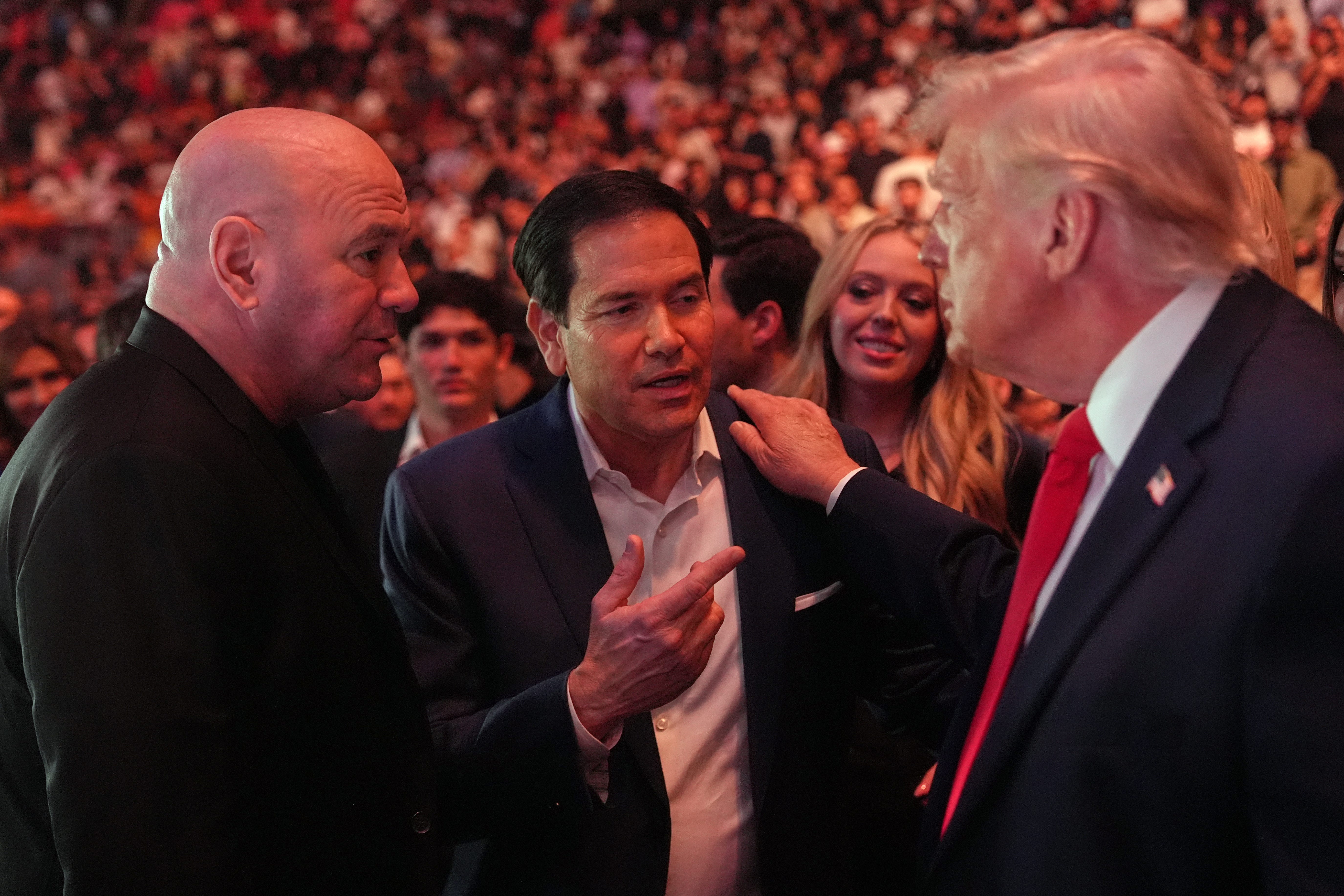
While he wasn’t present at the brief negotiation in Pakistan between Iranian and American officials (he went to a UFC fight instead), everything about it had Trump’s fingerprints.
The US was represented by charmless Vice President JD Vance, Trump’s real estate buddy Steve Witkoff, and his son-in-law Jared Kushner, whose talents for anything other than influence-peddling on a massive scale remain imperceptible. They apparently arrived insisting that since we are big and strong and the war has been a spectacular American success, Iran should make all the concessions. And when Iran failed to do so after a single day, Vance et al packed up and went home.
Trump still seems to believe that negotiations he has as president are basically the same as strong-arming a small business into giving him a better deal on some new curtains for one of his hotels. Preparation, understanding, and patience are for the weak; all he needs is to show is that he’s the dominant one, and his opponent will capitulate. Even when the strategy fails, he learns nothing.
Trump has always been a terrible negotiator
In his business career, Trump had a drive and ambition that allowed him to continue striving despite repeated defeats and bankruptcies. But he never seemed to take any lessons from his failures, and built up a belief that he had an innate talent for dealmaking that eluded ordinary mortals.
He always assumed that anyone with experience or substantive knowledge was actually an idiot. In 1984, the 38-year-old Trump, whose greatest accomplishments were a few developments and frequent appearances in the New York tabloid gossip pages, told the Washington Post that he should be the one to negotiate an arms control agreement with the Soviet Union.
“It would take an hour-and-a-half to learn everything there is to learn about missiles,” he claimed.
A few years later, he reportedly met diplomat Richard Burt, who would lead intricate negotiations for the START treaty, at a wedding and told him the key to achieving a complex nuclear deal with the Soviets.
“He said that he would initially be the gracious host and ask the Soviet delegation to get comfortable around the table,” Robin Wright reported in the New Yorker. “Then, Trump told Burt, he would stand up, shout ‘Fuck you!,’ and immediately walk out of the room.”
Why the Reagan administration failed to put him in charge of the negotiating team is a mystery.
It was around the same time that he published “The Art of the Deal,” the key artifact in the creation of his dealmaker myth.
“Deals are my art form,” his ghostwriter wrote in the book’s opening. “Other people paint beautifully on canvas or write wonderful poetry. I like making deals, preferably big deals. That’s how I get my kicks.”

But readers looking for insights and practical tips on negotiating were disappointed; the book is mostly a collection of anecdotes about fights with politicians and other developers. The advice he does offer is either real estate-specific (“Enhance your location”) or banal generalizations presented as profound truths.
“My style of deal-making is quite simple and straightforward,” he says. “I aim very high, and then I just keep pushing and pushing and pushing to get what I’m after.”
In dealing with Iran, Trump might have heeded this bit of wisdom from the book: “Leverage is having something the other guy wants. Or better yet, needs. Or best of all, simply can’t do without.” Like, for instance, the unconstrained flow of oil through the Strait of Hormuz.
When Trump got to the White House, his supporters expected a flurry of dealmaking the likes of which Washington had never seen. But it never materialized. In fact, unlike most of his predecessors, in five-plus years in office Trump has never negotiated a complicated piece of legislation. In his first term, he signed just one major law — a tax cut — and did the same in his second term. By all accounts he was barely involved in the crafting of those bills, and it’s no great feat to pass a tax cut in a Congress controlled by Republicans in any case.
Trump had no patience or energy for the difficult negotiations involved in legislating — understanding the incentives, desires and fears of hundreds of members; balancing the power of multiple factions in both parties; grasping the substantive policy issues at play. Whenever he tried, he would quickly get bored or frustrated, then retreat and forget about the whole thing.
In one emblematic moment early on, he briefly tried and failed to keep his promise to repeal and replace Obamacare, and was flummoxed by the process.
“Nobody knew healthcare could be so complicated,” he said in wonder, when in fact everybody knew it except him. Rather than trying to master the complexities, he spent years promising a “terrific” healthcare plan (which was always “two weeks” away) and never delivered — precisely because getting it passed would have involved negotiations he was utterly incapable of managing.
His foreign policy record was equally strewn with failure. The list of deals he promised in his first term that never materialized included one to convince North Korea to give up its nuclear weapons, a deal to have Mexico pay for his border wall, and, of course, a new nuclear deal with Iran.
The Iran war is a product of incompetence
This war is a direct result of Trump’s failure as a dealmaker.
He came into office denouncing the Joint Comprehensive Plan of Action (JCPOA), the agreement to constrain Iran’s nuclear program negotiated by multiple countries including the United States. But what seldom gets mentioned is not just that he wanted to abandon it, but that he promised that with his superhuman negotiating skills, he’d get a better deal in short order.
The JCPOA took over a year to negotiate, involving complex and sensitive issues around uranium enrichment, monitoring by the International Atomic Energy Agency, sanctions relief, the release of Iranian funds frozen in American banks, and its access to the international financial system.
While Trump obviously hated it because it was negotiated under Barack Obama, his chief stated complaint was that it didn’t give the US everything it wanted while giving nothing to Iran. When he abandoned the deal in 2018 (against the advice of his national security team, which at the time included multiple sane officials whom he’d eventually fire for insufficient sycophancy), he insisted that the Iranians would come crawling back and give in to his every demand.
“They are going to want to make a new and lasting deal,” he said. Which, of course, didn’t happen.
That is precisely the position the US is taking in the current negotiations: The only acceptable resolution is that Iran makes all the concessions and the US makes none. As Vance said upon his departure from Pakistan, “They have chosen not to accept our terms.” Trump reiterated that on Sunday:
But who has the “cards” here? Trump seems to think the only card that matters is being the bigger and stronger country. But Iran, it turned out, had some extraordinarily potent cards to play, especially the Strait of Hormuz.
Iran plunged the entire world into an energy crisis, one that is hitting the US in the form of ballooning gas prices and spiking inflation. And for all the devastating violence Trump has inflicted on Iran, the regime is intact and its resolve seems undiminished.
And now, Trump is threatening his own blockade of the Strait, which might deprive Iran of the tolls it wants to collect and its ability to move its own oil, but will only extend the energy crisis. It’s tantamount to saying “Not only will I punch you in the face, I’ll punch myself too!”
All of Trump’s weaknesses as a negotiator are now on display: His refusal to comprehend the substance, his childish understanding of the nature of power, his inability to grasp the perspective of his opponents, and his belief that anything can be accomplished with sufficient threats and violence.
You’d have to be the world’s worst negotiator to think his approach will work. Unfortunately, that’s exactly what Donald Trump is.
That’s it for today
We’ll be back with more tomorrow. If you appreciate today’s PN, please do your part to keep us free by signing up for a paid subscription.
Thanks for reading, and for your support.
Back in 2006, I was doing a job in a Connecticut town off the Merrit Parkway, an area in close proximity to NYC. At the time, I still owned a TV set and was vaguely aware of, and nauseated by, Trump. The house I was working in was a large one, dated and nothing special except for its location. The remodel consisted of basic window dressing for a rabbits warren of rooms with the exception of a grand entrance hall that was totally out of scale and style. My job was to install a Brazilan teak balustrade that wound up the circular staircase and to the mezzanine that connected to the second floor rooms that were small and nothing to write home about. I have worked in many mansions that were well designed and well built. This was not one of them.
To get to my point, in the course of my work I always check out the rest of the house. One "improvement" was a practically windowless study, that while made from expensive materials, had all the charm of sixties basement paneled with cheap sheets of plywood from Grossmans, IFYKYN. While I was in the room checking it out, a realtor and her friend from NYC came into it and the friend couldn't stop gushing over the house and how she lived in a Trump condo and how it was so great and how great Trump was.
You can take from this anecdote what you will but it marks a point in my career that solidly established in my mind a contempt for those who know the price of everything and the value of nothing, some deal.
The image of Trump punching himself in the face should be hilarious. Then you realize he is also punching each and every one of us in the face at the same time.😡 His brand did wonders for Victor Orban… lol.