

Public Notice is supported by paid subscribers. Become one ⬇️
Early in his first term, President Trump said that because he thought CNN and MSNBC were too critical of him, that meant “they’re illegal, what they do is illegal.”
Though it would be hard to think of an idea more antithetical to the Constitution and the entire American project than It should be against the law to criticize the president, he has never let it go. Last September, he said that news coverage is overwhelmingly “against me,” adding, “They’ll take a great story and they’ll make it bad. See, I think that’s really illegal.”
It was easy to dismiss those statements as the predictable whining of a toddler. But a year into his presidency, Trump’s Justice Department is moving to make it a reality, or at the very least to make members of the media worry that if they’re too critical, the criminal justice system might be deployed against them.
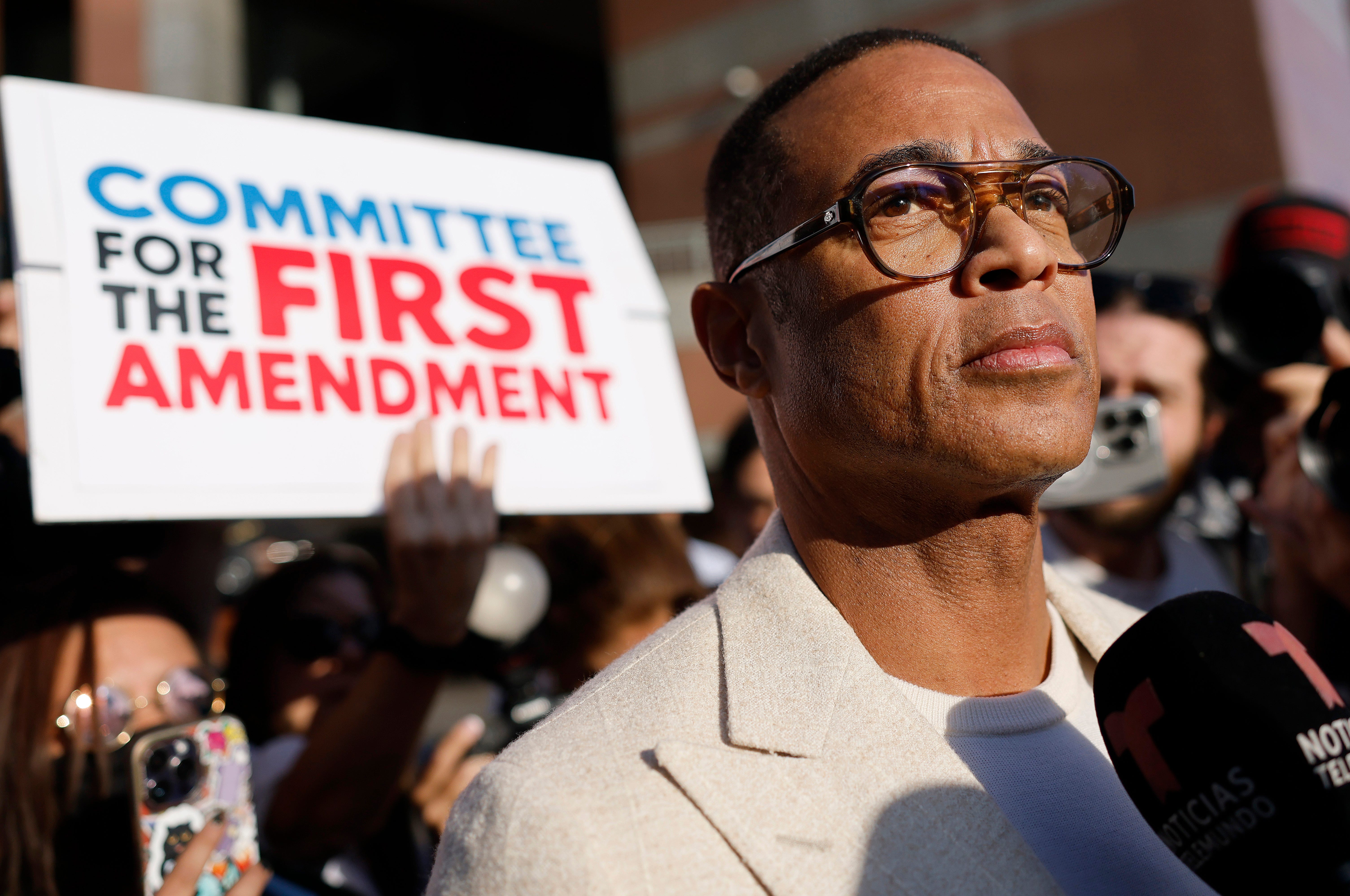
The first target is Don Lemon, who as a former CNN anchor has a high enough profile that making an example of him will send a powerful signal to others who criticize the administration. But it goes beyond the media. This is better understood as piece of a broader strategy to intimidate the entire country into submission.

The administration seized its opportunity
Two weeks ago, a small group of protesters disrupted Sunday services at a church in St. Paul where a high-ranking local ICE official is a pastor. Accompanying the group were two reporters, Lemon and Georgia Fort, a longtime Minnesota-based journalist.
The administration clearly saw it as an opportunity to highlight crazy lefties attacking oppressed Christians. “Demonic and godless behavior and also appears facially illegal,” tweeted Harmeet Dhillon, head of the Justice Department’s Civil Rights Division.
So DOJ swung into action, moving to file federal criminal charges against not only the protesters but Lemon and Fort as well. Because this is an administration that lives to produce content, the White House posted an AI-altered photo of one of the protesters being arrested; the false image showed her crying (she hadn’t) and darkened her skin.


In a legal theory that might generously be called creative, the DOJ sought to charge both protesters and journalists under the Freedom of Access to Clinics Act, a 1994 law that makes it a crime to physically block people from entering a facility to obtain reproductive health services; the law extends the same protection to people entering houses of worship to exercise their religious liberties. The problem is that the group didn’t physically prevent anyone from entering the church, and even if the protesters had, Lemon and Fort were reporting, not protesting. As of this writing, the First Amendment is still part of the Constitution.
Carol Leonnig of MSNOW reported that career federal prosecutors in Minnesota and Los Angeles refused to take part in the case against the journalists because they thought the charges couldn’t stand up in court. And they were right: When the government asked a federal magistrate judge for an arrest warrant, they were denied.
According to the New York Times, “Attorney General Pam Bondi and other senior Justice Department officials were furious.” So they tried to get an appeals court to overrule the judge, and were rejected again; the court noted that the DOJ had presented no evidence to suggest that the journalists had engaged “in any criminal behavior or conspired to do so.” Determined to teach Lemon a lesson, they finally convinced a grand jury to hand down an indictment, and masked agents arrived at Fort’s house to arrest her.
It’s hard to imagine that Lemon and Fort could possibly be convicted of a crime. But that’s not really the point. Most of us who have never been arrested would like very much to avoid it, if for no other reason than that it involves a huge hassle and expense; the state can punish you quite severely by arresting you even if it has little or no chance of ever obtaining a conviction. That’s true even for people of relative privilege, let alone those who can’t afford bail or a lawyer.
The message the Trump administration is sending to members of the media both famous and obscure is this: The gloves are off. If we decide we don’t like what you say, we’ll bring the weight of the federal government down on your head.
This wasn’t only the unprecedented action the administration took against a journalist in the last couple of weeks.
Hannah Natanson, a Washington Post reporter who has been covering Trump’s dismantling of the federal government, had agents show up at her door and seize her phone, smartwatch, and two laptops. Attorney General Bondi justified the seizure by saying Natanson was “obtaining and reporting classified and illegally leaked information from a Pentagon contractor.” But while it may be against the law to leak classified information, no journalist has ever been prosecuted for receiving and reporting such information — though the law on whether they could in theory be charged is a bit unsettled.
If reporters were routinely treated the way Natanson has been, it could make it much harder to expose government wrongdoing. Many of the most consequential scandals in recent history involved the reporting of classified and embarrassing information the government wanted to keep secret. Which is precisely the point: If the Trump administration can make reporters afraid to do their jobs, it will give it a much freer hand.

And while previous administrations have aggressively targeted national security leaks (especially the Obama administration, which in some cases monitored the journalists receiving those leaks), the distinguishing feature of Trump’s burgeoning attack on the press is its scope. He isn’t just going after reporters on matters affecting national security; he wants to intimidate everyone who reports on him.
There were previews of this in his first term. To take one example, when I was at the Washington Post, Trump sued the paper over two opinion columns, one I wrote and one written by my then-colleague Greg Sargent. His claim that we had defamed him was laughable, and the suit was eventually tossed out of court. But we had the benefit of an employer with a team of lawyers to handle the case, and it was the paper, not us personally, who would have been on the hook for damages.
So far, Trump hasn’t sued any independent journalists — but he might. Just before he took office he was asked whether he thought he would sue “people with individual platforms, social media influencers,” and he replied, “Oh, I do. I do. I think you have to do it. Because they’re very dishonest.”
Trump is desperate to dominate
Today, Trump’s vindictive whims are quickly translated into Justice Department action.
The way he’s targeting the press isn’t just about quieting criticism so he doesn’t have to hear people being mean to him. It’s the same impulse we see on the streets of Minneapolis: He wants to dominate those who oppose him and force them into submission.
As he told governors on a conference call when protests against police brutality exploded in the wake of George Floyd’s murder in 2020, “You have to dominate. If you don’t dominate, you’re wasting your time. They’re going to run over you. You’re going to look like a bunch of jerks. You have to dominate and you have to arrest people and you have to try people and they have to go to jail for long periods of time.”

Trump and his goons want to intimidate all of us — not just journalists, but anyone who might consider criticizing or protesting or objecting. He wants to arrive at a point where he does what he wants and no one has the courage to object. This is the way of tyrants everywhere, who know they don’t have to murder or imprison everyone who might expose or criticize them. They only need to do it to enough high-profile exemplars for the rest to decide that stepping out isn’t worth the risk.
For most of us in the journalism business, the risks of the job are pretty low even in a time like this. We don’t often dodge shrapnel in war zones, or brave tear gas and rubber bullets to report at protests, or arrange clandestine meetings to receive secret information about the next government scandal knowing that the Justice Department might seize our devices. The ones who do those things are not an easily intimidated group of people. At the same time, those who do their work from safer locations haven’t shown much inclination to temper their critiques.
That isn’t to say that Trump hasn’t found an ample supply of cowards who will bend the knee to him, in the news business as in other prominent institutions (just look at what has happened to CBS News, or the aforementioned Washington Post). But he has been unable to silence the voices of dissent, whether in media or in the streets. Every day he wakes up to a chorus of well-deserved denunciation, and that will be true as long as he is in office.
America, it turns out, is full of people unwilling to submit to authoritarianism. Even if it might cost them.
That’s it for today
We’ll be back with more tomorrow. If you appreciate today’s PN, please do your part to keep us free by signing up for a paid subscription.
Thanks for reading, and for your support.
This isn’t about intimidating Don Lemon. It’s about establishing the precedent that journalism equals criminal conspiracy when the regime decides it does.
Notice the pattern:
Federal magistrate judge denies warrant (no evidence of crime). Appeals court denies DOJ request (no evidence). Career prosecutors refuse the case (can’t win in court). But DOJ keeps pushing until a grand jury indicts anyway.
That’s the mechanism. When legal procedures don’t produce the outcome you want, you bypass them until something works.
The conviction doesn’t matter. The arrest is the punishment. The process is the deterrent.
Hannah Natanson getting her devices seized for reporting leaked information follows the same logic. No journalist has ever been prosecuted for receiving classified information, but the regime is testing whether they can change that precedent. Not because they’ll win the case, but because seizing devices and threatening prosecution makes other journalists think twice before publishing.
It’s constructing the enforcement apparatus for selective prosecution. The regime doesn’t need to arrest every critical journalist. They need to arrest enough high-profile ones that the rest self-censor.
That’s how authoritarian capture of media works…you don’t shut down every outlet, you make everyone afraid to push boundaries.
The people who stayed in DOJ after the purge are the ones willing to bring these cases. Career prosecutors refused. The apparatchiks who replaced them or who calculated compliance was worth it, they’re the ones making this operational.
That’s the leverage structure at work. Not everyone gets arrested. Just enough to send the message.
—Johan
I also wrote about this leverage structure in my piece yesterday.
Just imagine the screams if the Biden administration had even investigated someone in Fox News, OAN or Newmax, let alone charged them after losing twice in court.