

Public Notice is supported by paid subscribers. Become one ⬇️
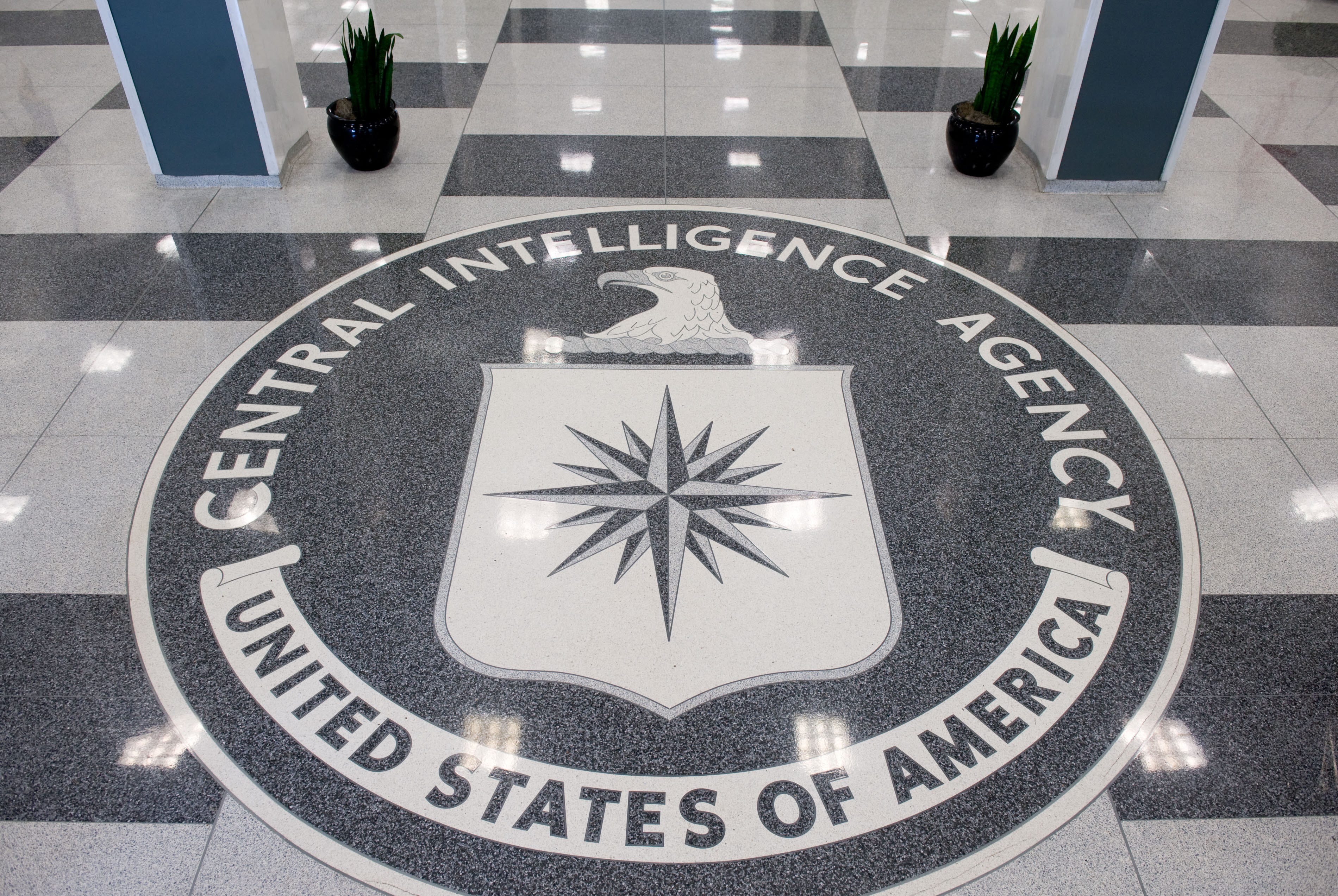
When the Trump administration closes down public access to yet another worthwhile resource, it doesn’t always make news. But the decision last week to shutter the CIA World Factbook stands out for what it reveals.
This administration has been fighting a sweeping information war meant to distort and suppress facts, ideas, and history that doesn’t “align with the president’s agenda,” in the phrase they so often use. But at the same time, they’re also waging a war on usefulness.
The CIA produced the Factbook, a concise roundup of facts and figures about every country in the world, since the 1960s; it started as an internal resource and then was made public so anyone could access it. If you wanted to know how many square miles Argentina is, or see a list of political parties in Belgium, or find out what the GDP of Cameroon was last year, the Factbook was a handy resource. But not anymore. Not only will the CIA stop producing new iterations, all previous versions have been removed from the web (though they can still be found at the Internet Archive).
It’s the latter part that gives away their intentions. What would the cost be of keeping the old versions of the Factbook online? Essentially zero. So what’s the point of deleting them?

In most of the places where the administration uses its gigantic eraser, it isn’t hard to discern the ideological intent. When information about slavery is purged from National Parks, it’s obviously because this is a white supremacist administration that finds any true accounting of history inconvenient. When the administration takes down information about climate change, it’s because it wants to stop all efforts to mitigate global warming. But there’s nothing partisan or contentious about the CIA World Factbook, and it’s hard to imagine how allowing people to use it could impede the MAGA agenda.
Unless, that is, you realize that the Factbook had to go precisely because it was useful.
Deleting data — and state capacity
To quote Joni Mitchell, you don’t know what you’ve got ‘till it’s gone, and that is how most Americans may be growing aware of all the useful information the government gathers and makes available.
The Trump administration has shut down federal data-collection efforts that have existed for decades, especially in science and public health, on everything from maternal mortality to drug abuse to child drownings. By some estimates, over 3,000 public databases have been taken offline, leaving independent researchers scrambling to download and preserve data sets before the administration can destroy them forever. Agencies such as the National Center for Education Statistics and Energy Information Administration have been reduced to skeleton crews.
Often, these data are of immediate interest only to academics and policy wonks. While one can understand why the Trump administration would want to deprive them of access to something like historical climate data, it isn’t as though the outcome of the midterm elections hinges on whether the public can get a look at the numbers. But there’s a deeper goal at work, the same one that motivates the cancellation of billions of dollars in research grants for science and medicine, the virtual shutdown of the Consumer Financial Protection Bureau, the cuts to national parks, the end to funding for public broadcasting, and so much more.

Wherever the government is doing something helpful or useful — anything that might make a regular person say, “Thanks, federal government” — it has been targeted for termination.
Sometimes that means eliminating what used to exist, and at other times it means making programs and agencies worse even if they remain in existence. The Trump administration has pushed out 350,000 federal workers — including 10,000 with PhDs in science — dramatically weakening the capacity of the government to solve problems and serve the public. At the same time, it has increased red tape and beefed up its ability to make people’s lives unpleasant.
Getting food stamps is more difficult and cumbersome than it used to be, since now you have to document that you’re working in order to receive your benefits. Those subsidies that used to make health insurance affordable for millions? Snatched away. Because the IRS has seen its workforce gutted, the significant improvements in customer service made during the Biden years will probably be wiped away; get ready for a tax season full of frustration and delays.
About the only place people can see an active and vigorous federal government at work is in the army of masked thugs deployed around the country to conduct immigration enforcement. In other words, the government that people see is a powerful force of violence, mayhem, and the deprivation of fundamental rights, but everything it’s supposed to do to actually serve people is being done worse.
Beyond “government is the problem”
When he was inaugurated in 1981, Ronald Reagan told Americans that “government is not the solution to our problem; government is the problem.” It marked a dramatic ideological shift both rhetorically and practically, and one of the most successful reorientations of public opinion and policy in our history — it would be 30 years before Democrats were able to pass vigorous spending to address both immediate and long-term challenges.
Reagan had support from powerful figures across the Republican coalition fighting to destroy state capacity; anti-tax activist Grover Norquist famously said “I don’t want to abolish government. I simply want to reduce it to the size where I can drag it into the bathroom and drown it in the bathtub.” More important was what his group Americans for Tax Reform called “The Pledge,” an oath it convinced nearly every Republican in Congress to take for decades, promising that they would never support a tax increase for any reason. If the government couldn’t pay for things, it wouldn’t do things.
But it turned out that those same Republicans were fine with deficit spending, and not only did they find plenty of projects they wanted to spend money on, they allowed the growth of a federal government apparatus that took on useful tasks in everything from health to infrastructure to agriculture. Like Reagan himself, they might have tried to discredit government, but they were willing to see it perform plenty of useful work — especially the things that didn’t have enough ideological valence to arouse their ire.
But not anymore. Though Trump doesn’t have anything like the ideological vision Reagan had, judged by his actions he is far more committed to destroying the government than Reagan ever was.

That’s not to say that no one has benefited from federal help in the last year. For instance, in October Trump approved disaster aid requests from Missouri, Nebraska, and Alaska, but denied requests from Vermont, Illinois, and Maryland. Everyone knows that his help is temporary and conditional, given not because its recipients are American, and not because there are good practical reasons for it, but only so long as the people there vote the right way and support the president.
This is effectively the domestic version of the way Trump has so utterly squandered America’s “soft power” overseas. At its best, the America seen by people around the world is a force for good — feeding the hungry, medicating the sick, helping victims of disaster, welcoming ambitious students to our universities, and spreading our dynamic arts and culture everywhere.
But in Trump’s version, much of that soft power has been destroyed. The shuttering of the US Agency for International Development alone has already caused hundreds of thousands of deaths and will likely lead to millions more. We have withdrawn from dozens of international organizations meant to promote global health, development, and peace. And America is as much a bully as it has ever been, bombing other countries, threatening to seize territory, sabotaging global trade, and heaping contempt on every nation that dares to assert its own sovereignty.
So it is here at home with American states, cities, and citizens. The federal government under Trump has decimated its ability to help, leaving only its ability to harm.
There are still places where people can feel good about their interactions with the federal government — if you’re fortunate enough to retain your Medicaid coverage, or if the beleaguered civil servants holding on to their jobs manage to solve a problem for you and your community without the political appointees taking notice. But that capacity will shrink every day Trump is in office.
Nevertheless, there may be room for optimism. Unlike Reagan, Trump is not working to persuade people of an alternative ideological vision with regard to the size of government. He wants nothing more than for people to sink into cynicism and despair, believing that they have no right to expect things to work properly.
And around the country, we see another model from rising progressive politicians like Zohran Mamdani in New York and Katie Wilson in Seattle. If Trump’s message is “You’ve never had it so good, now shut up,” their message is that we have a right to expect our government to make life better for all of us. It’s no accident that the administration is trying to stop New York (and any other city) from offering free bus service — the last thing Trump wants is for programs like those to succeed.
But despite his efforts, people still want their government to work for them. Yes, they’re often cynical, and they respond to politicians who prey on their disenchantment and offer easy answers. And the damage Trump is doing to the federal government will take years or even decades to repair. But there is still room for politicians and parties to convince them that things really can get better, and government can be the instrument of our collective progress and not just a boot stomping on people’s necks. Trump’s failures will be the most persuasive evidence to make that case.
That’s it for today
We’ll be back with more tomorrow. If you appreciate today’s PN, please do your part to keep us free by signing up for a paid subscription.
Thanks for reading, and for your support.
If carried to its logical extreme, the right wing's deletion of facts could be moving us towards a world where only those at the top are entitled to "knowledge".
Note: it was curiosity about the "forbidden fruit" that led Eve and her husband to get kicked out of Paradise. And it was also curiosity about a box forbidden to open that let Pandora unleash calamities onto Earth. Religions often stifle curiosity. (I'm now officially a heretic.)
As Trump purges the government and universities of PhDs in science, universities in Canada and Europe are reaping the benefits. In the meantime, there is no end of trouble we can get into without those scholars. Why did we botch Viet Nam so disastrously? Because McCarthy had purged every expert in the State Dept. who knew anything about the region, its history, its culture, and the relationship of Viet Nam to China.